Guides
8 things to understand about gutter service startup
Gutter service startup and market guide: what the business really sells, how to read a local market, the seasonal cash shape, and three ways in compared.
What to take away
- This trade sells drainage, not metal. The customer's problem is almost always where the water ends up, and companies that understand that keep their customers.
- Read the market by its housing stock and its rainfall, not by its population. Two towns of the same size can be very different businesses.
- The season is short and sharp. A plan that works on annual averages will fail in the weeks that matter.
- Start wider than a formed installation. Cleaning and repair work needs almost no capital and produces the estimate appointments that justify a machine later.
What the business actually sells
A gutter is a device for moving roof water somewhere it does no harm. Every part of the job that customers actually judge you on happens at one of the two ends of that sentence.
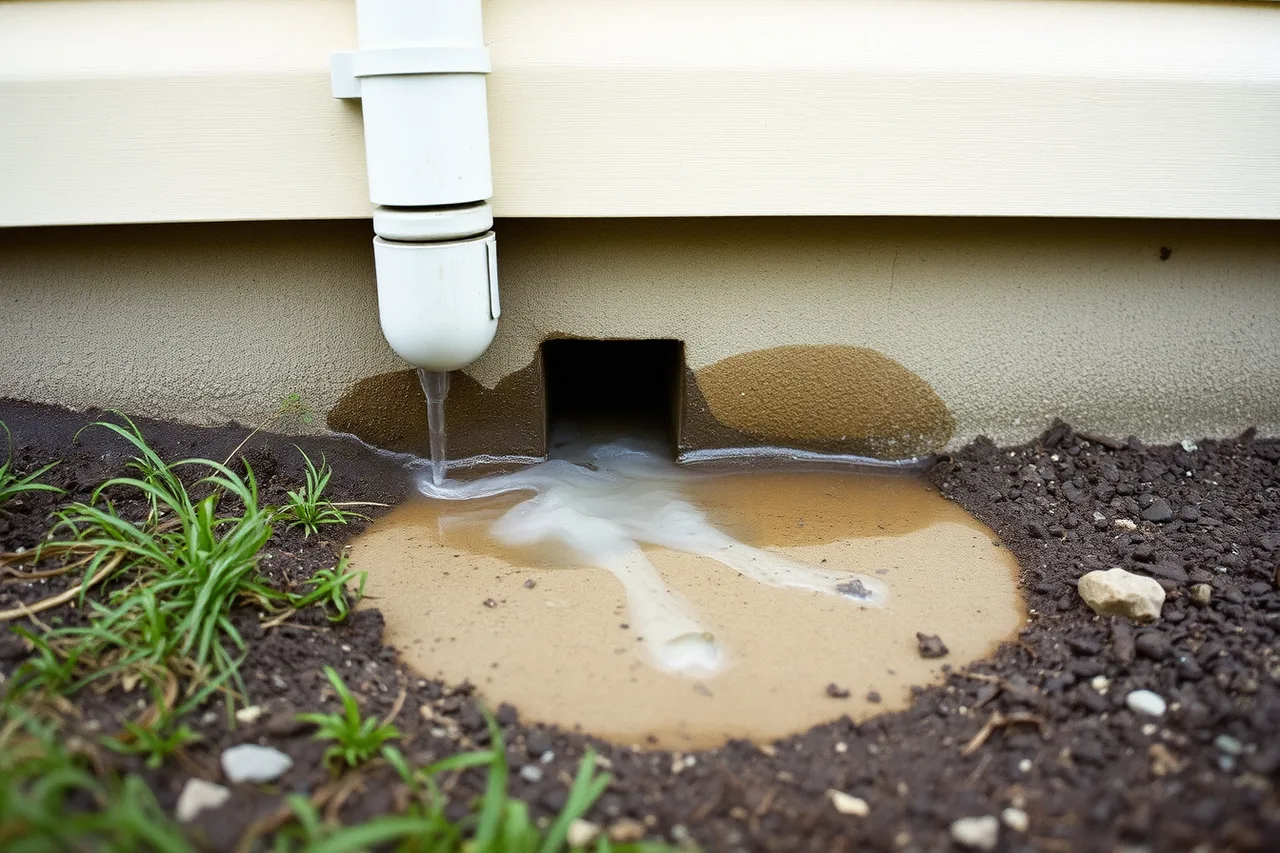
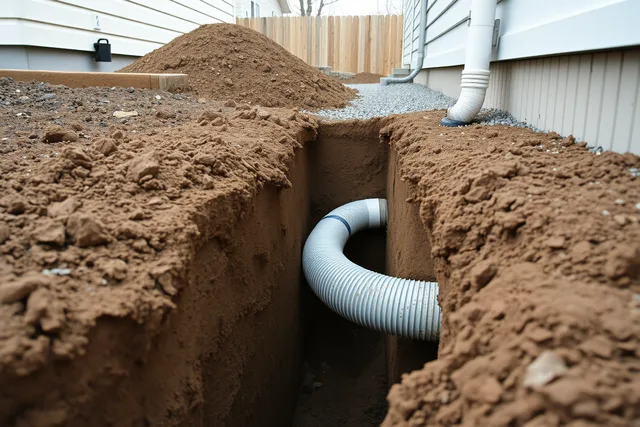
At the roof end, the question is whether the run catches what the roof sheds and carries it to an outlet. At the ground end, the question is where the water goes after the downspout. That second one is where most complaints originate, and it is the part most companies treat as an afterthought.
A customer with a wet basement calls the company whose name is on the trough. Whether the cause is a back-pitched run, a missing outlet, a blocked buried line or a grading problem, the phone call is the same. Companies that inspect and document the discharge end win those arguments and, more usefully, avoid them.
Reading a market before you commit
Population tells you very little. Four things tell you a lot.

Rainfall intensity sets the size of the system and, indirectly, the value of each job. It is regional and it is not a preference, so a habit carried from a drier market will undersize quietly.
The age and type of the housing stock sets the work mix. Older neighborhoods with mature trees generate cleaning and repair demand year after year. Newer developments generate installation work in waves and then go quiet. A market of steep three-story houses is a different business from a market of single-story ranches: different access, different crews, different pricing, different risk.
Tree canopy is worth its own line. It is the single best predictor of recurring cleaning demand, and you can see it from a car.
Local wage levels set your cost base. The Bureau of Labor Statistics publishes occupational employment and wage estimates by area, which lets you compare what a given occupation is paid across the metro areas you are considering before you commit to one.
Drive the market before you research it. An afternoon looking at rooflines and downspout terminations will tell you more than a week of desk work.
The seasonal shape, and what it does to cash
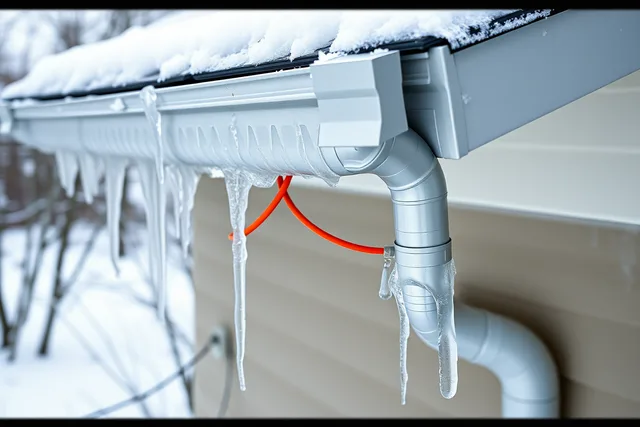
Demand in this trade concentrates. Leaf drop produces one peak. The first sustained rains after a dry stretch produce another, because that is when people discover what has been wrong all year. Ice produces a third kind of call in cold markets, and most of those calls are about a roof problem rather than a gutter problem.
The consequence is a cash shape rather than a revenue shape. Money arrives in bursts and costs do not. Insurance, finance payments, storage and your own living costs run every month regardless of whether it has rained.
Plan for that in two ways. Know your slowest month and make sure the fixed obligations survive it. And build a second service line that fills shoulder weeks, which for most companies is cleaning and repair work.
Weather also destroys capacity in exactly the weeks demand peaks. A plan built on calendar days will overstate what you can complete by a wide margin, because a crew cannot be on a roof in a storm and the storm is what generated the call.
Three ways in, compared
| Route | What it needs on day one | What it teaches you fastest | The risk |
|---|---|---|---|
| Cleaning and repair first | Ladders, access gear, hand tools, a vehicle | Your market's housing stock, one property at a time | Slow revenue per visit, so route density matters early |
| Installation with subcontracted forming | Access gear, measurement discipline, a forming partner | Estimating and scope writing | Your schedule and quality now depend on somebody else |
| Full installation with your own machine | Capital, a trailer, coil stock, a crew | Everything at once, including the parts you did not want to learn yet | A payment that runs through your slowest month |
There is no correct row. There is a row that matches your cash position and your tolerance for a bad season. Most owners who last start on row one and move down as the calendar forces them to.
Row one is underrated because the revenue per visit is small. What it actually buys is a map: after a season of cleaning you know which streets have mature trees, which houses have back-pitched runs, which have no drip edge, and which owners answer the phone. That is a prospect list nobody can sell you.
The two things that decide your first year
The first is your access ceiling. Decide, in the office, the tallest elevation you will accept work on. Then hold your intake to it.
Owners who leave this open end up sending crews to houses nobody on the truck is comfortable working, which is where reaching starts. It is also an underwriting answer: what you told an insurer about the height of your work is the sentence that gets read after an incident.
Almost all of this trade's severe risk sits at the roof edge. OSHA's guidance on fall protection in residential construction sets out the methods. It also makes clear the employer keeps responsibility for site-specific controls and for whichever federal or state-plan requirements apply.
The second is whether you can finish a job in one visit. A missing outlet, an elbow you did not carry, a bad measurement: each turns a finished job into a second trip.
Second trips are where a busy year turns into a break-even one. The penalty is unusually harsh in this trade: a formed run is made on site, and a remeasure means bringing the trailer back.
The service mix, and why it starts wider
New owners tend to define the business narrowly and then discover the calls they are turning away.
The realistic starting mix is cleaning, minor repair, downspout and discharge work, and full replacement quoted honestly. Guards belong in the mix too, sold as a change to the maintenance interval rather than as the end of maintenance, because the second version is a refund waiting to happen.
Two adjacent categories need decisions up front. Roof work is a different trade, with different licensing and different risk.
Grading and foundation drainage is where a lot of the customer's actual problem lives, and it needs either a partner you trust or a clear referral policy. Deciding both in advance stops a crew improvising an answer at the door.
What to set up before the first call
Register the entity and get the tax registrations in place. Open accounts separate from personal ones. Establish bookkeeping on day one rather than reconstructing it in April: the IRS guidance on starting a business sets out the sequence of structure, identification numbers, tax obligations and recordkeeping in the order they actually arrive.
Then answer the local questions nobody can answer for you. Whether this trade is licensed where you work, whether a permit applies to a replacement or only to a new drainage connection, and what the municipality allows you to do with discharged water. That last one shapes your standard scope and it appears on no licensing checklist.
Free help exists and is underused. The Small Business Administration's guidance and counseling pages point at local advisers who will read a plan and a cash forecast with you at no charge, which is a better use of an evening than another equipment comparison.
The mistakes that repeat
Buying the machine first, before the calendar justifies the payment. Pricing per foot for work whose cost is driven by access rather than length. Carrying every coil color a supplier offers instead of the two that move. Promising that guards end cleaning. And quoting a system without ever looking at where the water currently goes.
Each of those is avoidable in the first month and expensive to unwind in the first year.
Common questions
Is this a seasonal business or a year-round one?
Both, depending on the mix. Installation is seasonal almost everywhere. Cleaning, repair and discharge work spread the year out, which is why most durable companies carry them.
How big does a market need to be?
Less than owners assume, if the housing stock and canopy are right. Route density matters more than population, because driving time is the cost that eats a cleaning schedule.
Should I specialize in one type of property?
Eventually, yes, and the market will tell you which. Specializing before you have quoted a season is choosing without information.
What is the most common reason new companies fail here?
Cash timing rather than demand. Fixed costs run monthly and revenue arrives in bursts, and a business that only works in the peak weeks has no margin for a wet October.
How long before the business supports an owner?
That depends on your cost base, your market and how much of the work you do yourself, and any specific figure offered to you is invented. What you can do is model it with your own numbers and test it against your slowest month.