Guides
The new-hire checklist for a gutter service business
Gutter service staff training checklist with observed sign-offs at five stages, from ground work to the customer handover, and the records to keep.
What to take away
- Train in the order the work happens and sign off each stage by watching, not by asking.
- Nobody works alone until the ladder stage is signed off. That is the stage where the severe risk lives.
- Two checks are worth more than the rest combined: ladder setup on uneven ground, and the water test with the discharge follow-through.
- Keep the training records. They tell you who can be sent where, and they are what an insurer asks about after an incident.
How the sign-off works
A sign-off is a person watching another person do the thing, on a real job, and recording that they did it competently.
It is not a quiz, not a video, and not a certificate from anywhere. Written knowledge does not predict what somebody does on a ladder when they are late and the last screw is just out of reach.
Each stage below is signed by a named person with a date. Until a stage is signed, the trainee works that part supervised. The reasoning behind the sequence is in the hiring and training guide; this is the record you keep.
Stage one: ground work
- Loads and unloads the truck to the standard list without prompting
- Sets up site protection: tarps, ground cover, drive and walkway
- Bags and loads debris, and runs a magnet where fasteners were dropped
- Spots correctly for a ladder, including where to stand and what to watch
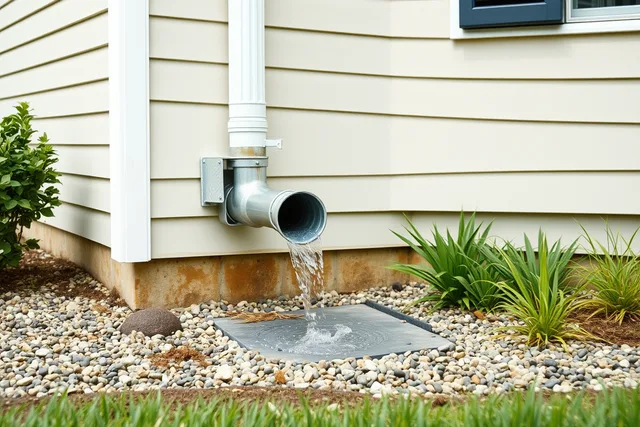
- Identifies where every downspout on the property currently discharges
- Reports what they found rather than what they assumed
The last two lines are not filler. Following water to its terminal end is the single most useful diagnostic habit in this trade, and the earlier somebody learns it the better their estimates will be years later.
Loading to the list matters because a missing outlet or elbow turns a finished job into a second visit. The list itself is in the equipment checklist for new owners.
Stage two: ladders and access
- Assesses ground before setting: slope, softness, thawing, obstructions
- Uses levelers and standoffs correctly rather than improvising
- Sets the ladder at the correct angle and secures it appropriately
- Moves the ladder rather than reaching from it, unprompted and repeatedly
- Inspects access gear against the company's removal-from-service criterion
- States the company's stated access ceiling and declines work above it
- Names the conditions under which they will stop work, and has stopped at least once
The last line is the one to insist on. A trainee who has never used stop-work authority has not tested it, and the first test should not be on a third-story elevation in wind. Contrive an opportunity if you have to.
This stage takes as long as it takes. Signing it early to fill a crew slot is the most expensive shortcut available in this business.
Stage three: diagnosis
- Identifies a back-pitched run and can demonstrate it with water
- Distinguishes an outlet problem from a capacity or sizing question
- Recognizes a failed miter or end-cap seal
- Presses fascia at the low points and at every existing downspout, and reports honestly
- Recognizes dissimilar metals in contact and knows why it matters
- Identifies where roof runoff is overshooting the trough
- Opens a buried line cleanout and confirms flow by watching the level
Sizing and spacing figures are not memory items. Anyone quoting a number for slope, hanger spacing or profile capacity from memory should be redirected to the manufacturer's installation instructions and to whatever the local building department has adopted, because those figures vary by product and by region.
Stage four: forming, hanging and sealing
- Measures twice and writes it down
- Verifies measurements at the property before anything is formed
- Selects a hanger suited to the fascia actually present
- Follows the manufacturer's spacing rather than a remembered interval
- Seals miters and end caps with a product rated for the metal and joint
- Cuts outlets cleanly and to the size the downspout needs
- Straps downspouts and orients elbows so water cannot exit a joint
- Runs the water test from the far end and confirms the terminal
A run formed to the wrong length is not a correction but a return trip with the trailer and the machine.
A formed run is made on site with everything traveling as one unit; see the equipment and setup guide.
Stage five: the customer
- Explains what was found in language a homeowner can check
- Shows the customer where the water now goes
- States the maintenance interval expected for this property and why
- Says plainly what guards do and do not change, where relevant
- Promises nothing that is not in the written scope
- Knows when to stop and call the office
Line four exists because the honest version of the guard conversation is the one that keeps the customer. Guards reduce large debris and do not end clearing, and a crew member who says otherwise has created a callback.
Line five is the discipline that protects everyone. A trainee answering a technical question confidently with no basis is a liability, and the correct answer is that they will find out and come back.
The records
| Record | Why it exists | Who keeps it |
|---|---|---|
| Stage sign-offs with dates and signatories | Tells you who can be sent where | Office, in the personnel file |
| Gear issued per person | Ties access equipment to a user and an inspection cycle | Office |
| Stop-work events, with reason | Confirms the authority is real and used | Office, reviewed monthly |
| Return visits attributed to a crew, with causes | Shows where training is not landing | Office, reviewed monthly |
The third row is the one companies never keep, and it is the most useful. A crew with no recorded stops is either extraordinarily lucky with weather or is not using the authority you told them they had.
Payroll and recordkeeping duties start with the first employee. The Department of Labor publishes compliance assistance aimed at new and small businesses covering what has to be kept.
Training and progression decisions must stay consistent. The Equal Employment Opportunity Commission's small business resource center covers obligations that attach as a company grows. Both sit on the wider calendar in the licensing and compliance guide.
What training is worth
Training time is a labor cost and it belongs in your rate, not in somebody's evening. If it is not in the priced hours, it will be the first thing cut in the weeks when new people are actually joining.
The size of that cost depends on what you pay, which is a market figure you can look up: the Bureau of Labor Statistics publishes occupational employment and wage estimates by area. How to turn that into a full labor cost per productive hour is set out in the pay rates and labor costs piece.
Common questions
How long should all five stages take?
As long as competence takes, which varies by person and by what they arrived with. Any calendar answer will be used as a target and someone will be signed off to meet it.
Can stages be signed out of order?
Ground and ladder work come first, always. Diagnosis and customer contact can overlap once the trainee is safe on a property.
Who can sign?
Somebody who does the work competently and was actually present. A signature from the office for work nobody watched is worse than no record.
What if a trainee refuses a task?
Find out why. In this trade a refusal is frequently good judgment, and treating it as insubordination trains people out of the behavior you most want.
Should experienced hires go through this?
Yes, faster. They usually clear stages one and two quickly and arrive with habits from another company that need checking against yours, particularly around the water test and the discharge end.