Guides
How to Clean Gutters Safely Without a Ladder
Clean gutters without a ladder using ground-level tools: a gutter vacuum, telescoping wand, and a leaf blower. Here is the sequence, the checks, and when to stop.
What to take away
- Most one-story and many two-story homes can be cleared from the ground with a gutter vacuum cleaner, a telescoping gutter wand, or a leaf blower with a gutter kit.
- The step that decides the result is dry debris removal before any water touches the channel.
- NIOSH counts falls as a leading cause of workplace death, and ladder work on wet ground is the main risk in this job.
- If the downspout will not pass water after you clear the top, the blockage is below reach and belongs to someone with a ladder or a drain snake.
What has to be true before the first step
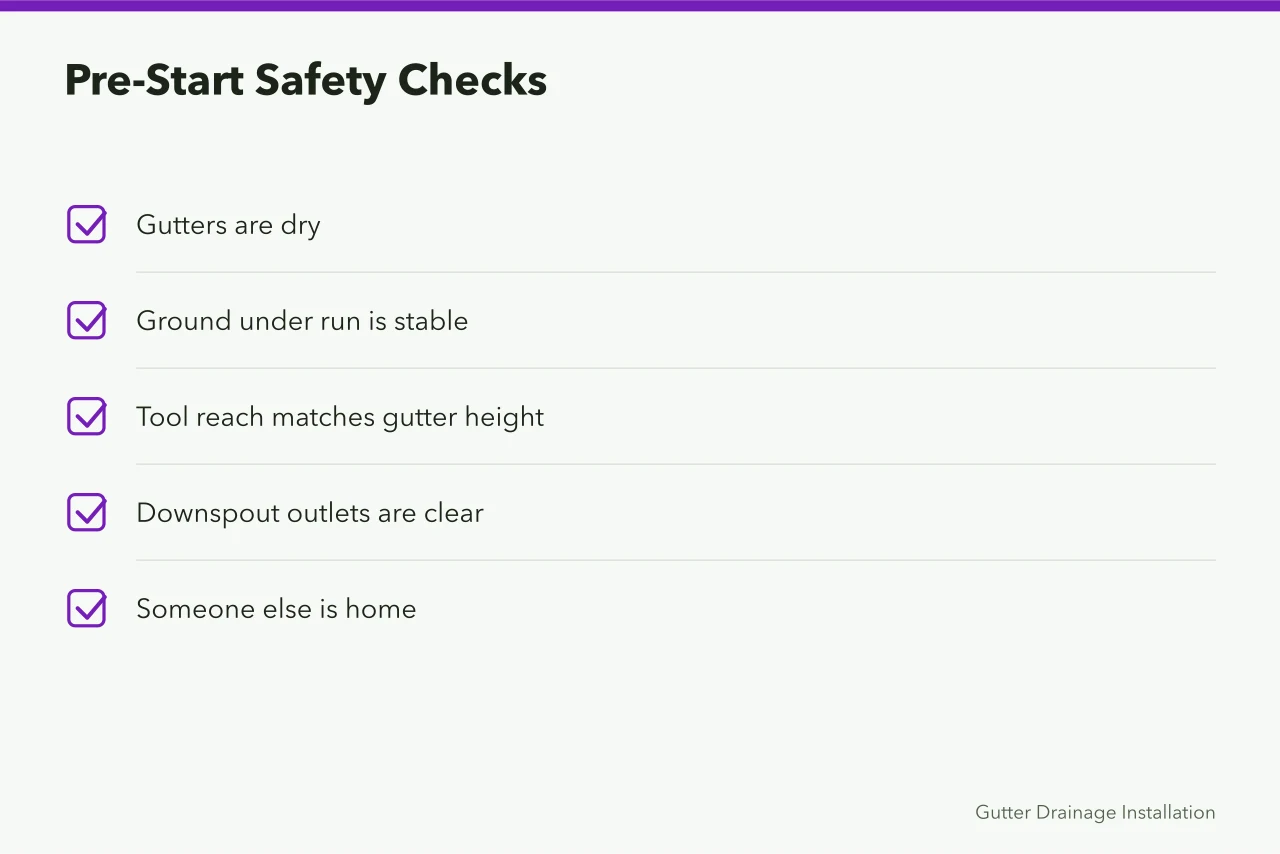
You need dry gutters. Water turns leaf litter into a mat that a ground-level tool pushes around instead of lifting out. Check the forecast and work after at least one dry day.
You need to stand on ground that does not move. Grass, gravel and pavement are fine. A slope above 15 degrees, a flower bed you cannot stand in, or a deck that blocks the run means the tool cannot reach the channel.
You need the right reach. Measure from the ground to the gutter lip. A telescoping gutter wand sold at Home Depot or Lowe's typically extends to about 12 feet, and gutter vacuum kits run to roughly 20 feet. Anything beyond that needs a different method.
The sequence
- Clear the ground below the run. Move hoses, toys and planters. Debris will come down and you do not want to step on it.
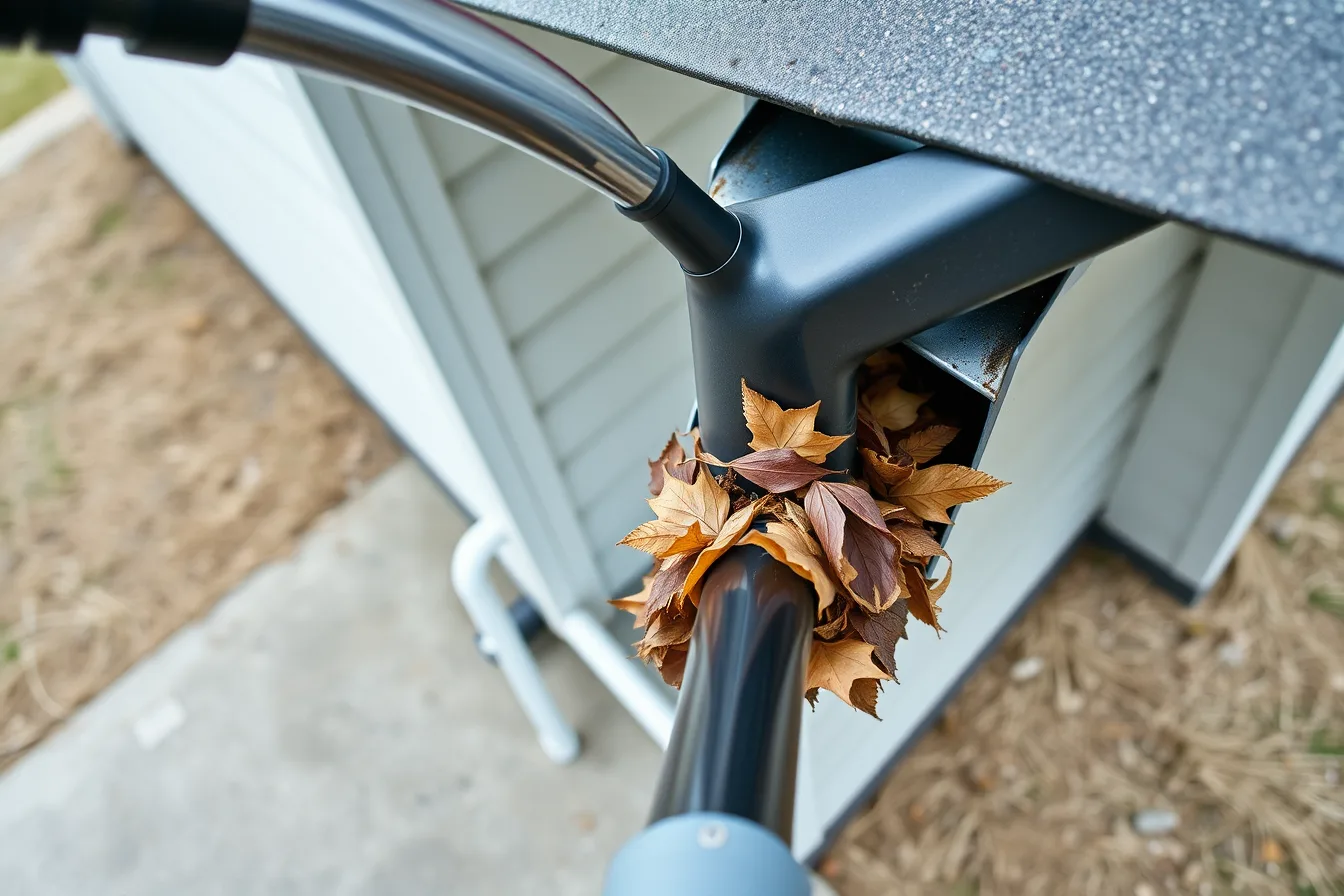
- Fit the tool. A gutter vacuum uses a curved nozzle that rides the channel. A telescoping gutter wand uses a hooked head. A leaf blower needs the gutter kit with the angled tube.
- Start at the end farthest from the downspout and work toward it. This pushes debris in the direction water already travels.
- Lift, do not scrape. Draw the tool back along the channel in slow passes. Scraping drags the mat and packs it.
- Clear the downspout outlet at ground level first, then the top opening. A blocked outlet backs water up the whole run.
- Flush with a hose from the ground if the wand has a water attachment. Watch the outlet, not the gutter.
The step that decides the result
Dry removal decides everything. If you skip it and flush first, wet leaves settle into the seams and the low spots, and the next rain pools there. Standing water in a gutter is what rusts steel, splits aluminum seams and rots the fascia behind it.

Run the tool until the channel is visibly empty of matted material. Loose grit can stay. Mats cannot.
For how roof and gutter components age under that kind of water load, the rain gutter overview covers materials and typical failure points.
How to check each step came out right
Use the hose test. Run water at the far end of the run for a full minute. Then check three things.
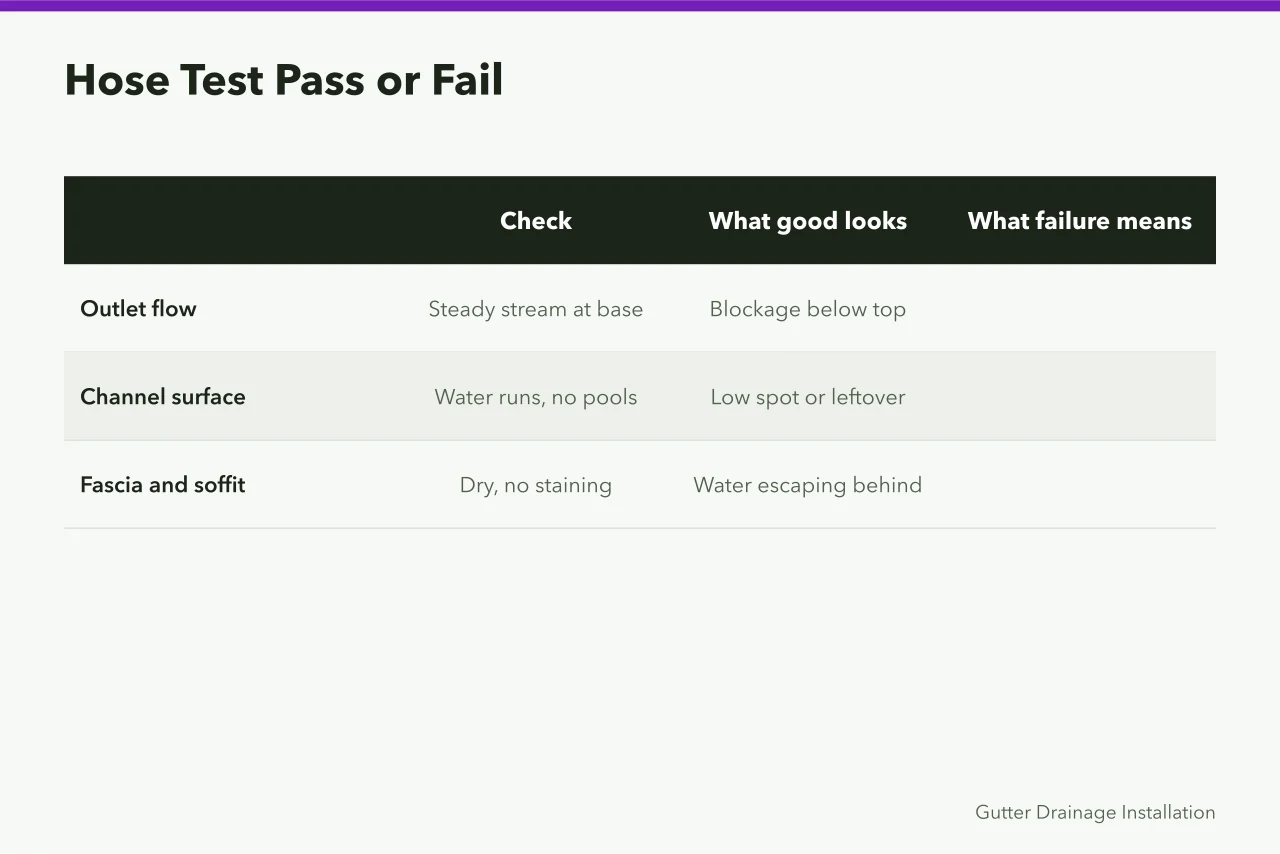
| Check | What good looks like | What it means if it fails |
|---|---|---|
| Outlet flow | Steady stream at the downspout base | Blockage is below the top opening |
| Channel surface | Water runs, no standing pools | Low spot or leftover mat |
| Fascia and soffit | Dry, no staining | Water has been escaping behind the gutter |
A steady stream within about 30 seconds of starting the hose is the pass mark on a normal run. Anything slower points to a partial block.
What to do when a step goes wrong
The common failure is a downspout that will not pass water. The recovery is a drain snake or a plumber's auger fed from the bottom outlet, not more water from the top. If the auger meets solid resistance within the first few feet, stop. That is usually a crushed section or a buried connection, and pushing harder splits the pipe.
If the tool keeps missing the channel, the head angle is wrong, not the reach. Adjust the nozzle before buying a longer pole.
The second failure is debris landing in a bed or on a walkway. Rake it out the same day. Wet leaf litter stains concrete and kills grass under it.
Work from the ground up. Every year, homeowners are injured falling from ladders while clearing gutters, and the NIOSH fall prevention program exists because those injuries are largely avoidable.
When to stop and hand it to a professional
Stop when the gutter height exceeds your tool's reach, when the auger hits solid resistance, or when you find sagging channel, pulled hangers, or separated seams. Those are repair conditions, not cleaning conditions.
Stop also when the roof pitch above the gutter is steep enough that you cannot see into the channel from the ground. You cannot confirm the work came out right, and unverified work is worse than no work.
If you run a crew and want the same stop rules written into a job sequence, the new-hire checklist for a gutter service business sets out what a trained worker checks before touching a roof.
Tools worth buying and one not to buy yet
A wet/dry shop vacuum with a gutter kit is the workhorse for one-story runs. A telescoping gutter wand with a water attachment is the best single purchase for two-story homes. A leaf blower with a gutter kit handles dry debris fast on long runs.
Skip the camera-inspection pole for now. At current US prices it costs more than a full professional cleaning, and it tells you what you already know from the hose test.
Common questions
Can a leaf blower really clear a wet gutter? No. A blower moves dry leaves and pine needles well. Once material is wet and matted, it needs a vacuum or a wand with water pressure.
How often should I do this? Twice a year in most US climates, once in late spring and once after the fall leaf drop. Homes under oak, maple or pine need the fall pass without fail.
What if water still drips behind the gutter after cleaning? That points to a pitch problem or a failed seam, not leftover debris. Call someone who can reset the hanger or reseal the joint.
Is a gutter vacuum worth the cost for one house? If you have two or more stories and clean twice a year, it pays back within a few seasons against professional cleaning prices. For a single-story ranch, a wand and a hose are enough.