Guides
How to decide between new and used gutter service equipment
Gutter equipment, new against used: how to convert both into a cost per formed foot, which variables decide it, and what a used machine hides.
What to take away
- Comparing two purchase prices answers the wrong question. Convert both into a cost per unit of work and the answer usually flips.
- The variable that dominates is not price. It is expected downtime in your busiest weeks.
- Used access equipment and used forming equipment are different risks. Treat them separately.
- Write the arithmetic with your own figures. Any article that hands you numbers for this is inventing them.
The comparison most owners make is the wrong one
Two prices side by side, one lower. That comparison feels complete, yet it leaves out what matters: how long each machine lasts under your workload, what it costs to keep running, what a breakdown does to your schedule, and what it is worth when you sell it.
A cheaper machine that idles a crew for two days in the leaf-drop weeks has cost more than the difference. A more expensive one that never justifies a second crew has also cost more. Neither shows up in the price comparison.
Write it as a rate
Convert each option into a cost per unit of the work it actually does. For forming equipment that unit is a formed foot. For access equipment it is a crew day.
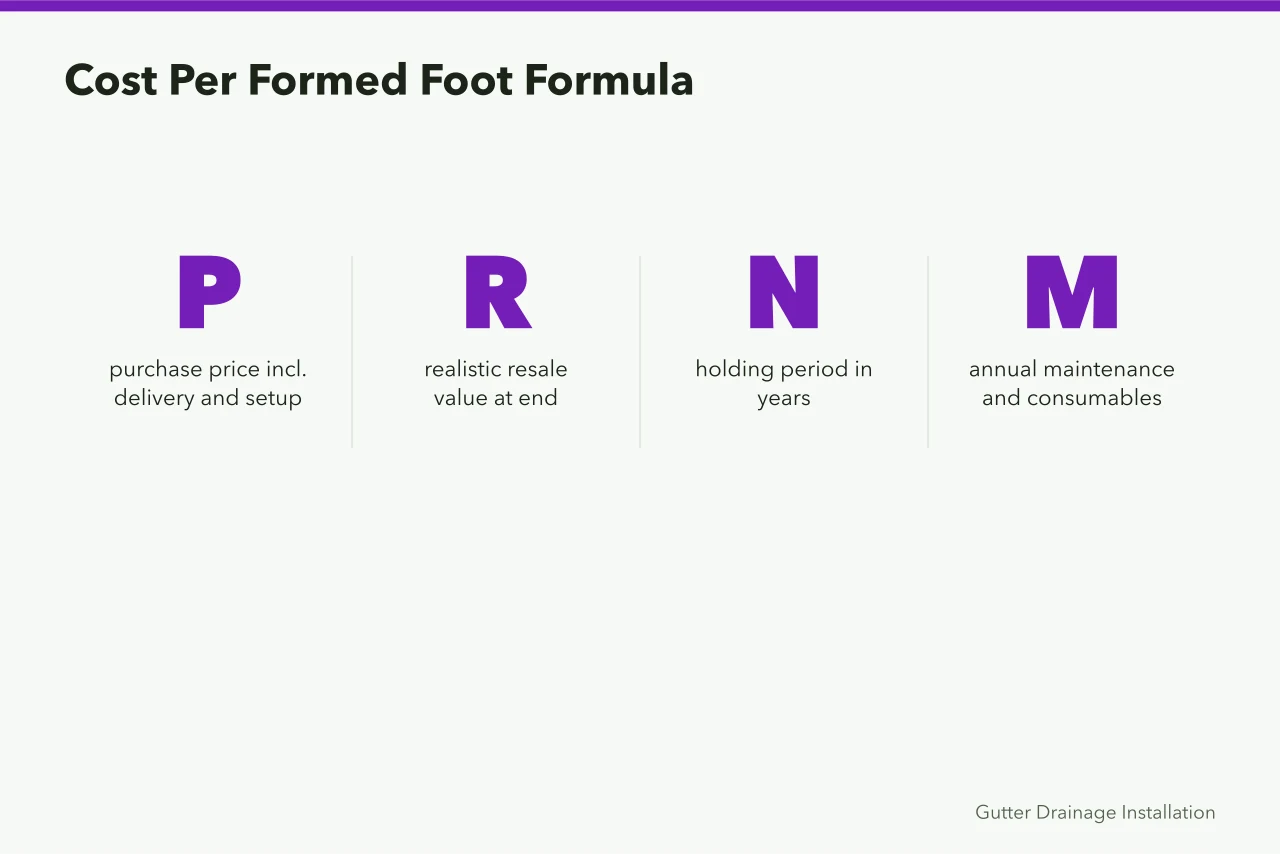
Define these for yourself and fill them from quotes and your own records:
- P, the purchase price including delivery, setup and any first-year modification
- R, the resale value you would realistically get at the end of your holding period
- N, the holding period in years you are prepared to commit to
- M, the annual maintenance and consumable cost, including the parts that only wear on a used machine
- D, the days of downtime you expect each year, split into ordinary weeks and peak weeks
- C, the cost of a lost crew day, which is not the same number in June and in October
- V, the volume of work the item handles in a year, in formed feet or crew days
Then the annualized cost is (P minus R) divided by N, plus M, plus D multiplied by C. Divide that by V and you have a rate you can compare across options, across suppliers and against the price of subcontracting the same work.
Why D and C do most of the work
The two variables owners underestimate are the downtime days and the cost of a lost day.
Downtime is not evenly distributed. Equipment fails when it is used hardest, during the same few weeks when every customer calls at once.
A day lost in a slow month is a scheduling inconvenience. A day lost in the busy weeks is a job that goes to a competitor, plus a customer who now has that competitor's number.
So C should be written as two numbers, one for ordinary weeks and one for peak. If you only ever record one, record the peak one, because that is the day you will actually lose.
What a used machine hides
Ask for the things that do not show in a photograph:
- The hour or footage history, and what evidence supports it.
- Which rollers, dies and drive components have been replaced, and when.
- Whether the profile it forms still matches current hanger and outlet parts, or whether you inherit a stock problem.
- Whether the previous owner ran coil thicknesses outside what the manufacturer specifies.
- What parts are still available, and from whom.
- Whether it has ever been dropped, which shows in the run rather than in the paint.
Point four is the one that catches people. A machine run outside its specified coil range wears in ways a walk-around inspection will not reveal, and the symptom appears as inconsistent runs months later.
Point three is the quiet one. A profile nobody stocks parts for turns every small repair into a special order, and a special order in October is a lost week.
What new equipment buys that is not performance
New equipment buys three things the comparison rarely shows: a warranty that shifts downtime risk to someone else, parts availability that is somebody's commercial interest to maintain, and financing that spreads the cost across the seasons that generate the revenue.
None of those is performance. All of them change the D and M terms above, which is where the arithmetic is decided.
The decision differs by item
| Item | Buy used when | Buy new when | The variable that decides |
|---|---|---|---|
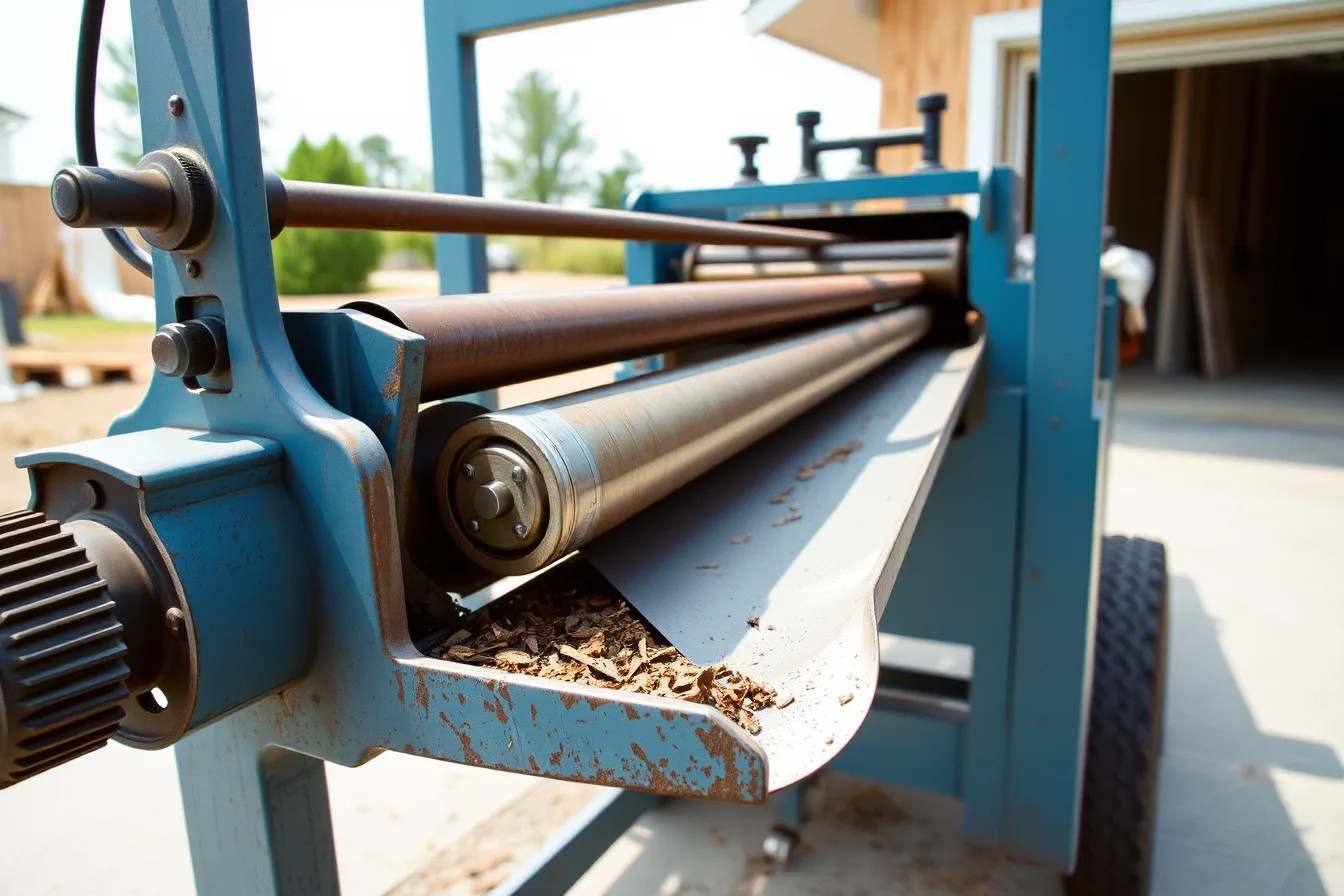
| Roll former | Parts and profile are current, and history is documented | You cannot absorb a peak-week outage | D in peak weeks |
| Ladders and access gear | Almost never, unless you can inspect against the maker's criteria | Always, if there is any doubt | Consequence rather than cost |
| Trailer | Structure is sound and you can weigh the repairs | You need it lettered and on the road this month | M plus your own time |
| Hand tools | Routinely | When precision or a warranty matters | Replacement cost is small either way |
| Vehicle | You have a mechanic you trust | Uptime is contractual | C, the cost of a lost crew day |
Access gear is the row with no real argument. A used ladder saves an amount that is trivial next to what it risks, and the risk is not financial. OSHA's residential fall-protection guidance describes what the employer is responsible for at the roof edge, and none of it becomes easier because the equipment was cheap.
The same reasoning belongs in the written program that OSHA's safety and health framework sets out, where inspection criteria and removal-from-service rules are recorded rather than remembered.
Before you commit
A used purchase that fails a licensing or insurance condition is not a saving. Some jurisdictions attach requirements to registered contractors and to the equipment they operate, and your insurer will want each item scheduled. The licensing and compliance guide explains how to find the requirement that applies where you work rather than assuming it matches a neighboring state.
Keep the paperwork either way. The IRS sets out what records a small business is expected to keep, and a private-sale receipt written on a notepad is the version of that record you will regret. Ask a tax professional how a particular purchase is treated in your year and your structure.
Two other things move the arithmetic and are easy to forget: a machine pays for itself only if a crew runs it. Decide the purchase timing and the timing in the hiring and training guide together.
A vehicle is the most-seen advertisement most gutter companies own. Its condition is part of what the market thinks of you and the asset register.
If you have not yet decided which items you need at all, work through the equipment checklist for new owners first, and read the scheduling consequences of owning a forming machine in the equipment and setup guide.
Common questions
Is used forming equipment a bad idea?
No, but it is a documented idea. With service history, current parts and a profile that matches what you stock, the arithmetic often favors it. Without those, you are buying an unknown D.
How do I estimate resale value?
Watch what comparable items actually sell for over a season rather than what they are listed at. Asking prices are not a market.
Should I finance new equipment?
That is a cash-flow question, not an equipment question. What matters is whether the payment survives your slowest month, which you can test against your own records before you sign.
What if I cannot fill in V?
Then you do not yet know whether you need the machine. Track formed feet for a season while subcontracting the forming, and the number will arrive on its own.
Does a warranty justify the price difference on its own?
Sometimes, and the way to tell is to put the warranty into D rather than into a feeling. If it removes the peak-week outage, it is doing real work in the arithmetic.