Guides
How to Install a Gutter Drainage System That Handles Heavy Rain
How to install gutter drainage system for heavy rain: US sizing, slope, downspout routing, and checks for DIY installers before cutting metal.
What to take away
- Heavy rain capacity comes from gutter width, downspout size, and constant fall.
- Use a roof-area table or your local code before buying parts.
- The step that decides the result is setting a fall of one quarter inch per 10 feet toward the outlet.
- Check each run with a level, then with a garden hose.
- Stop and call a licensed pro if the fascia is soft, the roof edge is over 20 feet high, or the discharge crosses a driveway.
How to install gutter drainage system starts with the roof area and the local storm, not with the gutter hangers. Use a code table or a simple roof-area check before you buy parts. The sections below follow the work in the order a DIY installer should use.
What has to be true before the first step
The fascia board must be sound. Probe it with a screwdriver; dry, firm wood holds hangers. The roof edge must have a drip edge or the gutter back must tuck behind it.

Each downspout outlet must have a place to discharge at least 10 feet from the foundation. A splash block, a buried pipe, or a rain garden all work.
Know the roof area each downspout will serve. Measure the horizontal footprint of the roof section, not the sloped surface. Confirm the local code minimum. Many US jurisdictions adopt the International Residential Code, which sizes roof drainage by rainfall rate and roof area.
Canadian practice uses metric rainfall rates; Canadian gutter installers size eavestroughs under the National Building Code. This comparison matters if the property is near the border.
Sizing gutters and downspouts for heavy rain
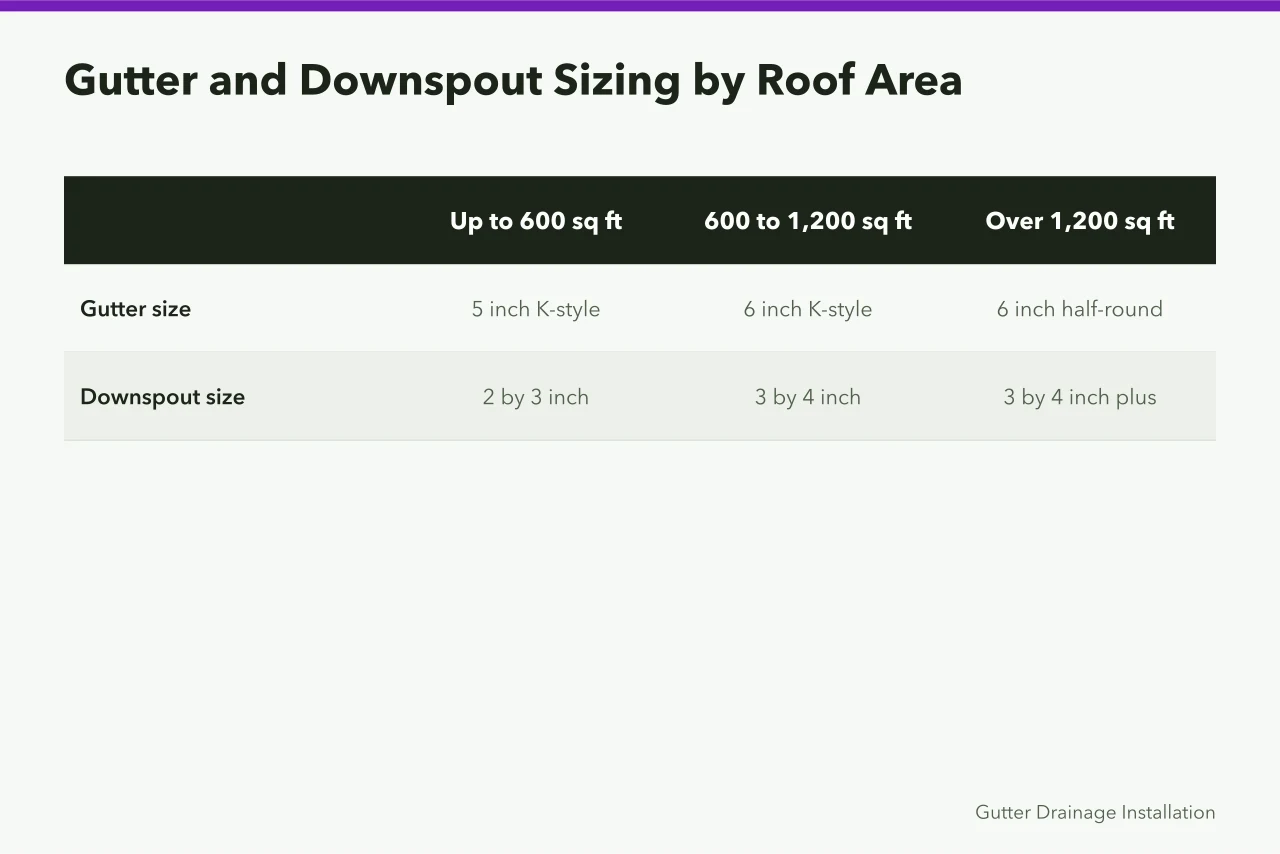
A 5-inch K-style gutter with a 2 by 3 inch downspout handles most roof sections up to about 600 square feet. For 600 to 1,200 square feet, a 6-inch K-style gutter with a 3 by 4 inch downspout is safer. These ranges are illustrative; check your local code table before cutting metal.
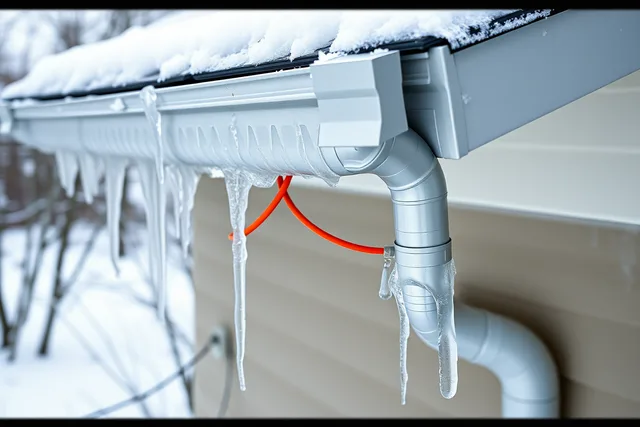
In a Gulf Coast cloudburst, a 5-inch gutter on a long run can overflow even with correct slope. In the Pacific Northwest, long drizzle exposes sealant leaks. In Minnesota, snowmelt needs clear outlets before spring rain.
The installation sequence
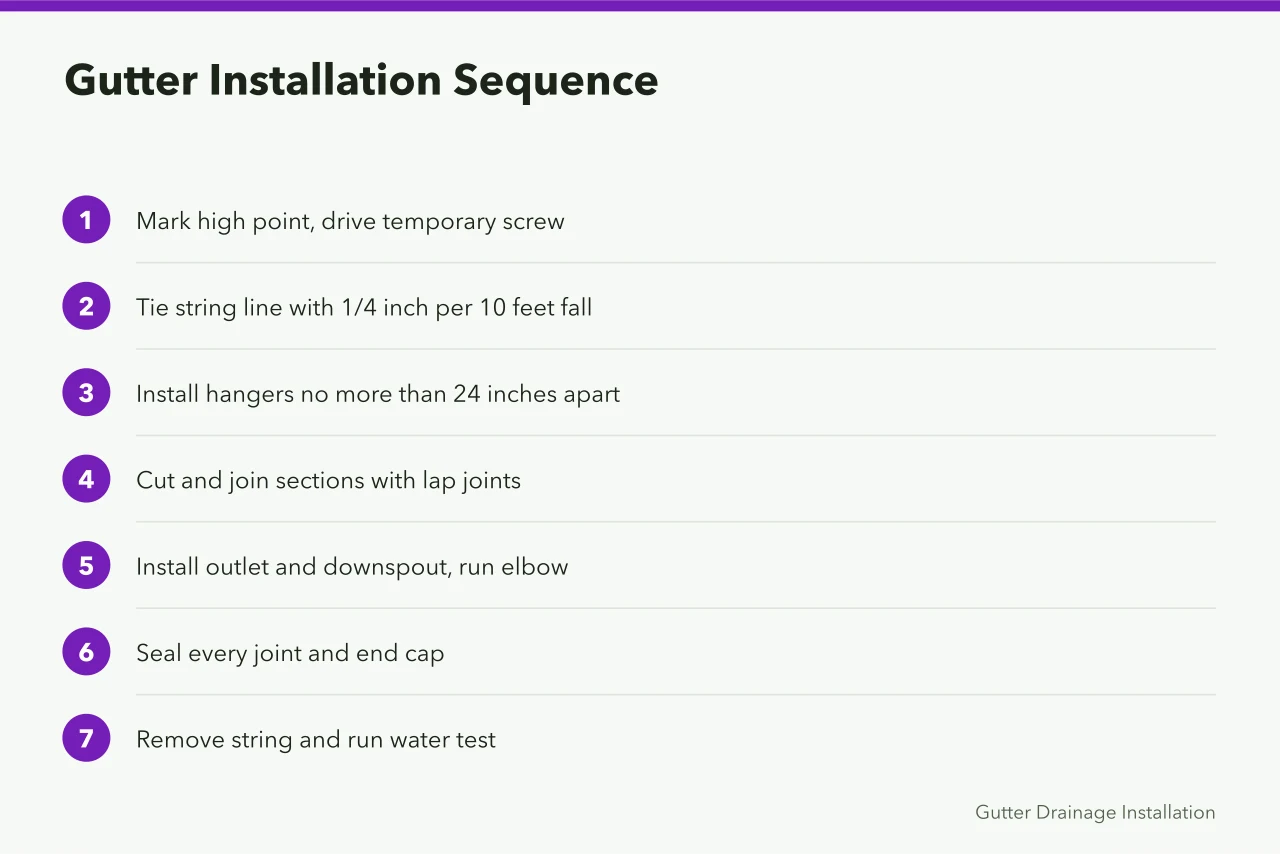
- Mark the high point at the end farthest from the outlet. Drive a temporary screw into the fascia.
- Tie a string line from that screw to the outlet with a fall of one quarter inch per 10 feet of run.
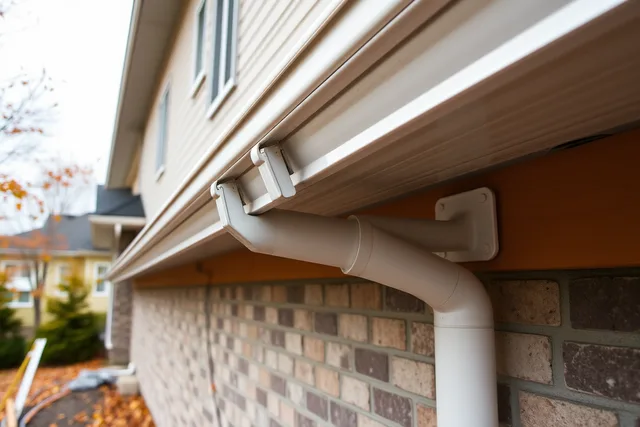
- Install each hanger so the back of the gutter follows the string. Space hangers no more than 24 inches apart.
- Cut and join gutter sections with lap joints. Overlap each upper piece over the lower piece in the direction of flow.
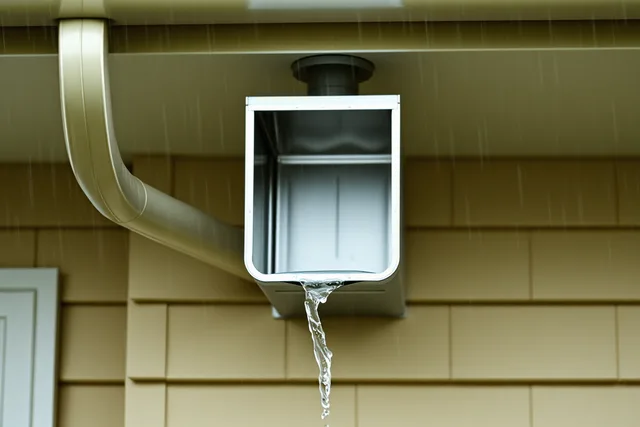
- Install the outlet and downspout, then run an elbow to the discharge point.
- Seal every joint and end cap with gutter sealant. Wipe the bead smooth with a gloved finger.
- Remove the string and run a water test with a garden hose.
A clean run makes later service easier. The new-hire checklist for a gutter service business lists what a service crew should inspect after installation, including bracket spacing and sealant condition.
The step that decides the result
The fall of the gutter is the step that decides whether heavy rain leaves the roof or spills over the edge. Set a fall of one quarter inch per 10 feet of run, never less. A level gutter may look right but leaves water standing. Too much fall makes water shoot past the outlet.
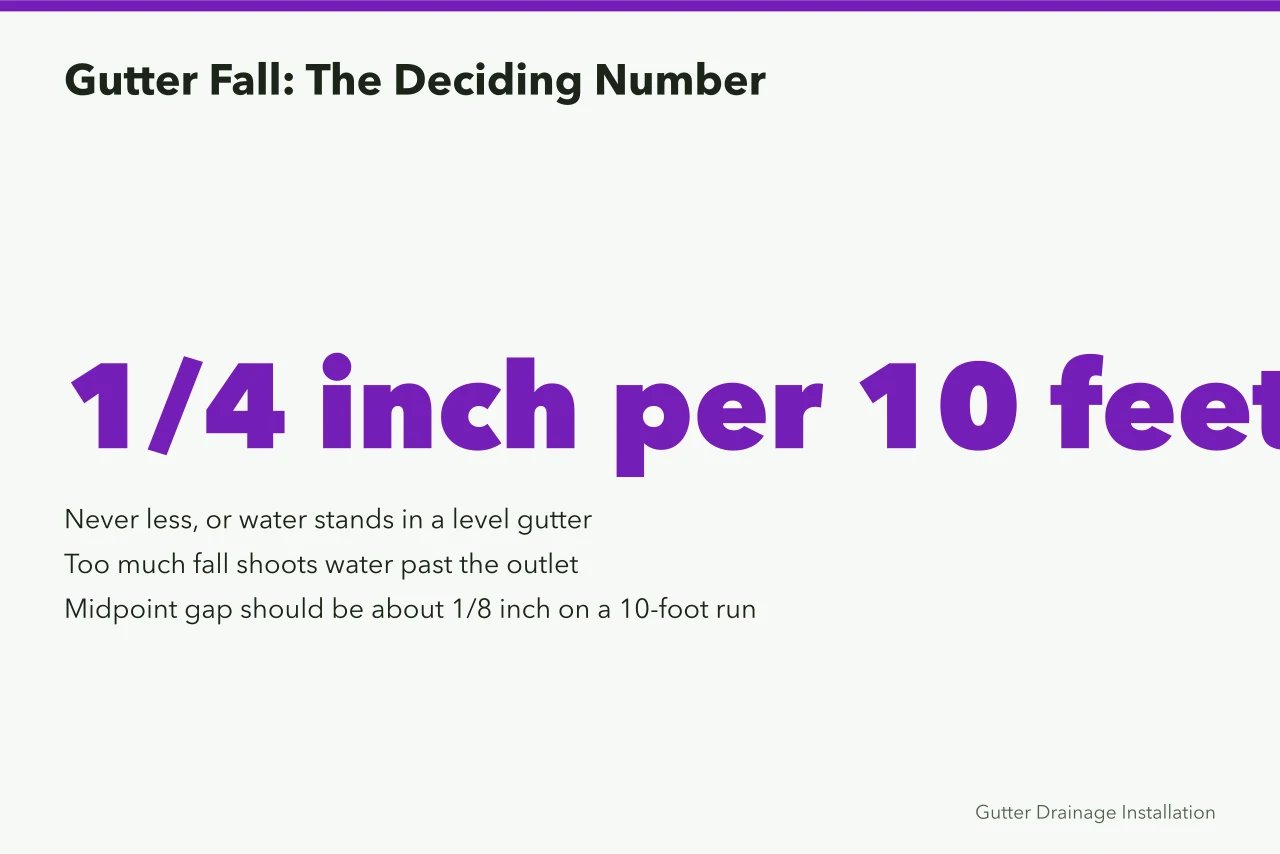
Check the fall with a string line and a small line level. Measure from the string to the gutter back at the midpoint; the gap should be close to one eighth inch on a 10-foot run.
How to check each step came out right
Use a 4-foot level against the gutter back after hanging the first 10-foot section. The bubble should sit just off center in the direction of flow. Run the garden hose from the far end and watch the water path. No water should stand after the hose stops. Every joint should look dry on the outside after the test.
- Gutter back follows the string line at every hanger.
- Water flows to the downspout without pooling at the midpoint.
- Downspout discharge lands at least 10 feet from the foundation.
- Joints show no drips after the water test.
For the final discharge, EPA's Soak Up the Rain guidance describes how to build a rain garden or dry well.
What to do when a step goes wrong
The common failure is a sagging run in the middle. The recovery is to remove the hangers in the sagging section, reset the string line, and rehang the gutter so the back follows the line. Do not keep adding sealant; sealant cannot fix a low spot.
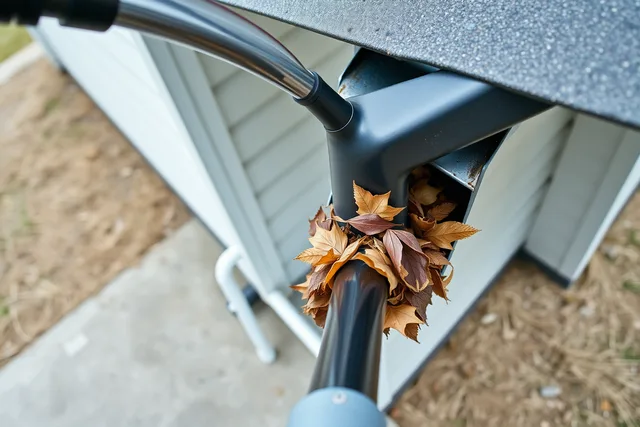
If water backs up at the outlet, the downspout may be too small or the outlet may be clogged. Remove the downspout and check for debris. A buried pipe that holds water may be crushed or pitched backward.
FEMA's building science page explains how standing water near a foundation can cause damage. If local rules require disconnection, compare downspout disconnection rules to see how a disconnection program should work.
When to stop and hand it to a professional
Stop and call a licensed gutter contractor if the fascia board is soft or split when probed. Stop if the roof edge is more than 20 feet above grade; fall protection and ladder work become a different risk.
NIOSH's falls page describes how ladder falls injure homeowners every year. Stop if the downspout must cross a driveway, a sidewalk, or a utility line without a prepared trench.
If the property crosses the US border or you run a crew on both sides, cross-border gutter business explains the licensing and tax differences.
Common questions
How wide should gutters be for heavy rain? A 6-inch K-style gutter with a 3 by 4 inch downspout handles heavy rain better than a 5-inch system. Use the roof area table above as a starting point, then check your local code.
What slope should a gutter have? Set one quarter inch of fall per 10 feet of run. This is enough to move water without making the gutter look crooked from the ground.
When should I stop and hire a professional? Stop if the fascia is soft, the roof edge is over 20 feet high, or the downspout must cross a hard surface without a prepared trench.