Guides
Underground Gutter Drainage Installation in Ontario: Rules and Costs
Underground gutter drainage installation in Ontario: permits, downspout disconnection, storm sewer limits and frost depth. Toronto forbids new storm sewer links.
What to take away
- Underground gutter drainage installation in Ontario is controlled first by the Ontario Building Code, then by local municipal bylaws.
- A permit is triggered when you connect to a municipal storm sewer, alter grading, or install a new buried drain pipe on most urban properties.
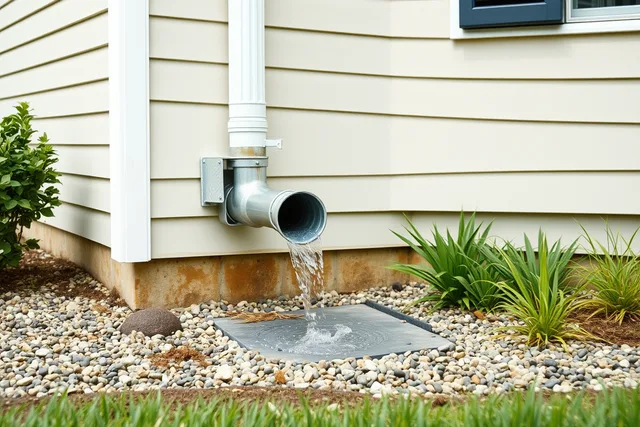
- Toronto does not allow new downspout connections to the storm sewer. You must drain to a soakaway, rain garden or lawn.
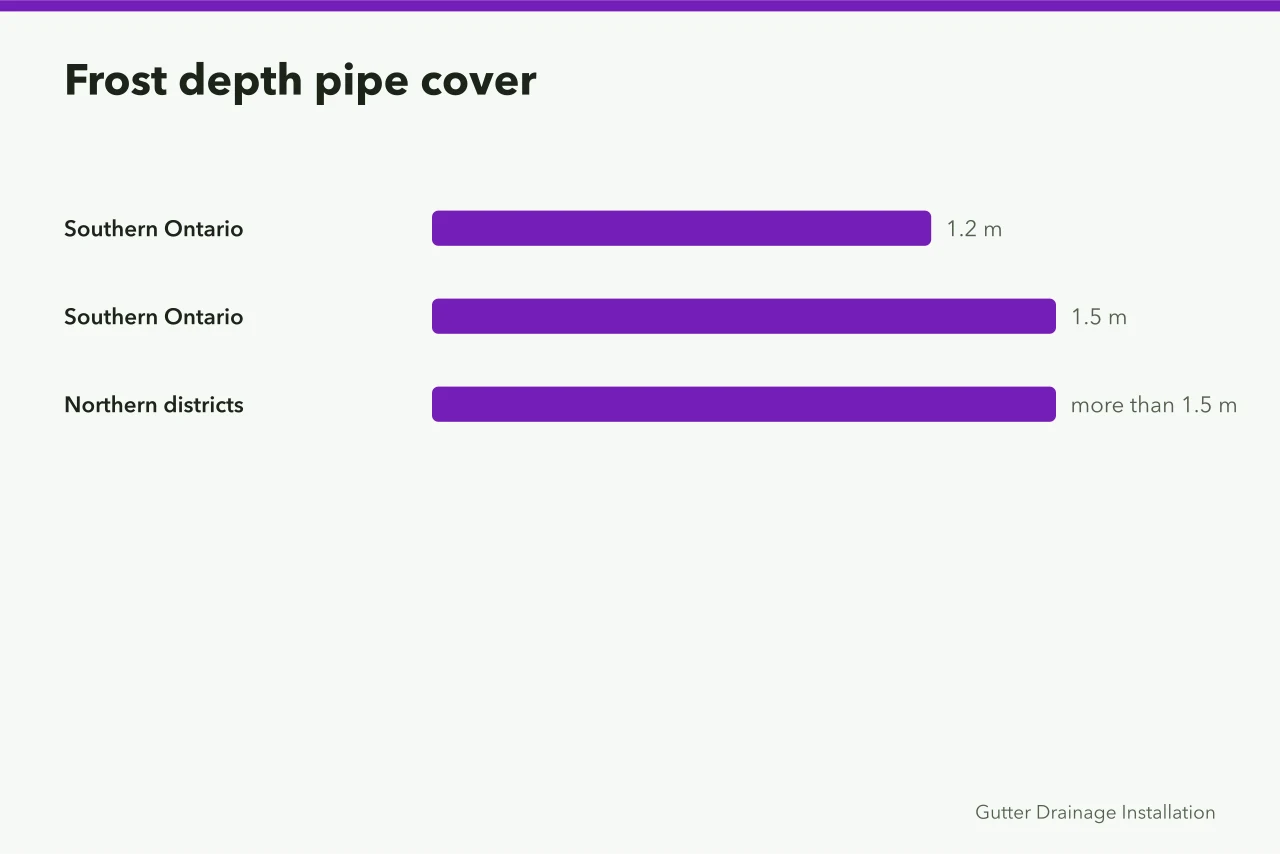
- Frost depth decides minimum pipe cover. In southern Ontario this is usually 1.2 m to 1.5 m.
- Buried drainage work typically runs $25 to $60 per linear foot in most Ontario markets, plus a $150 to $500 permit and $3,000 to $8,000 for a soakaway pit.
- Skipping an approval can result in a work order to disconnect the pipe at your expense and a provincial order under the Ontario Water Resources Act.
Who has jurisdiction in Ontario
Three layers of rules apply: provincial law, municipal bylaw, and private property agreements. Ontario sets baseline rules through the Building Code Act and the Ontario Water Resources Act.
Municipalities add local bylaws for downspout disconnection and storm sewer connections. Toronto keeps its sewer rules in the Toronto Municipal Code, Chapter 681, Sewers.
A condominium corporation or a neighbor's drainage easement can add private restrictions. Those private rules can require board approval before any excavation on common elements.
What triggers a permit
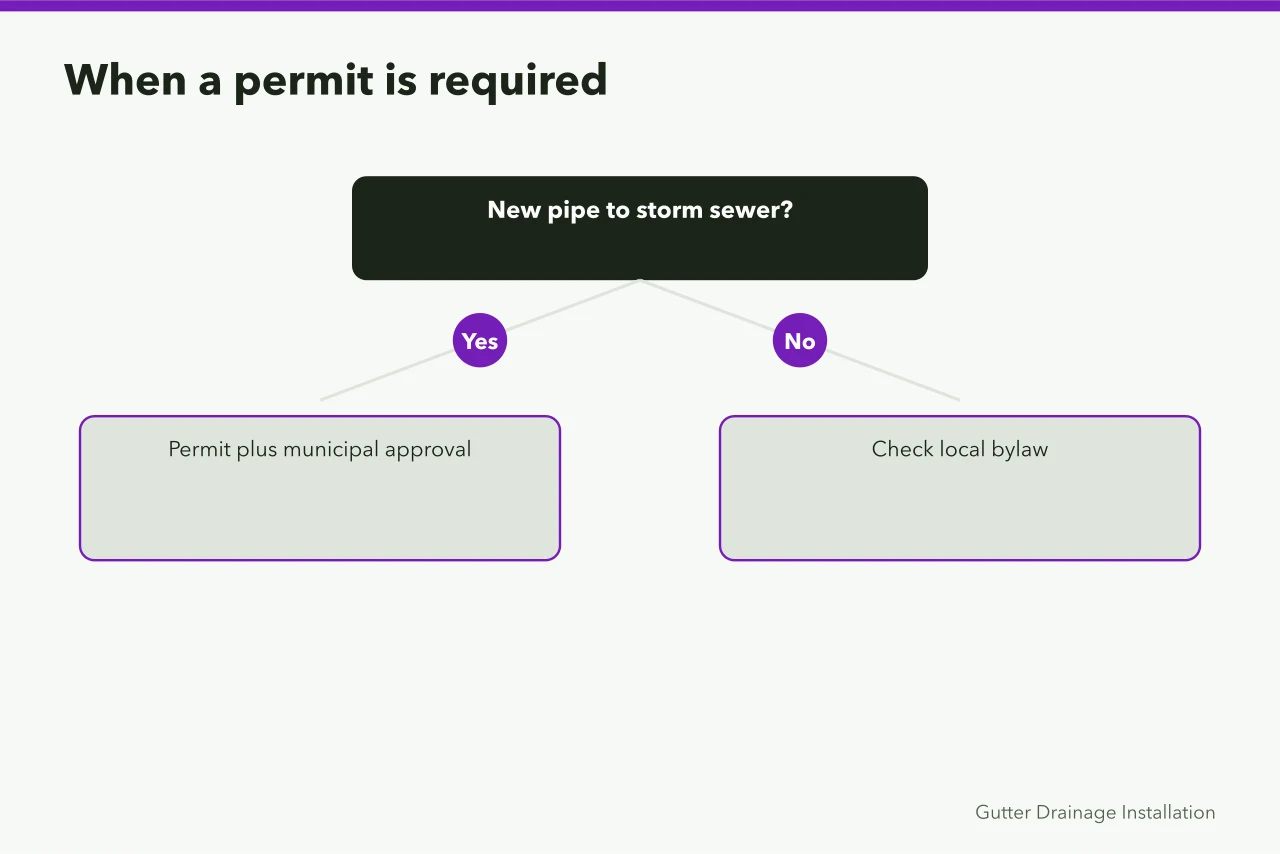
A permit is generally required to install a new underground drainage pipe that connects to a municipal storm sewer or changes surface water flow onto a neighbor's property.
In Toronto, Downspout disconnection rules are stricter than in many other Ontario municipalities. Toronto does not issue new permits for a direct downspout-to-storm-sewer connection on most houses. Instead, water must go to a lawn, rain garden, or soakaway pit. The table below shows when approval is normally needed.
| Trigger | Permit required in most Ontario municipalities |
|---|---|
| New pipe connecting to storm sewer | Yes, plus municipal approval |
| Downspout to lawn or soakaway | Often no permit, but check local bylaw |
| Altering lot grading | Yes, grading plan required |
| Repairing existing pipe in place | Usually no permit if same size and route |
What to submit for approval
A complete application needs drawings that show the existing house, the proposed pipe route and the discharge point. For the gutter side, see how Canadian installers size eavestroughs under the National Building Code.
The pipe size must match that roof area and the local storm intensity. Typical municipal application packages ask for these documents:
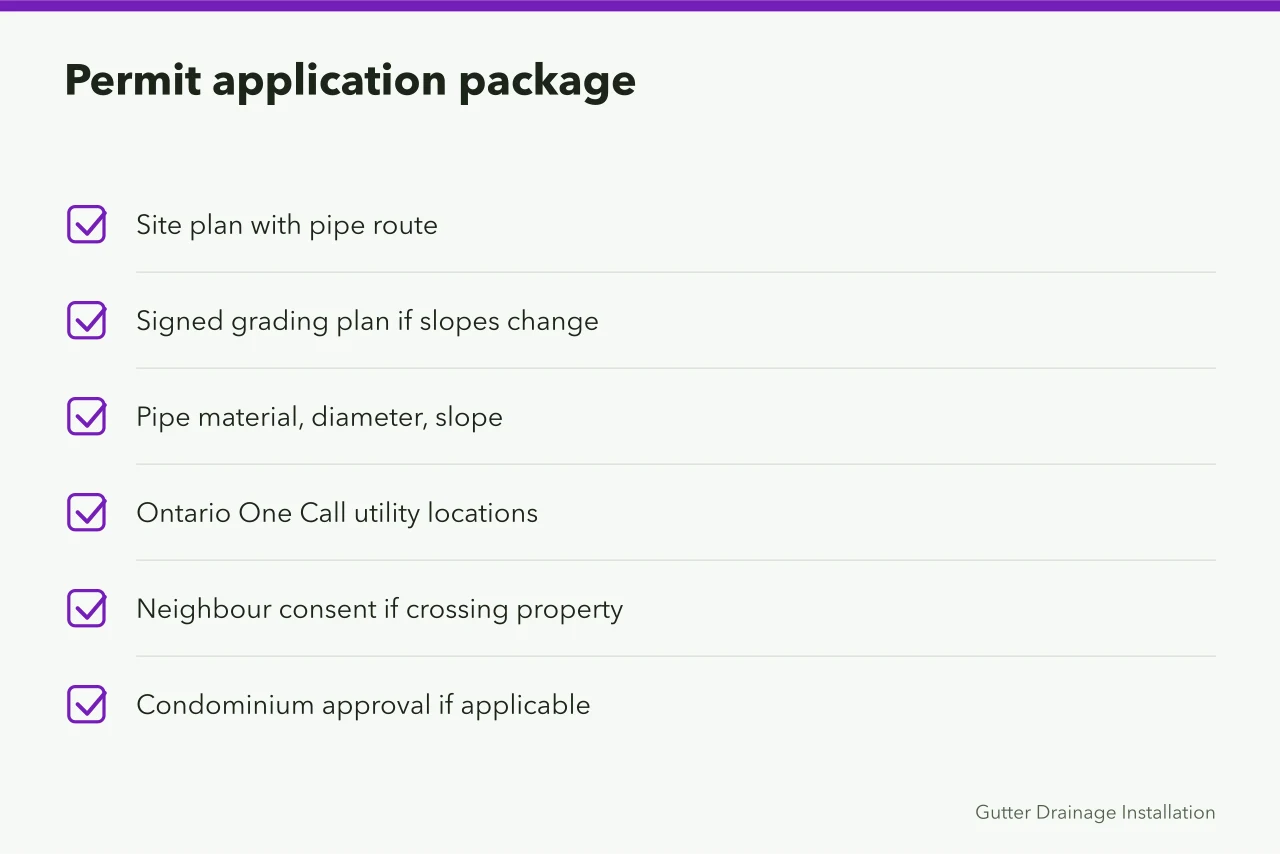
- Site plan showing house, downspouts, proposed pipe route and discharge point
- Grading plan signed by a qualified designer if you are changing slopes
- Pipe material, diameter and slope details
- Location of any underground utilities from Ontario One Call
- Written consent from an affected neighbor if drainage crosses a property line
- Condominium corporation approval if the unit is part of a condominium plan
Frost depth and pipe cover
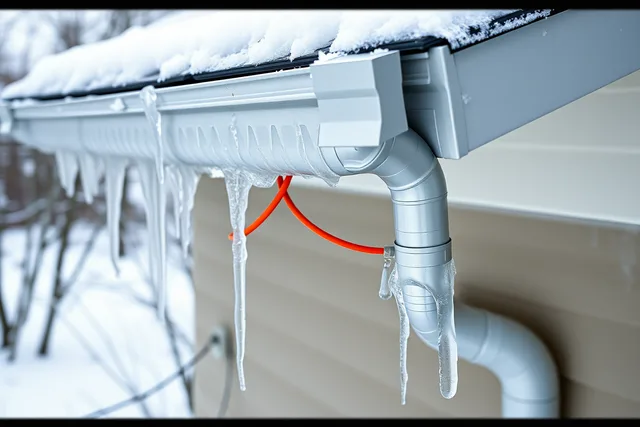
Underground gutter pipe must sit below the local frost line to avoid freezing. In southern Ontario, that means 1.2 m to 1.5 m of cover. Northern districts can require more.
The Ontario Building Code references local climatic data; the municipal building department sets your site's exact depth. The answer to What Size Gutter Drain Pipe also depends on roof area and frost-safe slope.
What underground gutter drainage costs in Ontario
Contractors in most Ontario markets quote buried drain work by the linear foot. A typical installed range is $25 to $60 per linear foot, covering trenching, pipe, fittings, gravel and surface restoration.
Depth drives the spread. A run that must sit 1.5 m down costs more to dig and backfill than a shallow one. Frost depth and yard access move the number more than pipe material does.
- Permit fee: typically $150 to $500 for a residential drainage or grading permit, higher for complex applications.
- Grading plan from a qualified designer: typically $500 to $2,000, and more when a professional engineer must stamp the drawing.
- Soakaway pit or dry well: typically $3,000 to $8,000 installed, depending on size, soil and machine access to the yard.
- Rain garden: typically $1,500 to $6,000, with plants, amended soil and excavation as the main variables.
- Downspout disconnection to a splash pad or buried extension: typically $150 to $500 per downspout.
- In-place repair of an existing pipe run: typically $500 to $1,500 for a short section.
- Utility locates from Ontario One Call: free, and required before you dig.
Toronto's Basement Flooding Protection Subsidy Program has covered up to $3,400 per property for backwater valves, sump pumps and related flood protection work, with the city paying part of the cost. Confirm current amounts and eligibility with Toronto Water before you budget.
How long approval takes
A simple residential permit in many Ontario cities is issued within 10 business days when drawings are complete. Complex cases with engineering review or a committee of adjustment take 4 to 6 weeks.
Toronto's storm sewer connection approval runs through Toronto Water and is separate from the building permit. Municipal stormwater fees apply in some cities; stormwater fees Canadian cities charge affect how quickly a property owner sees a payback from disconnection.
What happens if you skip it
If you connect a downspout to the Toronto storm sewer without approval, the city can issue a notice of violation and require disconnection at your own expense.
The Province of Ontario can issue an order under the Ontario Water Resources Act for an unauthorized discharge. A repeat violation can lead to a provincial offense prosecution. Water enters the municipal storm drain system without approval.
An illegal storm sewer connection is not a paperwork problem. It is an order to cut the pipe and restore the lot at the owner's cost.
Common questions
Do I need a permit for a soakaway pit in Toronto?
Most Toronto properties do not need a building permit for a simple soakaway pit if it meets the city's depth and setback rules. Check with Toronto Water because rules vary by ward.
Can I connect a new downspout to the existing storm sewer lateral?
In Toronto, no. The downspout disconnection bylaw prohibits new connections to the storm sewer. You must drain to a lawn, rain garden or soakaway.
How deep must underground gutter pipe be in Ontario?
It must be below the local frost line. In southern Ontario, that is commonly 1.2 m to 1.5 m; your municipality sets the exact number.
What does underground gutter drainage cost in Ontario?
Trenching, pipe and restoration typically run $25 to $60 per linear foot in most markets. Add $150 to $500 for a permit and $3,000 to $8,000 for a soakaway pit. Frost-depth runs sit at the top of the range.
What if my neighbor's land is lower and receives my runoff?
You need their written consent before you direct water onto their property. Without it, the municipality can treat the discharge as a drainage bylaw violation.