Guides
Gutter service market trends worth planning around in 2027
Gutter service trends for 2027: which shifts actually move demand, which ones are marketing noise, and the local indicators worth watching yourself.
What to take away
- No forecast numbers appear here. Demand in this trade is local, weather-driven and not predictable from a national statistic.
- The shifts that genuinely move work are slow: housing age, canopy maturity, stormwater rules and labor availability.
- Most published trends in this trade are product marketing with a date attached.
- Watch five local indicators yourself. They are free, observable and more useful than any forecast.
Why this page carries no forecast
Demand for gutter work in a given market is driven by what the weather does, how old the housing is, how mature the trees are, and what the municipality requires of stormwater. None of those is captured by a national growth percentage, and none of them moves at the same time everywhere.
A forecast figure would be borrowed from somewhere else and applied to your street. Worse, it would look authoritative enough to plan against.
What is defensible is separating the shifts that actually change the work from the ones that change the advertising, and then telling you what to watch locally.
Shifts that genuinely change the work
Housing age. Neighborhoods built in a wave reach the age where systems fail in a wave. That is the most reliable demand signal in this trade and it is visible from a car: uniform street, uniform age, uniform problem arriving.


Canopy maturity. Trees planted with a development take a decade or two to start filling troughs. When they do, an entire subdivision becomes recurring cleaning work.
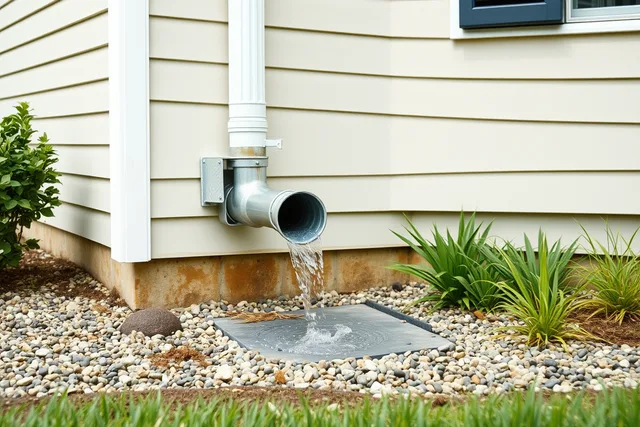
Stormwater regulation. Local rules set where and how roof water may be discharged, and they change. A tightening rule turns a simple downspout job into a designed discharge: more work, more valuable work.
It also invalidates standard scopes written before the change, so the checking method in the licensing and compliance guide must be re-run rather than done once.
Labor availability. The constraint on this trade is crews and workable days, not customers. When comparable physical trades pay more, your hiring gets harder and your capacity falls regardless of demand. The Bureau of Labor Statistics publishes occupational employment and wage estimates by area, which is the honest way to watch that rather than relying on impressions.
Insurance and risk expectations. Property managers, associations and increasingly homeowners ask for documentation that a small operator did not use to need. That raises the floor to compete and favors companies that already document their work.
Shifts that mostly change the advertising
| Claimed trend | What it usually is | What actually changes for you |
|---|---|---|
| A new guard technology | A product cycle | Nothing, unless the maintenance interval genuinely changes |
| Smart or connected gutter devices | An early product category | Very little at residential scale so far |
| Color and profile fashion | Coil inventory pressure | Which colors you carry, and how many coils sit idle |
| Aggregator and lead platforms | A change in who owns the customer | Your cost per job, and who the customer thinks they hired |
| Seasonal urgency campaigns | Marketing | Nothing, and they train customers to wait for discounts |
The fourth row deserves the most thought. When a platform sits between you and the homeowner, the relationship and repeat work belong to the platform, not you.
Repeat and referral carry a mature company in this trade. That is a strategic choice, not a marketing channel, and it belongs in the reasoning in the marketing and growth guide.
The first row is worth one honest sentence. Guards reduce large debris and do not end maintenance, and every generation of them is sold as though this time it does. Sell the change in interval, stated plainly, and you keep the customer through the first storm.
Five local indicators worth watching
- Age profile of the neighborhoods you serve, and which ones are crossing into failure territory.
- Canopy maturity in developments built ten to twenty years ago.
- Any change in municipal stormwater rules, checked with public works annually.
- What comparable physical trades are advertising for locally, which predicts your hiring difficulty.
- What arrives on home inspection reports in your market, because those generate deadline-driven work.
Indicator five is the one nobody watches and it is close to free. Ask two or three inspectors what they flag on gutters and drainage. Their reports produce urgent, well-qualified work with a closing date attached.
Indicator three has a second use. A rule change is a reason to contact past customers with something genuinely useful rather than a promotion, which is the kind of communication that gets forwarded to neighbors.
What to do with any of this
Trends are only actionable where they change a decision. Three decisions are worth revisiting each year.
Service mix. If canopy is maturing across your area, recurring maintenance is growing and should be sold harder. If a wave of housing is reaching failure age, replacement capacity is what to build.
Capacity. Growth here is limited by crews and by workable days, so if hiring is getting harder, that is the constraint to address before any demand-side effort. The approach is in the hiring and training guide.
Equipment. Coil colors, access gear for taller housing and whether to own forming capacity all follow from the work mix rather than leading it. The buying order is in the equipment checklist for new owners, and the scheduling consequences of owning a forming machine are in the equipment and setup guide.
One thing does not change with any trend. The work happens at the roof edge, and OSHA's guidance on fall protection in residential construction places responsibility for site-specific controls on the employer whatever the market is doing. A busy year is when that gets skipped.
If you want somebody to argue with your reading of your own market, free help exists: the Small Business Administration's guidance and counseling pages point at local advisers who will do exactly that at no charge.
Common questions
Is demand for this work growing?
Locally, sometimes, for the slow structural reasons above. Nationally, the question is close to meaningless, because the answer differs between two towns an hour apart.
Should I invest in a new guard product?
Only if it changes the maintenance interval enough to describe honestly to a customer. If the sales pitch is that it ends cleaning, treat that as a claim you will have to defend after the first storm.
Do lead platforms work?
They produce jobs and they cost margin and ownership of the customer. Decide deliberately whether you are buying volume you can otherwise not fill, and watch what happens to your repeat rate.
How often should I re-check stormwater rules?
Annually per market, and whenever you enter a new city. They are not announced to contractors and a scope written on an old rule will be wrong quietly.
What is the most durable advantage in this trade?
Being the company that looks at where the water actually goes. That has not changed and no product cycle affects it.