Guides
Gutter companies worth watching for 2027
Gutter companies cannot be ranked worldwide, so here are the named operators and the signals that show which ones are worth watching in 2027.
What to take away
- LeafFilter, Brothers Gutters, Ned Stevens, Gutter Guards America and Harry Helmet are the named North American operators worth watching in 2027, each for a different reason.
- Watch them for how they price, how they staff and where they expand, not for a quality ranking nobody can verify.
- The signals below are the ones a working contractor can read from the street: ladder use at the estimate, downspout discharge and sizing tables. Then hanger stock, cleanouts and fascia photos.
- Recurring maintenance revenue is the strongest predictor of which of these companies is still standing after a bad season.
The companies worth watching
A worldwide ranking of gutter contractors would need comparable callback rates, safety records and financials from thousands of private firms. That data does not exist. What does exist is a short list of operators whose moves are visible, whose models differ, and whose choices a gutter business owner can learn from.
LeafFilter Gutter Protection (part of Leaf Home, Hudson, Ohio) is the largest gutter protection brand in North America. It sells a micromesh guard installed on existing troughs, backed by a lifetime transferable warranty, through a direct-to-home sales force rather than a dealer network.
Watch it because it sets the price ceiling for guard work in most metros. Its sales model is the one most independent gutter companies compete against at the kitchen table.
Brothers Gutters (Cleveland, Ohio) runs a franchise model across the United States and Canada. Franchisees get training, supplier pricing and a territory.
Watch it because franchise expansion is how gutter work gets consolidated. The franchise disclosure documents show what a gutter territory actually earns, which is rare public information in this trade.
Ned Stevens Gutter Cleaning (Fairfield, New Jersey) is the largest pure-play gutter cleaning company in the US. It runs crews on fixed routes with recurring annual contracts.
Watch it because recurring revenue lives in cleaning rather than installation. This company built its whole model on that fact.
Gutter Guards America (national US installer) sells and installs guards through a network of local crews with a no-clog guarantee.
Watch it because its subcontractor model shows what happens to quality control when installation is outsourced. Its pricing is published, which is unusual in this trade.
Harry Helmet (Pennsylvania, operating since 1981) installs guards, gutter heating and roof heating across the northeastern US.
Watch it because it has survived four decades of bad seasons. Heat cable work is the part of this trade most contractors avoid.
None of these is a recommendation. Each is a company whose pricing, staffing and expansion you can observe and compare against your own operation.
Signals of capability
- They put a ladder up during the estimate rather than quoting from the driveway.
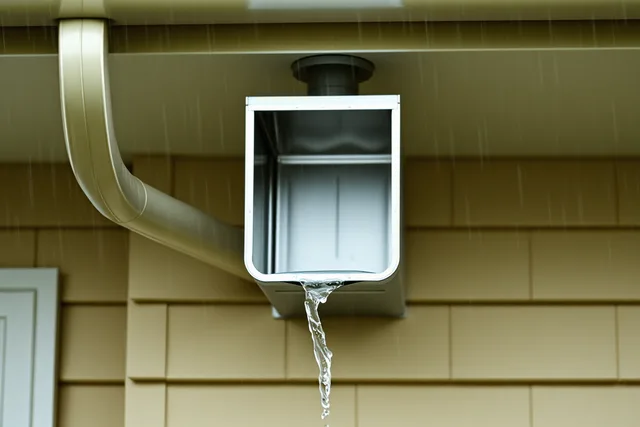
- Their quotes name the downspout count and where each one discharges.
- They can tell you what roof area a proposed system was sized for, and which rainfall intensity table they used.
- They ask about the roof covering and pitch, not just the length of the run.
- They carry more than one hanger type on the truck.
- They open a buried line cleanout rather than assuming it flows.
- They run water into a finished run before leaving.
- They photograph the fascia before touching it.
- They talk about the ground the water lands on, not only the trough.
- They say what guards will not do, before selling them.
Signal three separates operators from installers. Eavestrough and downspout sizing is set by the National Building Code and by local rainfall intensity. A company that resizes rather than reproducing the existing design is asking whether the original system ever worked.
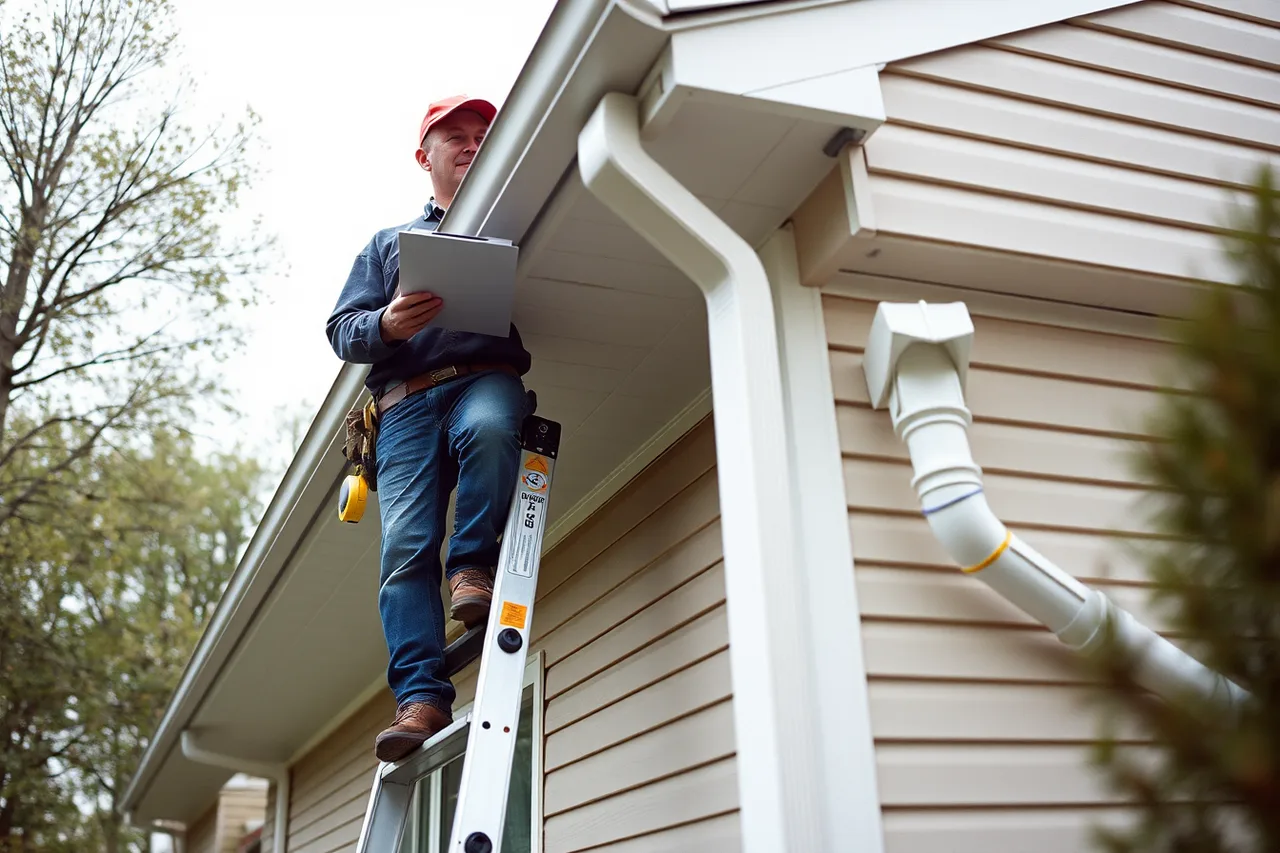
That is a different job, and it is the one that stops ice damming on Edmonton and Winnipeg roofs.
Signal ten matters because guards do not stop water backing up under a low-pitch roof edge. A company that admits this will not sell you the wrong product.
Signals of discipline
- Their crews move the ladder rather than reaching from it, visible from the street.
- They have a stated ceiling on the elevations they accept and will say what it is.
- They stop for weather, and tell customers why rather than inventing a reason.
- Their trucks are stocked so jobs finish in one visit.
- They arrive in the window they gave.
- Their crews wear and use access gear when nobody is watching.
- They can produce a certificate of insurance without a delay.
- They know which credential they hold and which body issued it.
Signals eleven and sixteen are free to observe and tell you more than any brochure. Drive past a job.
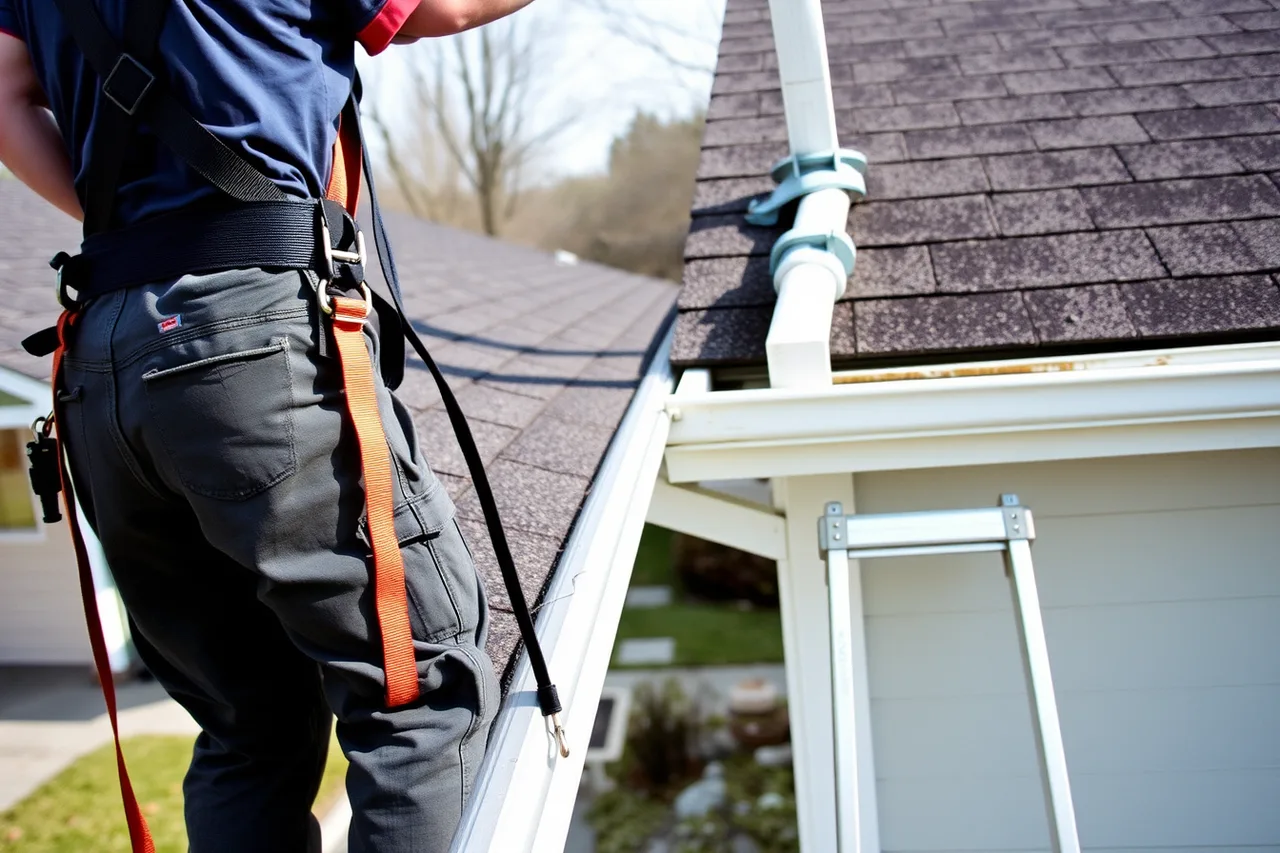
Behavior when nobody is checking is the whole of what a safety program produces, and the employer responsibility behind it is set out in OSHA's guidance on fall protection in residential construction.
Fall protection requirements vary by jurisdiction; the authority that sets them where you work is the one to follow. The training is certified, not improvised.
Signal eighteen matters because credentials vary. In Ontario the body is WSIB, in British Columbia it is WorkSafeBC, in Quebec it is CNESST. A company vague about its own is either careless or overstating.
How to establish what applies in a given market is in the licensing and compliance guide.
Signal fourteen is a stocking problem more than a discipline problem.
A truck loaded to a fixed list, with hangers, sealant, downspout elbows and a spare coil, finishes in one visit. What belongs on that list is in the equipment checklist for new owners.
Signals of commercial health
- They quote scope rather than only price, and their exclusions are written down.
- Their advertising claims match what their quotes actually deliver.
- They carry recurring maintenance work, not only installations.
- Their reviews arrive steadily rather than in bursts, and negatives are answered calmly.
- They are willing to decline a job that is wrong for them.
- They pay at or above what comparable physical trades pay locally.
- They have been operating through more than one bad season.
Signal twenty-one is the strongest single indicator of durability in this trade. A company with only installation revenue has nothing in the quiet months, which is when crews leave and cash runs out.
Ned Stevens built its whole business on that observation. The reasoning is in the expansion and market guide.
Signal twenty-four is checkable. The Bureau of Labor Statistics publishes occupational employment and wage estimates by area, so you can see what the local market pays comparable physical work and judge whether a company is competing for people or hoping.
Signal twenty-five is the quiet one. Anybody can look good in a year with a wet autumn. Harry Helmet has been at it since 1981.
Using the signals three ways
| Purpose | Which signals matter most | What to do with the answer |
|---|---|---|
| Reading a competitor | 1 to 10, plus 19 and 20 | Compete on the ones they skip, not on price |
| Checking a partner or subcontractor | 11 to 18, plus 17 specifically | Do not subcontract to anyone failing the discipline group |
| Judging your own company | All of them, honestly | Fix the discipline group first |
| Benchmarking a named operator (LeafFilter, Ned Stevens, Harry Helmet) | 19 to 25 | Compare what each publishes on pricing, warranty and staffing with your own quote |
The competitor row is worth expanding. Most gutter companies in most markets skip signals one, six, seven and nine.
A company that does all four is visibly different at the estimate, which is where this trade is actually won, as set out in the marketing and growth guide.
Worked example: reading one company in an afternoon
Say you want to judge a local operator against the five named above. Spend one afternoon on it.
Call for an estimate and watch whether a ladder comes off the truck. Ask what roof area the proposed system is sized for and which rainfall table was used. Ask how many downspouts, and where each discharges. Ask what the company will not do.
Then drive past a job and watch the crew for ten minutes. Do they move the ladder or reach from it? Are they wearing access gear?
Finally, check the paperwork. Certificate of insurance, credential body, and whether the company carries maintenance contracts or only installs. Four hours of looking tells you more than any directory.
If you want to judge the hardware itself rather than the crew, gutter service equipment reviewed: what holds up and what does not covers the tools that survive a season of this work.
Common questions
Are these five companies the best in the trade?
No. They are the ones whose pricing, staffing and expansion are publicly visible, which makes them worth watching. Best is a local question, decided by the signals above in your own market.
How do I find the good operators in my market?
Ask suppliers who they respect, ask roofers who they refer to, and drive past jobs. All three are more reliable than any directory, and none of them costs anything.
For owners starting out, the Small Business Administration's guidance and counseling pages point at local advisers who will read your numbers and argue with your assumptions.
Should I copy the biggest local company?
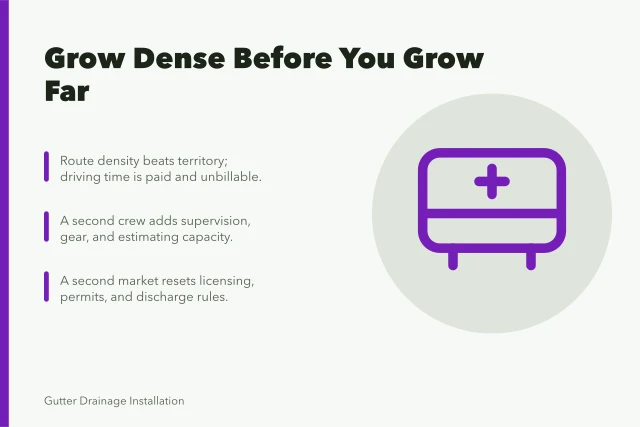
Copy the specific behaviors that survive the signals above. Copying their scale before you have their density is how growth goes wrong. The named companies above grew into their models over years.
What if a company fails several signals but is much cheaper?
Then you know what the difference in price is buying. That is exactly what the list is for.