Guides
Eavestrough Drainage in Canadian Winters: A Homeowner's Guide
Eavestrough drainage in Canadian winters hits a hard limit when meltwater refreezes. This guide shows which winter workarounds survive and when to stop them.
What to take away
- Winter eavestrough drainage fails when meltwater refreezes inside the channel or at the downspout outlet, not when rain volume is high.
- The measurable limit for most unheated eavestroughs is five consecutive days with a daily mean temperature below -10°C.
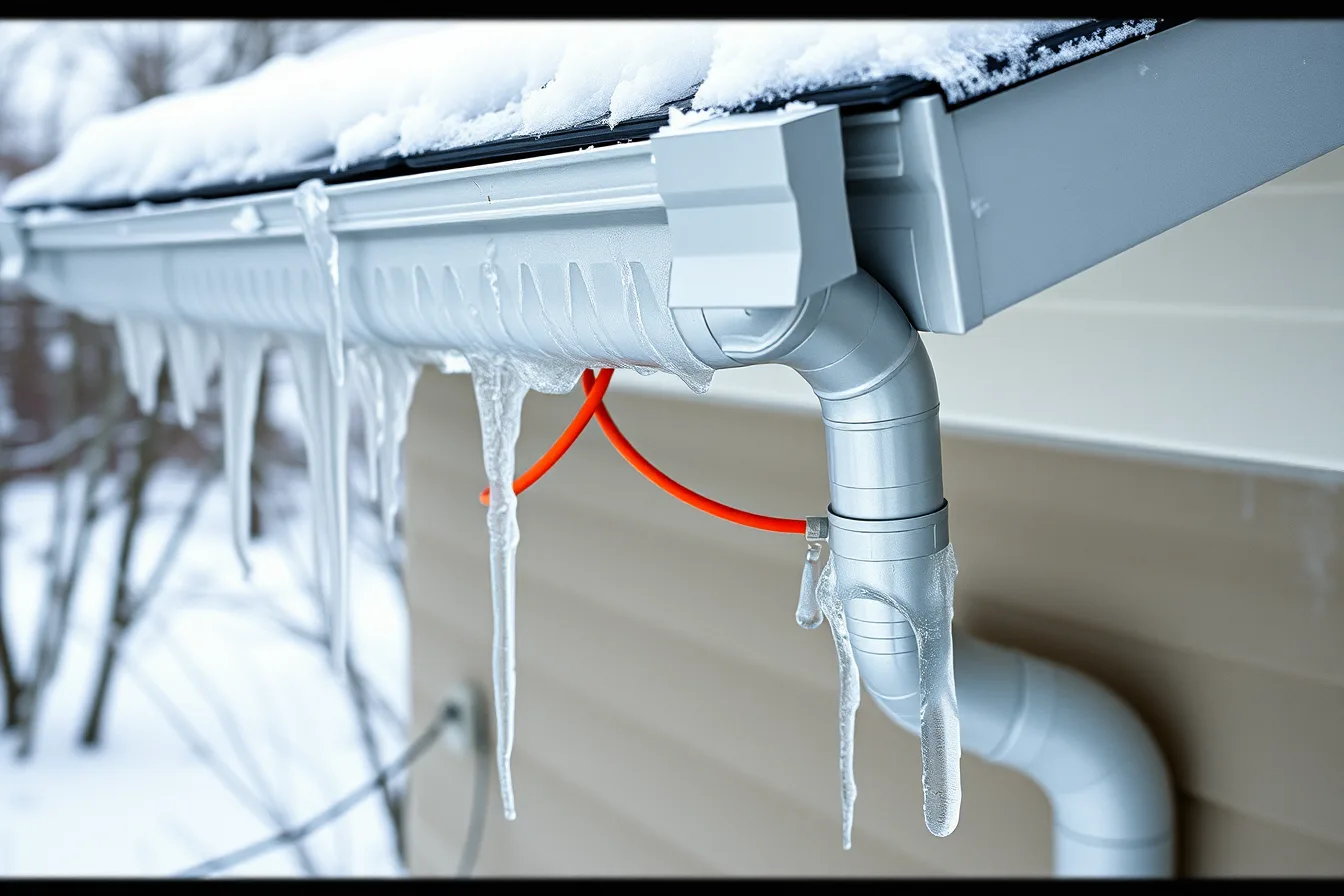
- Heated gutter cables help only where they cover the lower roof edge and the eavestrough outlet, and they must be rated for Canadian cold.
- Direct snow melt away from the foundation before it refreezes or it will lift soil and crack footings.
- Stop the do-it-yourself workaround when roof snow depth passes 30 cm or ice dams exceed 5 cm, whichever comes first.
In Winnipeg, the ground under a downspout can stay frozen for four months, so meltwater that reaches the surface freezes into a sheet instead of soaking away. In Canadian usage, the word eavestrough refers to the same roof edge channel as a rain gutter, and that term appears in building codes and contractor quotes.
The winter limit in measurable terms
The constraint is cold, not water volume. A standard aluminum eavestrough will carry meltwater until the daily mean temperature stays below -10°C for five days. After that, the channel, the elbows and the downspout begin to ice from the outside in. This threshold is a rule of thumb used by Canadian eavestrough contractors because it matches the depth of frost penetration in many central Canadian soils. The table below shows the measurements that matter.
| Measurement | Winter threshold | What it rules out |
|---|
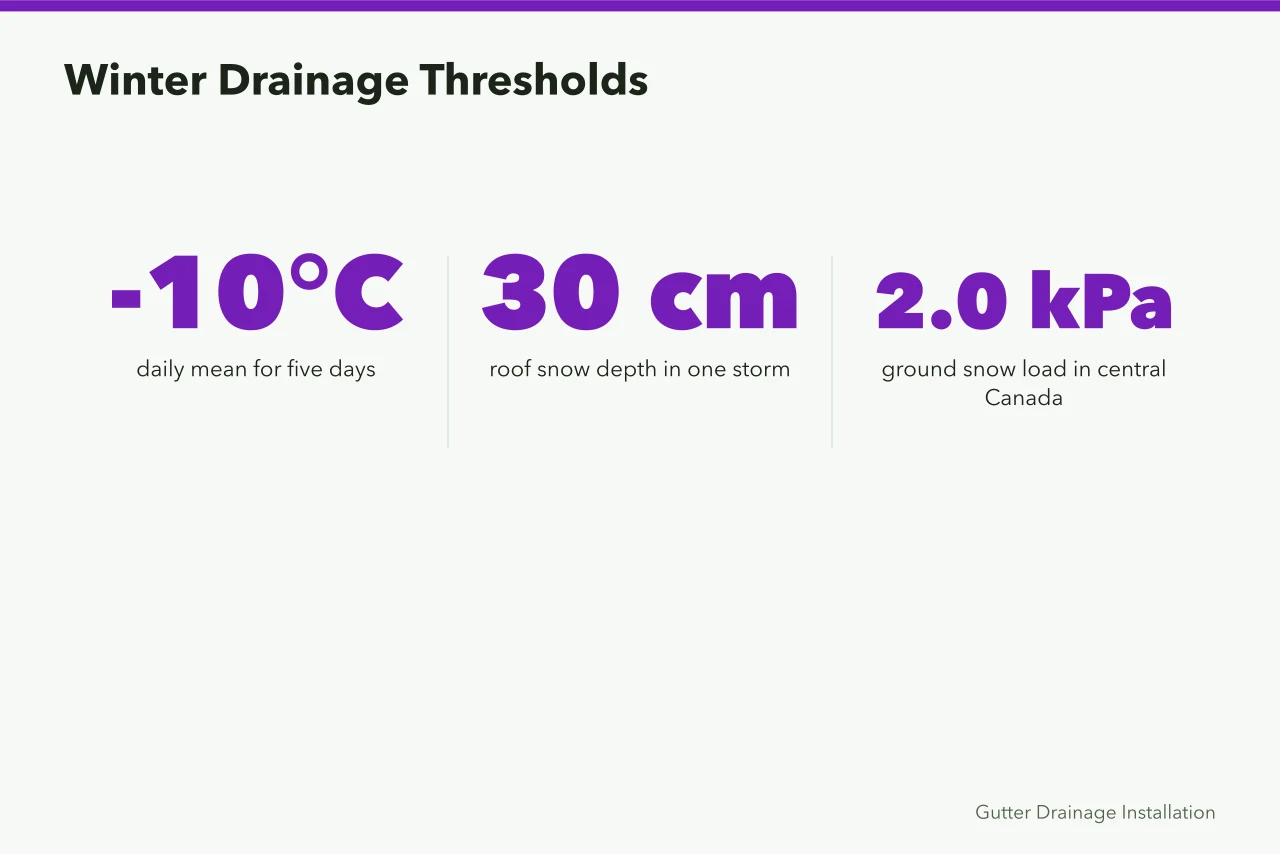
The snow load figures are illustrative ranges, not legal limits. Provincial building officials publish design values for each city. In Ontario, for example, the Ontario Building Code lists ground snow loads by municipality.
What the constraint removes
In a Canadian winter, the constraint removes the option of a passive, unheated eavestrough system that drains by gravity all season. It also rules out the common downspout discharge onto the ground surface near the foundation. When meltwater freezes there, it can create an ice dam at grade that pushes water back under the shingles. The Ontario Water Resources Act governs changes to drainage that may affect watercourses, so a winter redirection of meltwater still needs to follow the rules.
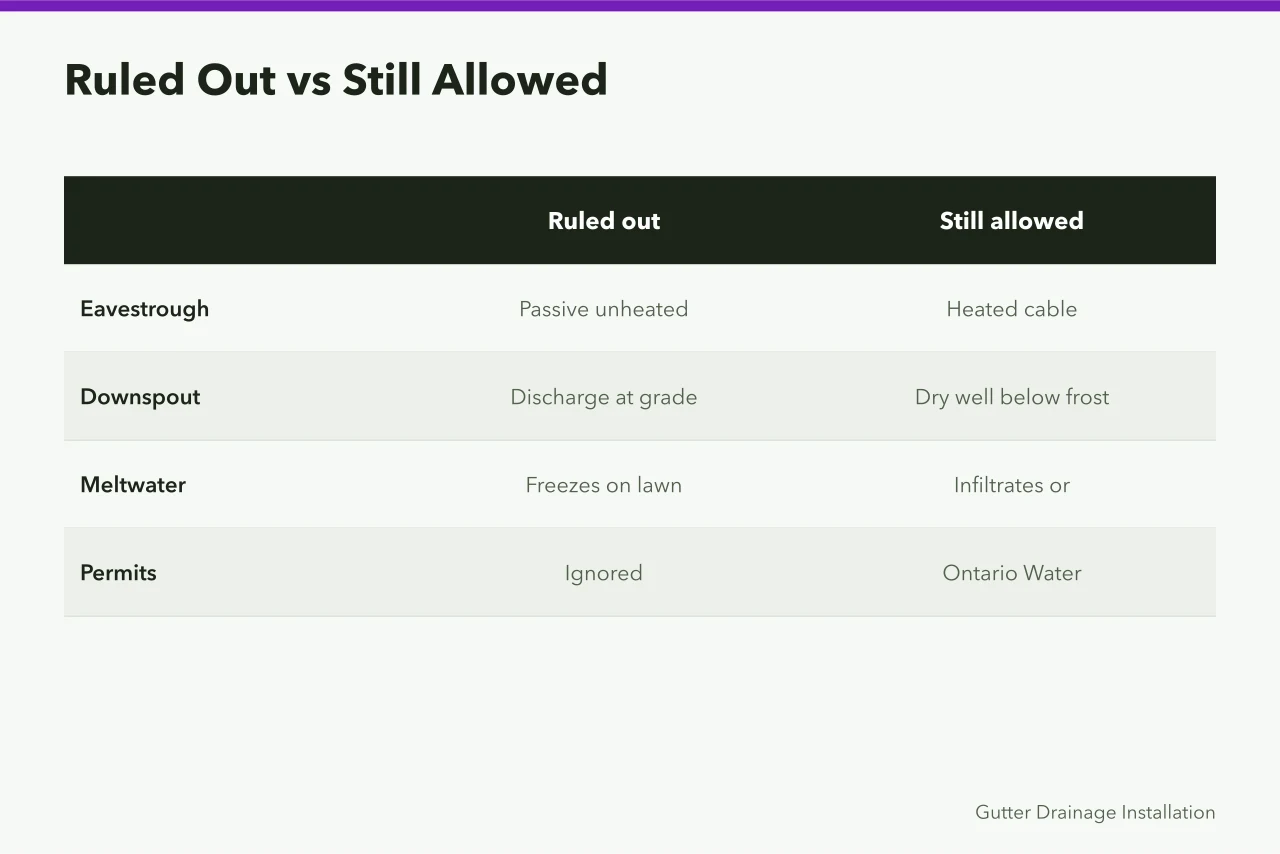
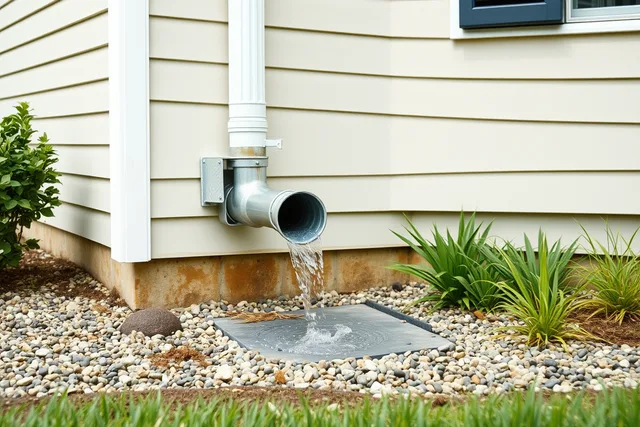
A downspout that ends at grade and discharges onto a frozen lawn is also ruled out because the water will not infiltrate.
What still works
- Install heat cable along the eavestrough and downspout before the first hard freeze.
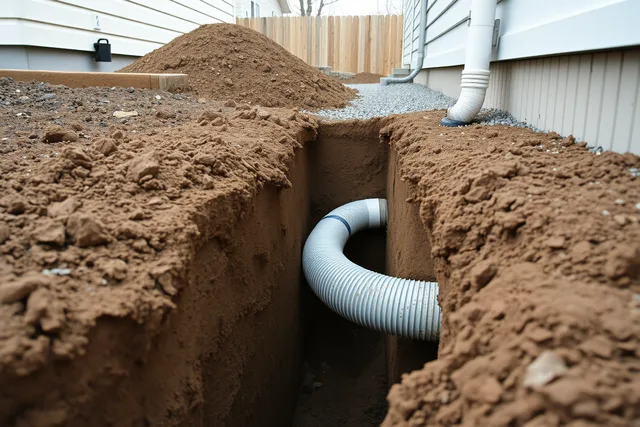
- Direct downspouts to a dry well or drainage bed below the local frost line.
- Keep the lower roof edge clear of snow with a roof rake used from the ground.
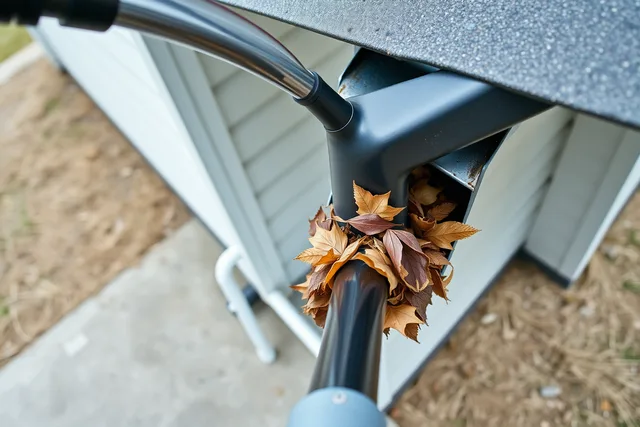
- Check the eavestrough outlet after every thaw to remove slush dams.
These steps keep a channel open without heating the entire roof. A close look at how this works in prairie winters appears in Ice damming on Edmonton and Winnipeg.
The compromises worth making
One compromise is to accept that unheated eavestroughs will freeze but still keep the downspout open with a short length of heat cable at the outlet. A second compromise is to run heated gutter cables only along the lower roof edge and the first metre of downspout. This targets the freeze-thaw zone without heating the entire run.
Heated gutter cables Canada homeowners buy at hardware stores are usually self-regulating and rated to -40°C. Another compromise is to wait until a thaw day to clear eavestroughs, rather than trying to chip ice when it is -20°C. These steps keep the system working for most of the winter without a full heated roof.
The compromises that are not worth it
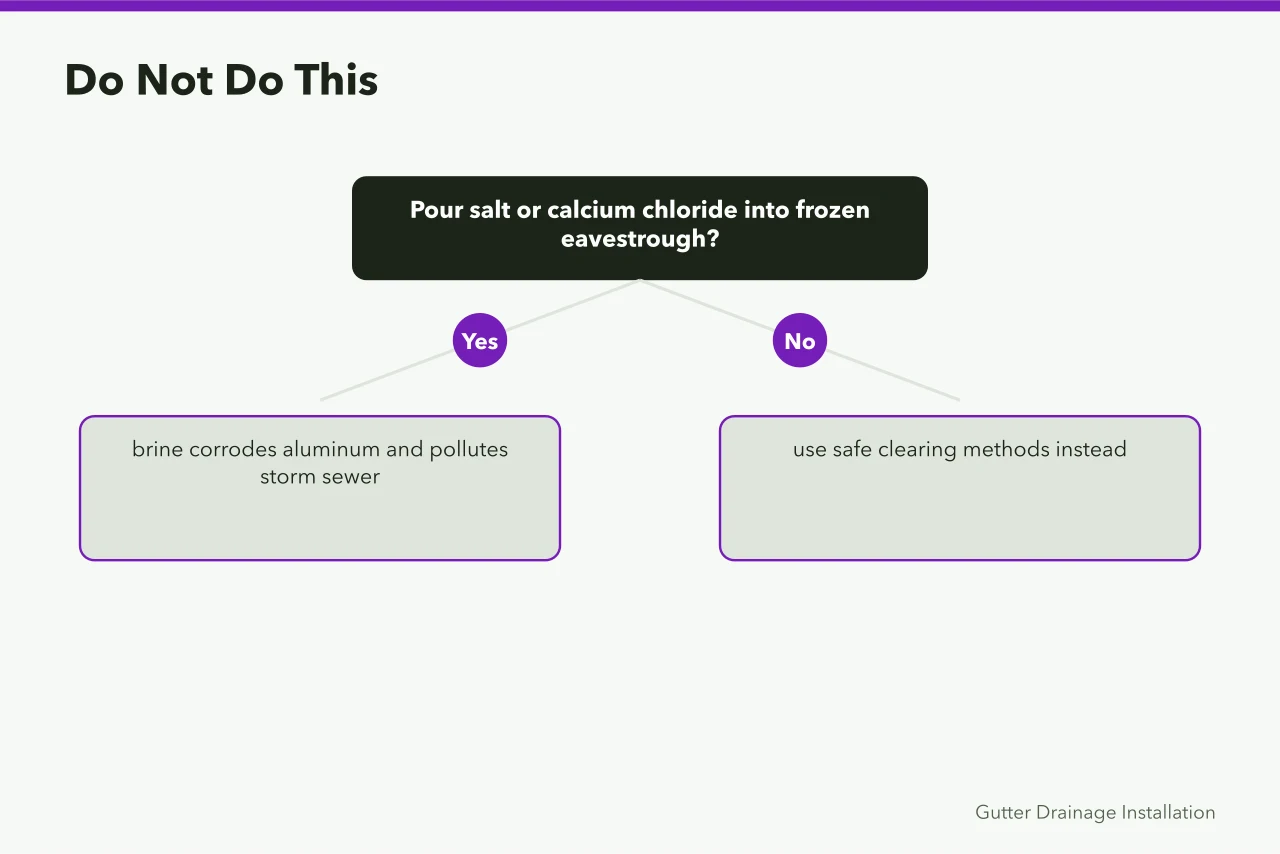
Do not pour salt or calcium chloride into a frozen eavestrough. The brine corrodes aluminum and runs onto plants and into the storm sewer. Do not climb a ladder to hammer ice off the eavestrough. Falls from ladders are a leading cause of winter home injuries, and the surface under the ladder is often ice. If you must clear ice, use the methods in Clean Gutters Safely Without a Ladder.
When to stop and do it properly
Stop the workaround when any of these thresholds is reached: roof snow depth above 30 cm, an ice dam thicker than 5 cm, or water stains appearing on the ceiling below the eavestrough. At that point the eavestrough is no longer draining; it is holding water against the roof deck.
Downspout discharge that freezes against the foundation is one of the Gutter Drainage Problems that leads to structural damage.
A licensed roofing contractor in a cold-climate province will measure the eavestrough slope and check the outlet for a frozen blockage before adding heat cable. They will also look for missing insulation at the roof edge, which feeds the freeze-thaw cycle.
- Remove snow from the lower roof edge using a roof rake from the ground, never from a ladder.
- If the ice dam persists, call a licensed roofing contractor with winter experience in your province.
- Have the contractor inspect the eavestrough slope, downspout size, and outlet for a frozen blockage.
- Redirect the downspout discharge to a frost-protected drainage bed or dry well, which may require a permit under provincial law.
If you need to direct meltwater below the frost line, compare the rules in Underground Gutter Drainage Installation.
Common questions
Does heated gutter cable work when it is -30°C? Self-regulating cables produce heat down to about -40°C, but the eavestrough may still freeze where the cable is not touching the metal. Coverage and contact matter more than the cable's temperature rating.
Can I just disconnect the downspout in winter? Disconnection removes a frozen downspout blockage, but the discharge must not pool on frozen ground next to the foundation. It needs a frost-protected path or it will refreeze at grade.
When should I call a roofing contractor for ice damming? Call when an ice dam is thicker than 5 cm, water is backing up under shingles, or you see stains on the ceiling. At that stage the eavestrough alone cannot fix the problem.