Guides
Downspout disconnection rules in Toronto, Vancouver and Montreal compared
Toronto, Vancouver and Montreal each police downspout disconnection differently, so the permit, the paperwork and the follow-up work change with the city.
What to take away
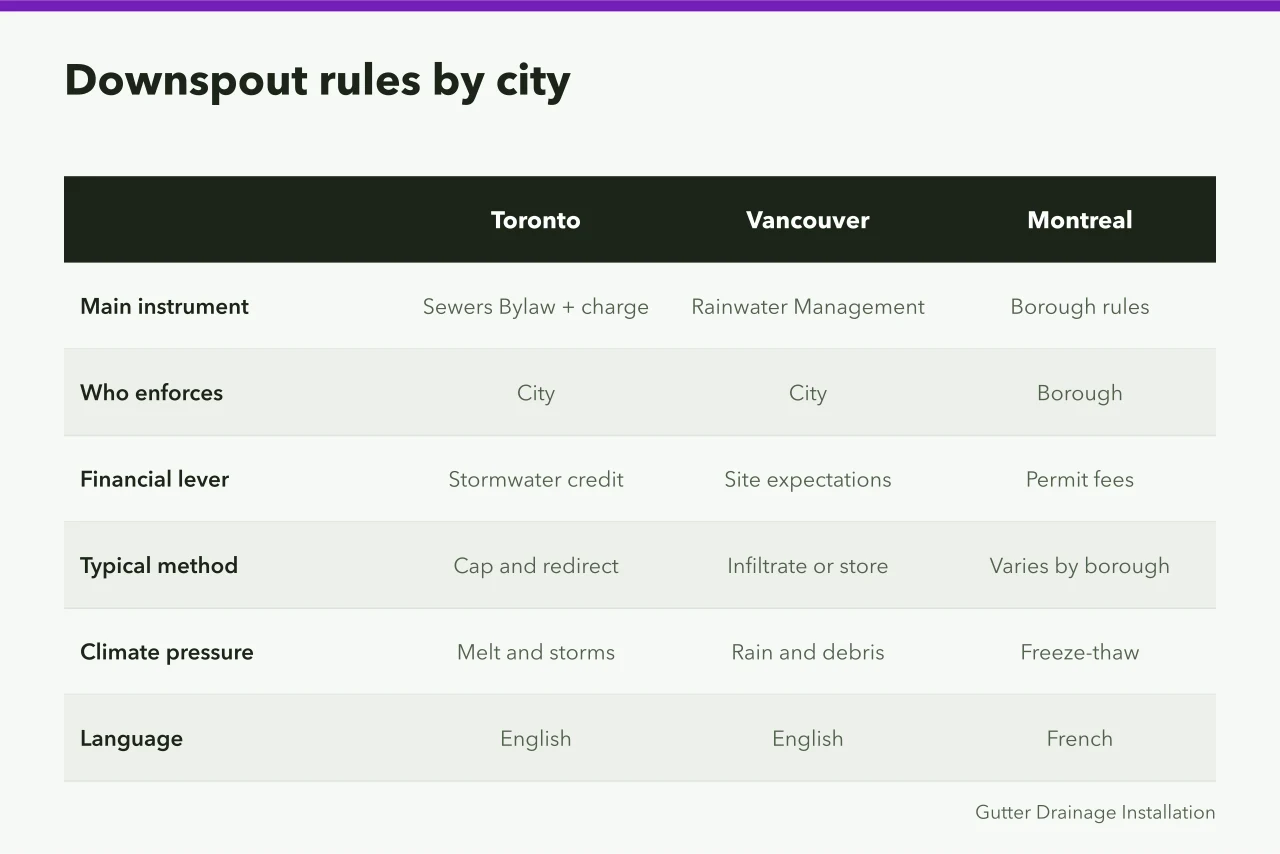
- Toronto enforces disconnection through its Sewers Bylaw and a stormwater charge billed on hard surface area, with a credit programme for owners who disconnect.
- Vancouver folds disconnection into Rainwater Management requirements, pushing roof water into infiltration, storage or controlled release on site.
- Montreal has no citywide rule. Each borough sets its own permit and method, so a Plateau job and a Verdun job are not the same job.
- Disconnection converts a one-off repair into recurring maintenance, because every endpoint at grade, in a garden or in a tank can clog or freeze.
- Quote disconnection by city, not by pipe length. Permit effort, inspection risk and follow-up visits vary more than the downspout does.
Why roof water is a regulated discharge
A connected downspout drops clean roof water into the sanitary sewer. In a storm that clean water fills the pipe meant for sewage, and basements flood. Cities regulate the connection because the flood damage lands on the municipality, not the homeowner.
Ontario sets the frame that Toronto works inside. The province's drainage and water management framework gives municipalities authority over connections and discharges, which is why a downspout is not a purely private pipe.
British Columbia runs the same logic through the Environmental Management Act. A Vancouver contractor is choosing a discharge point, and the discharge point is regulated.
At the building level, storm drainage and downspout connection come from plumbing code, including the National Plumbing Code. Sizing, attachment and stormwater connection are code questions. Confirm them with a licensed engineer or your local building official, not with a supplier's chart.
The rules create steady work. A disconnection notice, a stormwater charge or a flood claim all end with someone calling a contractor. That demand shows up in the markets for a gutter service, where regulated cities reward crews who know the local bylaw.
Toronto: Sewers Bylaw, stormwater charge, credit
Toronto's Sewers Bylaw controls what may enter the city's sewers and prohibits clean roof water in the sanitary system. Enforcement is complaint-driven and inspection-driven, so not every house gets a letter.
The stormwater charge is the money side. It appears on many utility bills and is calculated from hard surface area on the lot, so a big roof and driveway cost more than a small one. Disconnecting can reduce it through the city's credit programme.
A Toronto disconnection job usually means confirming the existing connection, capping or redirecting the downspout, and documenting the work for a credit application. Older housing stock and mature tree canopy mean downspouts are often undersized, broken or buried. Disconnection turns into a repair more often than not.
Permitting for stormwater and drainage work sits under provincial regulation as well as municipal rules. The wrong permit slows the job and eats the margin. Check which permit applies with the city before you schedule the crew.
Toronto's basement flooding history is why homeowners take a notice seriously. A contractor who can explain the bylaw, the charge and the credit in plain terms wins the job over one who quotes a cleaning price and stops talking.
Vancouver: Rainwater Management on site
Vancouver handles the same problem through Rainwater Management requirements rather than a single disconnection bylaw. The city wants rainwater managed on site, by infiltration, storage or controlled release. Disconnection is one tool inside that approach.
On a single-family lot, that usually means sending roof water to a landscaped area, a rain garden or a tank. On larger sites the city may ask for a rainwater management plan showing how runoff moves across the property. Whether your site needs one is a question for the city and, where structure is involved, a licensed engineer.
The coastal climate changes the maintenance pattern. Moss, needle debris and rain year-round mean gutters and drainage lines clog continuously, not in two seasonal bursts. A blocked infiltration point backs water toward the foundation.
The Environmental Management Act governs discharges to the environment, so roof water cannot simply be dumped onto a neighbour's lot or into a storm line without checking what is allowed.
Vancouver rewards a maintenance contract. Disconnect, then return two or three times a year to clear the system. That recurring revenue is part of the equipment and service mix worth planning around, because the climate keeps the work coming back.
Montreal: borough by borough
Montreal has no single citywide disconnection rule. Each borough sets its own requirements, so the permit and the permitted method can change when a job crosses a street. Check the local rule before you quote, not after.
Older boroughs with flat roofs, exterior staircases and dense rear courtyards are the hard cases. A flat roof drains through internal leaders or scuppers, and the downspout may be shared with a neighbour or run through a party wall. That is a design problem, not a five-minute cut.
Language matters. Borough documents, permits and notices arrive in French, and homeowners expect service in French. A contractor who cannot read the borough rule or explain the work in French will misread requirements and lose jobs.
Language obligations for businesses in Quebec are set by the Charter of the French Language, administered by the Office quebecois de la langue francaise.
Confirm your own obligations with a lawyer or the OQLF.
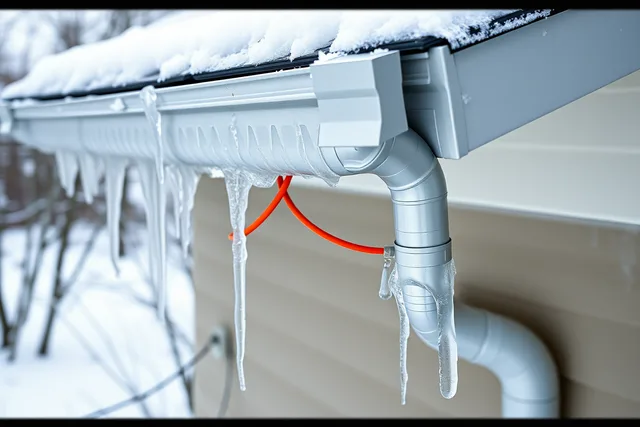
Winter adds a constraint the other two cities do not face the same way. A downspout releasing water at grade in January builds an ice sheet on a walkway or a neighbour's property. That is a liability question as much as a drainage one, so extensions must discharge where freezing water causes no harm.
Because the rules are fragmented, Montreal is a city to enter one or two boroughs at a time. The expansion guide covers how to add territory without spreading a crew too thin.
The three cities side by side
Worked example: one house, three jobs
Take a 1920s detached house with a connected rear downspout. The pipework is nearly identical in all three cities. The job around it is not.
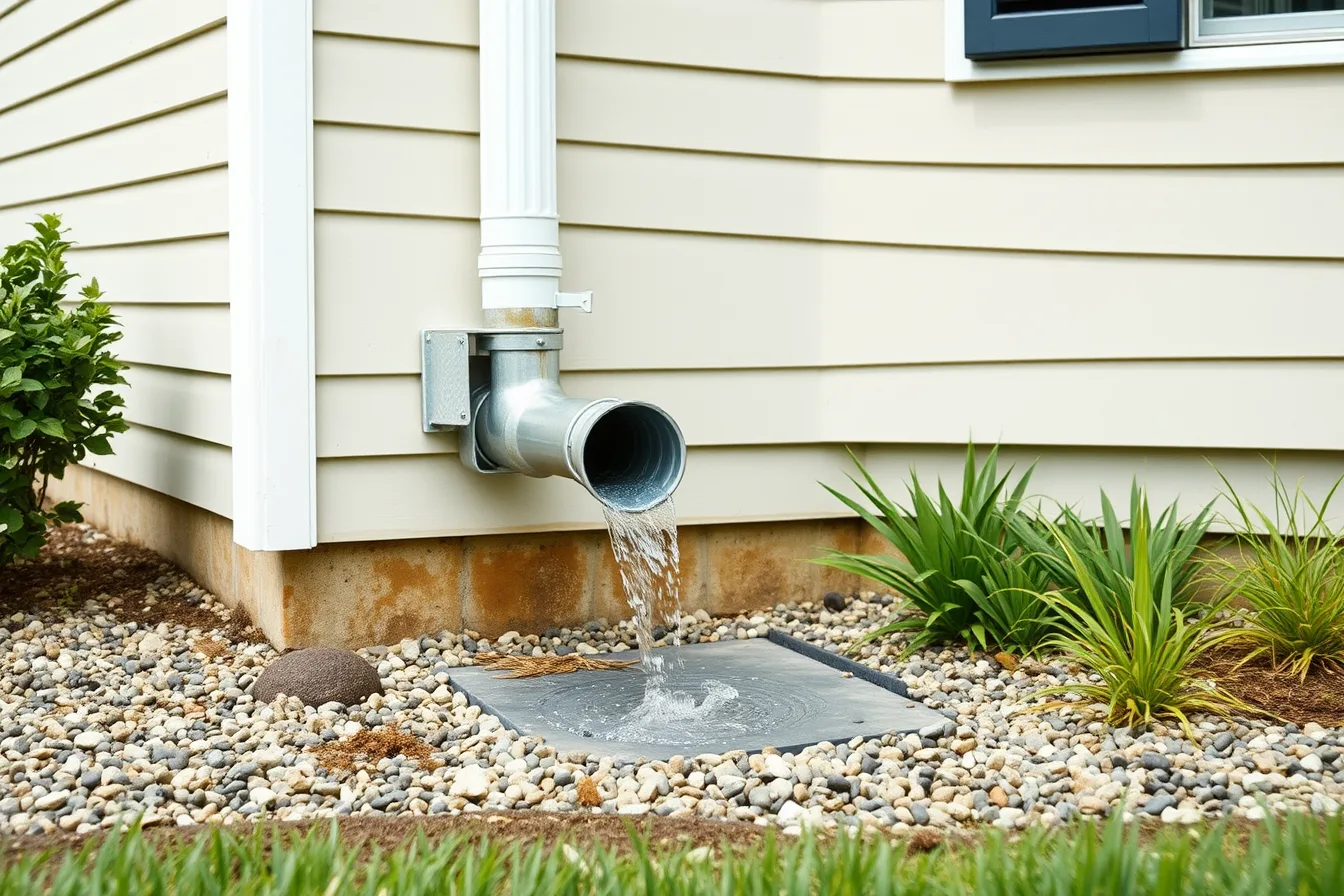
- Toronto: confirm the sanitary connection, cap it, extend the downspout to a splash pad and rain barrel, photograph everything, and help the owner apply for the stormwater credit.
- Vancouver: route the downspout to a rain garden sized for the roof area, confirm overflow has a safe path, and set a twice-yearly clearing visit.
- Montreal: read the borough rule first, establish whether the downspout is shared, pull the permit if required, and discharge where winter ice will not reach a walkway.
Permits, inspection risk and follow-up service separate a profitable disconnection from a callback. The pipe is the cheap part.
What disconnection does to service demand
Disconnection moves work from a one-off repair into a maintenance relationship. A connected downspout can be ignored for years. A disconnected one ends at grade, in a garden or in a tank, and every one of those endpoints can clog, freeze or erode.
Expect more calls for downspout extensions, splash pads, rain barrels, buried drainage repair and regrading alongside ordinary cleaning. Each is a separate line item with its own material cost.
Do not quote disconnection at a cleaning rate. It carries a site assessment, sometimes a permit, and documentation for a credit or an inspection. The pricing and profit guide sets out how to build those costs into a number. Crews who price the job by the hour and forget permit time and travel between boroughs watch the margin disappear.
There is a compliance risk too. Reconnecting a downspout after a city has required disconnection puts the penalty on the homeowner and the reputational damage on the contractor. Written scope and dated photographs protect both sides.
Across all three cities the direction is the same. Cities want roof water out of the sewer and will charge for it. Contractors who learn the local rule, document the work and sell the follow-up visit hold onto one of the steadier revenue lines in Canadian gutter drainage.
Common questions
Can I disconnect my own downspout in Toronto?
Often yes, if the connection is capped properly and water is redirected safely. The stormwater credit usually requires documentation, so photograph the work. Confirm the requirements with the city before you start.
Does Vancouver require a rainwater management plan for a single house?
Not always. Smaller lots are usually handled through on-site infiltration or storage. Larger or more complex sites may need a plan showing how runoff is managed across the property. Ask the city whether your site falls into the second group.
Why do Montreal rules differ by borough?
Boroughs hold local powers over permits and nuisances, so each sets its own disconnection requirements. A method accepted in one borough may be refused in the next. Check before quoting, and keep the answer in writing.
Does disconnection lower the Toronto stormwater charge?
A disconnection credit can reduce the charge, but eligibility and the amount depend on the property and the current programme rules. Apply with photographs and a description of the work.