Guides
Working in Quebec as a gutter contractor under Bill 101 and CNESST
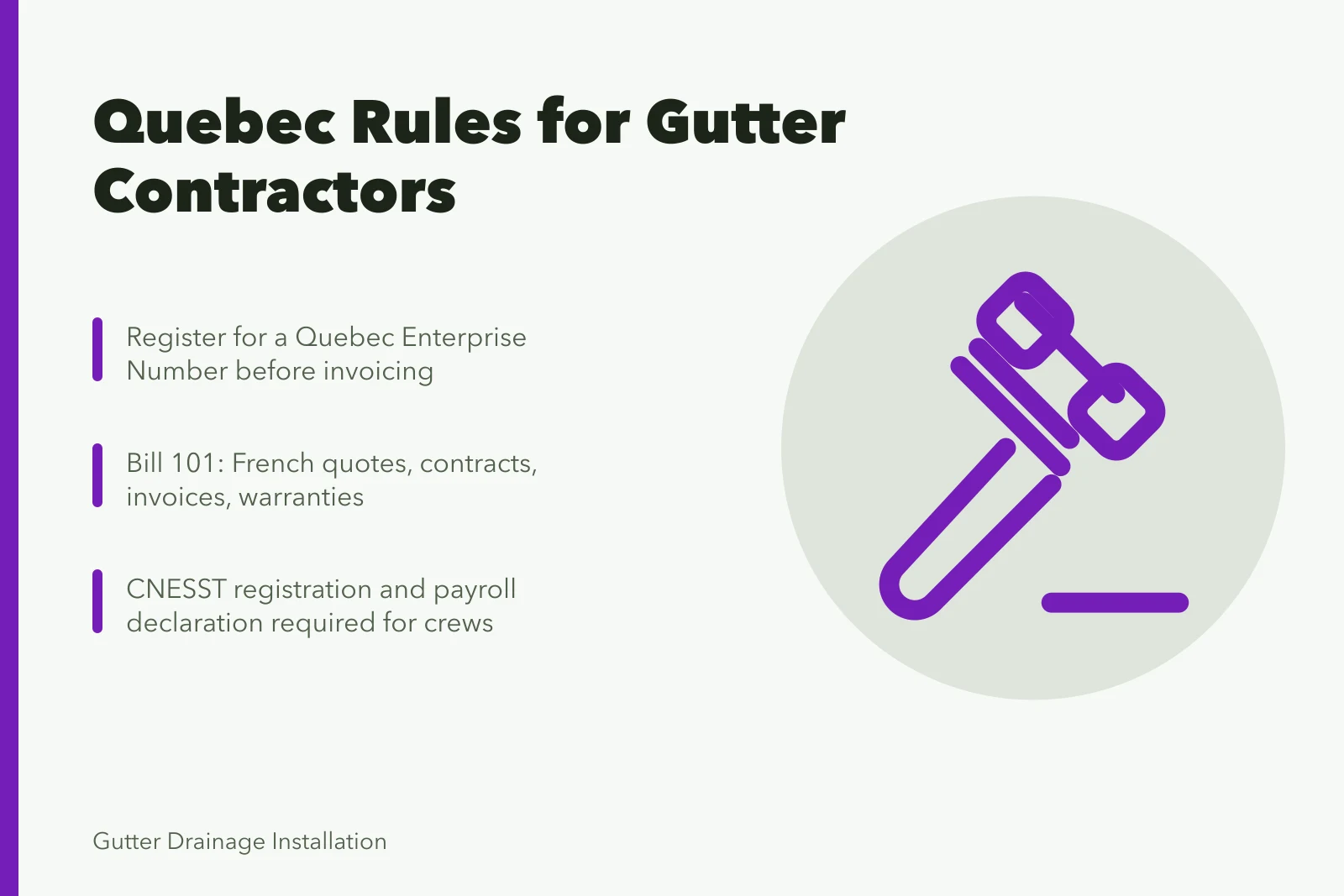
Quebec gutter contractors must follow Bill 101 French-language duties, CNESST safety rules, and NEQ registration requirements before issuing any first invoice.
What to take away
- Any business carrying on activity in Quebec needs a Quebec Enterprise Number (NEQ) from the Registraire des entreprises, and the number belongs on your quotes and invoices.
- Bill 101 makes French the normal language of commerce: contracts, invoices, advertising and phone service must be available in French, and French must be markedly predominant where both languages appear.
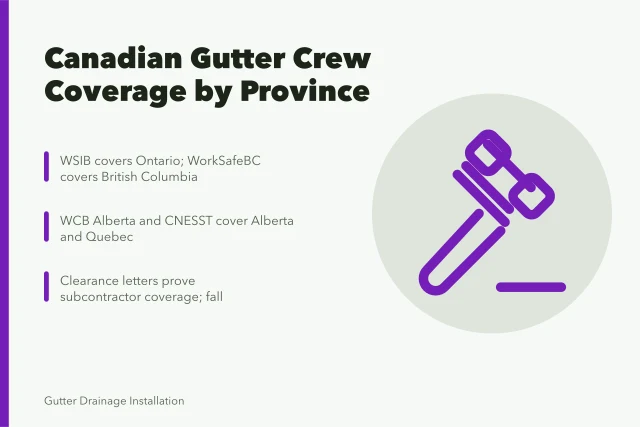
- CNESST is Quebec's workplace safety and compensation board, separate from the WSIB and WorkSafeBC. Employers register, declare payroll, and pay a rate set by classification.
- Fall protection requirements, ladder rules and prevention program thresholds are set by Quebec regulation. Confirm the current text with CNESST and put workers through certified training.
- Quebec roofs are steeper, metal is common, and ice damming drives winter callbacks. Hanger spacing, snow guards and sealant choice follow from that, not from a national template.
- Payroll runs through Revenu Quebec for provincial income tax, alongside federal deductions and CNESST declarations.
What changes when you cross into Quebec
Quebec runs its own enterprise register, its own workplace safety board, and its own language law. A gutter contractor from Alberta or New Brunswick cannot load the truck and start quoting in Montreal.
Registration comes first. Any business carrying on activity in Quebec registers with the Registraire des entreprises and obtains an NEQ. That covers a sole proprietor, a partnership, and an out-of-province corporation.
The work itself is different too. Steep sloped metal roofs, heavy snow loads, and freeze-thaw cycles that work hangers loose. Eavestrough sizing and storm connections follow the National Building Code and the Quebec construction code, and a licensed engineer or building official has the final word on any specific installation.
Then the language. Bill 101, the Charter of the French Language, reaches commercial activity. An English-only phone line is a complaint waiting to happen.
This guide covers registration, the language obligations, CNESST duties, and the field practices that separate a Quebec crew from one working in Ontario. If you are still sorting out your home province, start with what a gutter service business needs to operate legally before you cross borders.
Bill 101: what a gutter customer sees
Bill 101 is the common name for the Charter of the French Language. It makes French the normal language of commerce in Quebec, and it reaches every document a customer sees.
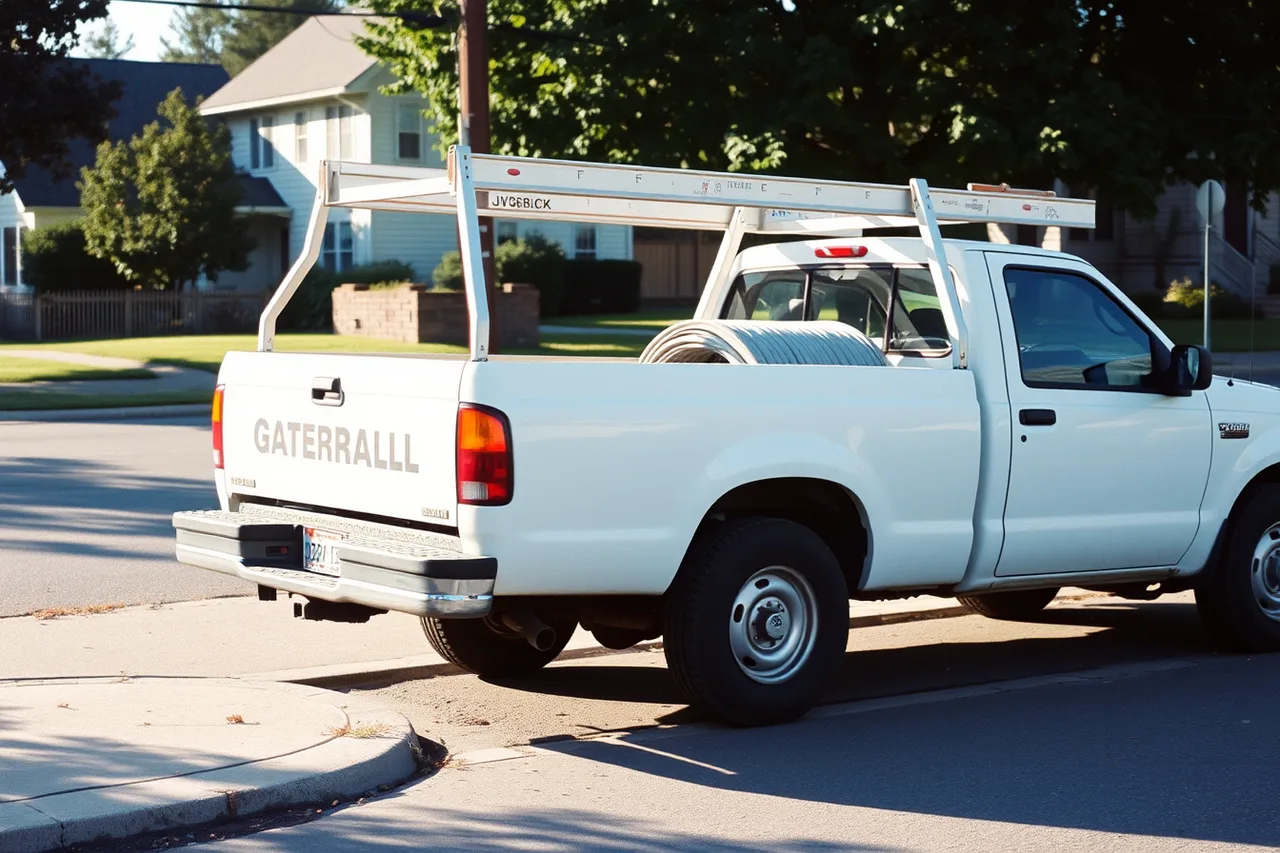
Quotes, contracts, invoices, receipts and warranties must be in French. An English version is allowed, but the French version must be available and must not be less favourable. A customer cannot be forced to sign an English-only contract.
Advertising follows the same rule. Truck lettering, flyers, Google ads and a website aimed at Quebec customers must be in French, and the French text has to be markedly predominant where both languages appear. A large English tagline over a smaller French line does not satisfy that test.
Customer service is the part crews underestimate. A homeowner in Sherbrooke who calls your number has the right to be served in French. If nobody in the office can take that call, you need a plan: a bilingual staff member, a French voicemail with a callback promise, or a French-language answering service.
There are narrow exceptions. A business with fewer than five employees may have some flexibility in internal communications, but commercial documents and service to the public still follow the Charter. Do not build a business plan on an exception you have not had reviewed.
The Office quebecois de la langue francaise receives complaints and can fine per offence. The amounts change, so check the current schedule with the OQLF or a Quebec lawyer rather than a number from a forum.
What that looks like in practice:
- Have your standard contract, quote template and invoice translated by a professional, then reviewed for Charter compliance.
- Make the French version the default for Quebec visitors to your website, with English as an option.
- Train at least one person per crew or in the office to answer the phone in French.
- Put French first on truck signage and in any paid advertising that targets Quebec.
- Keep copies of the French documents you issued, in case a complaint is filed.
A compliance checklist helps you track those items alongside registration and insurance renewals.
Registering for a Quebec Enterprise Number
The NEQ is a ten-digit identifier issued by the Registraire des entreprises. It appears on your registration, your invoices and your contracts.
Being from out of province does not exempt you. Install gutters on a Quebec building and you are carrying on activity in Quebec, which triggers registration for a sole proprietor and a corporation alike.
A federal business number is a separate thing. You may still need a Canada Revenue Agency business number for GST/HST and payroll, but the NEQ is the provincial identifier Quebec agencies and customers use.
Registration runs online through the Quebec government's business portal. That portal explains the Quebec Enterprise Number (NEQ) requirement and the documents you need: your name, address, business activity, and the names of directors or partners.
Once registered, your record is public. Customers, general contractors and insurers check it before awarding work, and you can use it to vet a supplier. The government's Find an Enterprise in the Enterprise Register tool searches by name or NEQ.
Renewal is annual. Miss it and the business can be struck off, which means it cannot enter contracts or sue to collect a debt. A struck-off gutter company may find itself unable to enforce a lien.
The sequence:
- Choose your legal form: sole proprietorship, partnership or corporation.
- Reserve your business name if you are incorporating or trading under a name.
- File with the Registraire des entreprises and pay the fee.
- Receive your NEQ and check that the public record is accurate.
- Set a calendar reminder for the annual update.
Starting from zero? The province's Start an Enterprise page walks through incorporation, registration and the language considerations that apply from day one.
CNESST: registration, rates and fall protection
CNESST is Quebec's workplace safety and compensation board. It sets prevention rules, inspects worksites and pays benefits to injured workers. It is the Quebec counterpart to the WSIB and WorkSafeBC, and the rules are Quebec's own.

Every Quebec employer registers with CNESST and declares payroll. Your rate follows your classification, and gutter work usually lands in roofing or building exterior work, which carries a higher rate than office work because of fall risk.
Falls are the hazard that drives that rate. Quebec's Regulation respecting occupational health and safety requires fall protection when a worker can fall more than three metres, which covers most two-storey homes. A crew on a ladder at the eave is exposed.
Acceptable methods include guardrails, a travel-restraint system, a fall-arrest system with an anchor point, or a secured ladder used within its limits. A ladder alone is not fall protection above three metres. This article will not teach you to rig any of them: book certified working-at-height training and follow the current CNESST and CSA guidance.
Ladder rules are enforced. Ladders are inspected, set on firm ground and tied off, and a helper holding the ladder is not a substitute for tying it off. CNESST also expects employers to give workers the information and training the job requires, with closer supervision for new and young workers.
Accidents must be reported. A serious injury or fatality goes to CNESST, and an employer cannot penalize a worker for filing a claim. A prevention program is required once payroll passes a set threshold, and general contractors often ask for a written safety plan before that.
How a gutter service business hires and trains staff shows up directly in its CNESST record. Untrained workers on ladders are the fastest route to a claim and a rate increase.
Quebec roofs: ice, pitch and metal
Quebec's climate and building stock push gutter work in directions a crew from a milder province will not expect.
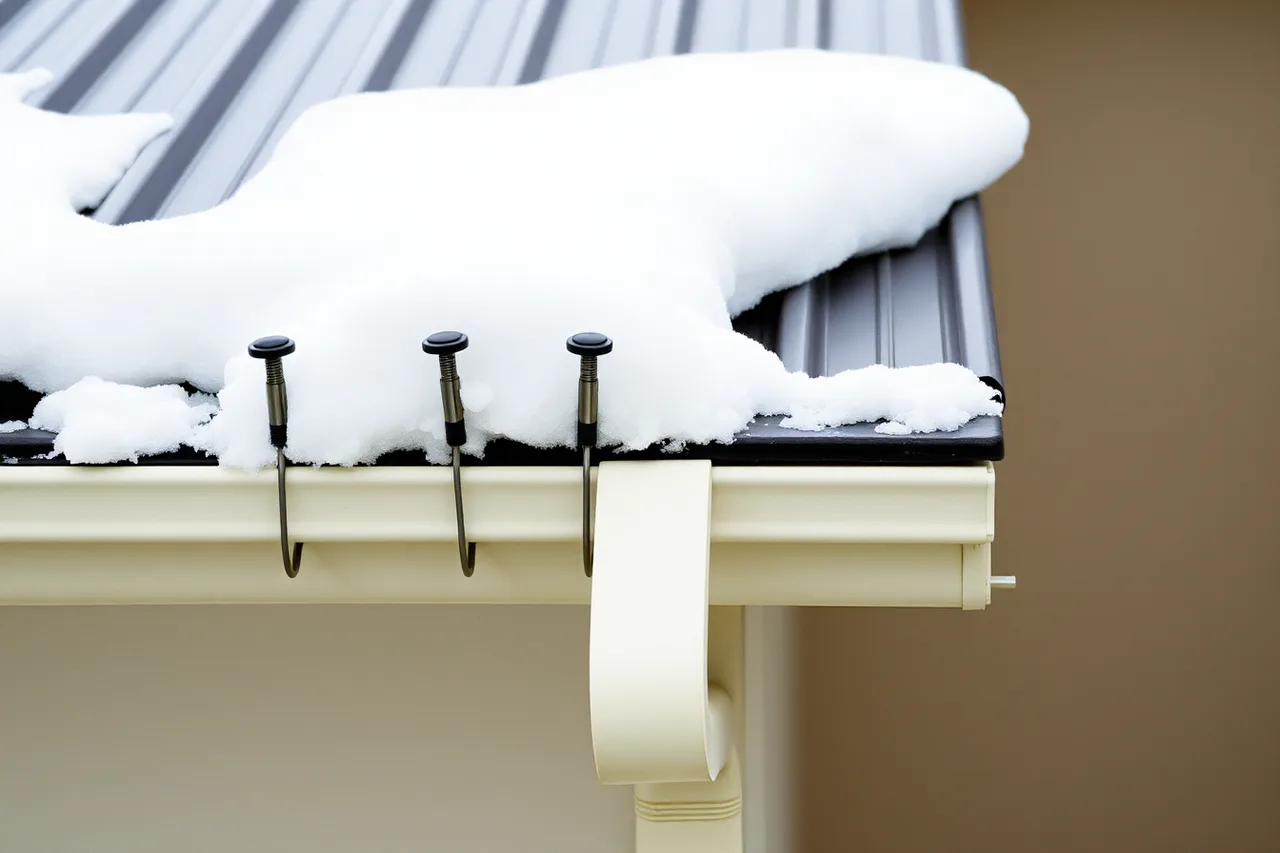
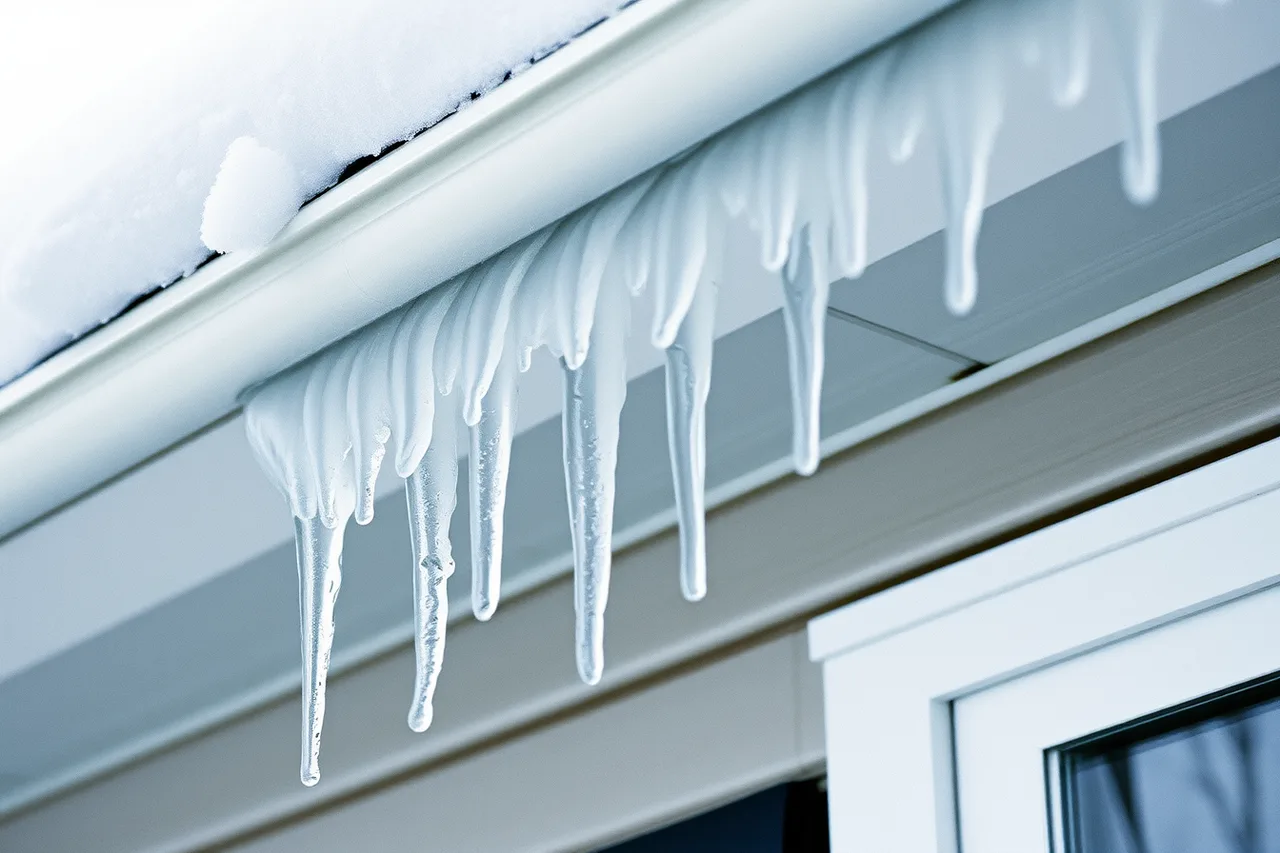
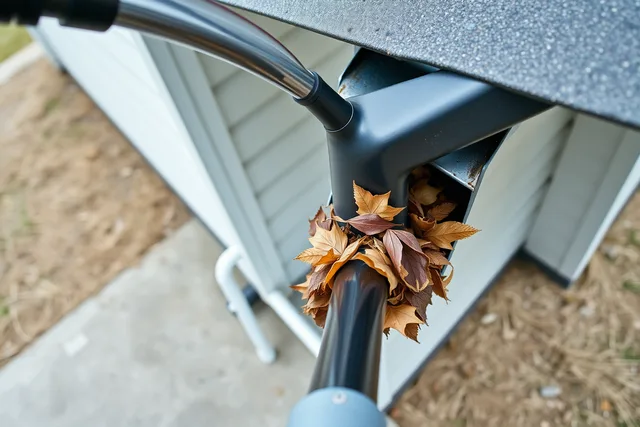
Ice damming is the central problem. Heat escaping through the roof melts snow, which refreezes at the cold eave and backs water under the shingles. A correctly sized eavestrough and a clear downspout help, but the fix usually starts with attic insulation and ventilation. Homeowners ask about it every winter.
Roof pitch runs steeper on many Quebec homes, especially older stock in Montreal and Quebec City. Steep roofs shed snow faster, so hangers must resist sliding snow and ice, and standard spacing may not be enough.
Hanger spacing, pitch and outlet placement are engineering questions: cite the National Building Code and the local bylaw, and have a licensed engineer confirm the attachment for the roof in front of you.
Metal roofs are common on rural and commercial buildings, and snow leaves them in sheets. Snow guards and gutter guards are often specified together so the sliding load does not tear the gutter off the fascia.
Freeze-thaw cycles are harder on sealants than steady cold. A product that performs in Alberta's dry cold can crack in Quebec's wet freeze-thaw, so choose sealants rated for the temperature range and for movement.
Downspout discharge matters more in dense urban areas. Montreal and other cities restrict what can enter the storm sewer, and Toronto, Vancouver and Montreal all have downspout disconnection rules worth checking before you reconnect anything. A downspout that ices a sidewalk creates a liability claim.
The season is compressed. Snow cover can arrive in November and stay into April, so installation peaks from late spring to early fall and cleaning splits into a spring flush and a late-fall clearing before the freeze.
Hiring and payroll under Quebec rules
Hiring in Quebec layers provincial rules on top of the federal ones. Employment standards, payroll and language all have Quebec-specific requirements.
Quebec's Act respecting labour standards sets minimum wage, hours, overtime and vacation. A written document with the job title, duties, wage and schedule is expected. It can be in French, and it usually is.
The Charter reaches the workplace. Job postings must be in French, and internal communications default to French in most cases. An English-only job ad for a Quebec position invites a complaint.
Payroll deductions for provincial income tax go through Revenu Quebec, alongside federal deductions. You also register with CNESST and declare payroll so workers are covered from their first day. Classification, remittance and cross-border questions are accountant and regulator territory: ask Revenu Quebec, CNESST or your accountant for a ruling on your own facts.
Supervision is a legal duty, not a suggestion. You must ensure work is carried out safely, which means a competent person on site, a way to confirm harnesses are worn, and a stop-work rule when conditions turn.
Mixed-language crews need one language for safety briefings. Instructions have to be understood by everyone on the roof, whatever they speak at home.
The province's Hiring and managing staff guidance covers CNESST obligations and the employment rules that apply from the first pay period. For more on building a crew that lasts, see how to hire reliable staff and what permits a gutter service business needs in its first year.
Common questions
Do I need an NEQ if I am based in Ontario and only do a few Quebec jobs?
Yes. Carrying on activity in Quebec triggers the registration requirement, whatever your home province. Register with the Registraire des entreprises and get your NEQ before you invoice.
Can I use English contracts if the customer speaks English?
You may provide an English version, but the French version must be available and must not be less favourable. A customer cannot be forced to accept an English-only contract.
What fall protection does CNESST require for gutter work?
Fall protection is required when a worker can fall more than three metres. Guardrails, travel restraint, fall arrest with an anchor, or a secured ladder used within its limits are the recognized approaches. Confirm the current requirement with CNESST and use certified training.
Does a Quebec gutter job really differ from an Ontario one?
Yes. Ice damming and steep metal roofs change the hangers, guards and sealants you carry, and the shorter season tightens the calendar. The registration and language rules are provincial as well.