Guides
Getting a gutter found locally: SEO checklist
Gutter service local SEO checklist: the profile, website and review items worth doing, the service area trap, and the tactics to leave alone.
What to take away
- Local search for this trade is triggered by an event, so the aim is being findable and credible in the hour somebody is annoyed.
- Treat your business profile as an operational record. Accurate hours and service areas do more than clever wording.
- Review practices have rules, and the compliant approach is also the one that ages well.
- Most of what is sold as local SEO for contractors is either the checklist below or noise.
What local search rewards, according to the platform
Rather than repeat what agencies claim, start with what the platform itself publishes. Google's guidance on improving local ranking for a Business Profile describes the factors it takes into account, framed as relevance, distance and prominence, and gives practical steps for each.
Two useful conclusions follow. Distance is not something you can manipulate, so effort spent trying is wasted. And completeness and accuracy are things you fully control, which makes them the sensible place to start.
Everything below is either drawn from that guidance or is ordinary operational hygiene that happens to matter for search.
The profile checklist
- Business name matches the name you actually trade under, with nothing appended
- Categories set accurately for what you actually do, primary first
- Address and service area reflect where you genuinely work
- Hours correct, including the seasonal changes you actually operate
- Phone number answered by a person during those hours
- Description written for a homeowner, naming the services you deliver
- Photographs of real work, including finished discharge terminals
- Any credential you hold displayed with its issuing body and number
The first line is worth defending. Stuffing service words into the business name is a common contractor tactic and it is a misrepresentation of the name you trade under, which is a bad foundation for a profile that customers use to verify you.
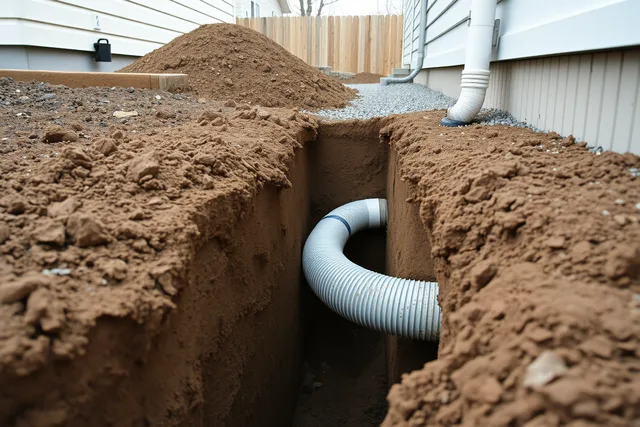
The photograph line is the one nobody does. Pictures of finished discharge terminals, extensions and buried line connections show the part of the job that customers actually care about and that no competitor bothers to photograph.
Credentials should be exactly what you hold, no more. What counts as a credential varies by jurisdiction, and the method for establishing yours is in the licensing and compliance guide.
The website checklist
- One page per service you genuinely deliver, describing scope rather than adjectives
- Each page says what is included, what is excluded, and where water discharges
- A page per real service area, written about that area rather than templated
- Phone number visible without scrolling on a phone
- Loads quickly on a phone connection, since that is where the trigger search happens
- Credentials, insurance and how to verify them
- Real photographs, not stock images of houses you have never worked on
The second line does double duty. It is what a customer needs in order to compare you against a cheaper quote, and it is also the material that makes a page about a specific service genuinely different from a competitor's.
The third line is where contractor websites go wrong. Twenty near-identical pages with the town name swapped is a pattern search engines have understood for a long time. It is also useless to a reader.
Write an area page only when you have something specific to say about it: the housing stock, the canopy, the drainage rules that apply there.
Service definitions carry a lot of this content, and they should match what you actually sell rather than being written for search. The structure is set out in the packages and pricing guide.
The service area question
Set it to where you will actually send a crew, not to where you would like to.
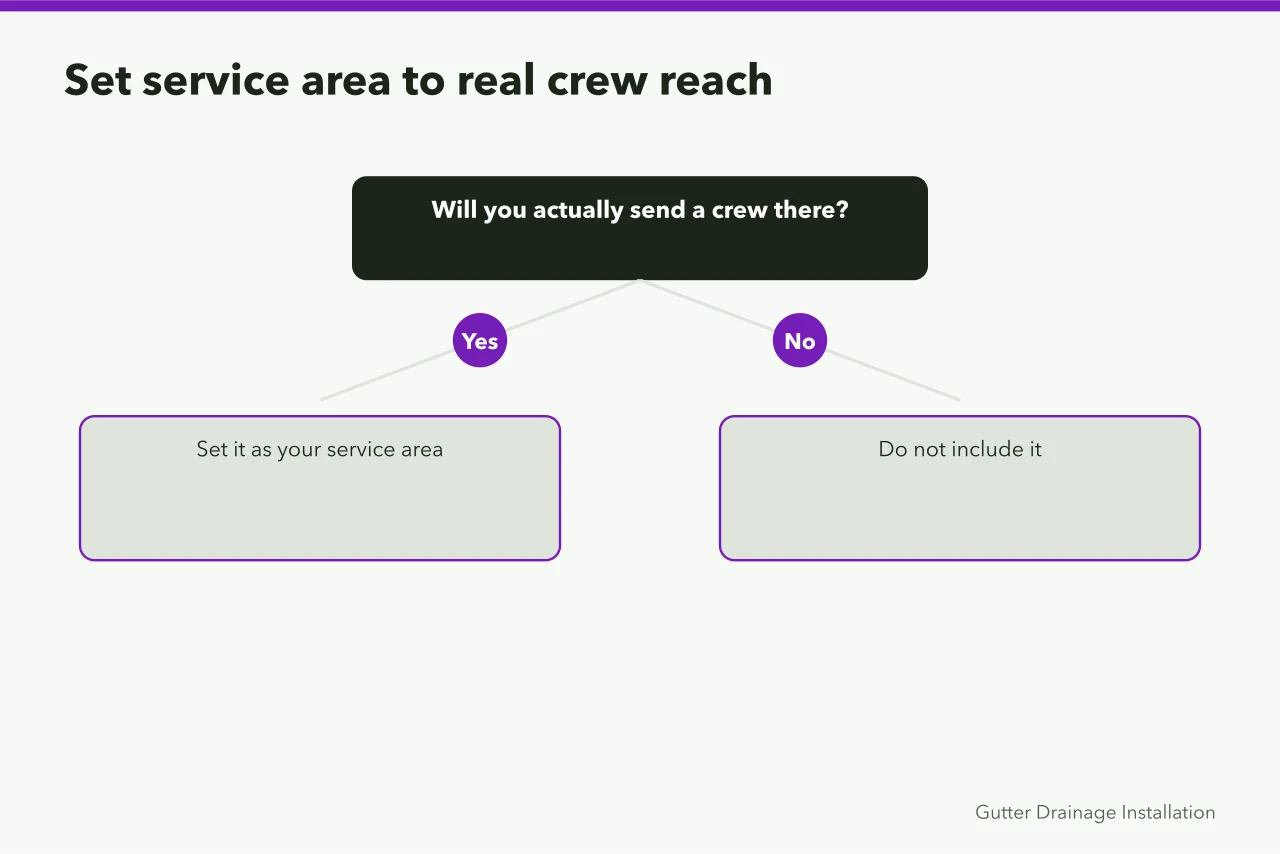
Overstating a service area produces calls you cannot serve profitably, which costs you a phone conversation and produces a bad experience for someone who then reviews you. It also degrades route density, which is the number that quietly controls your labor cost.
If a formed installation is involved, the machine, coil, and crew travel as one unit. A distant job is more than a longer drive. It is a whole trailer trip that cannot be shared with anything else.
Scheduling consequences are set out in the equipment and setup guide.
The review checklist
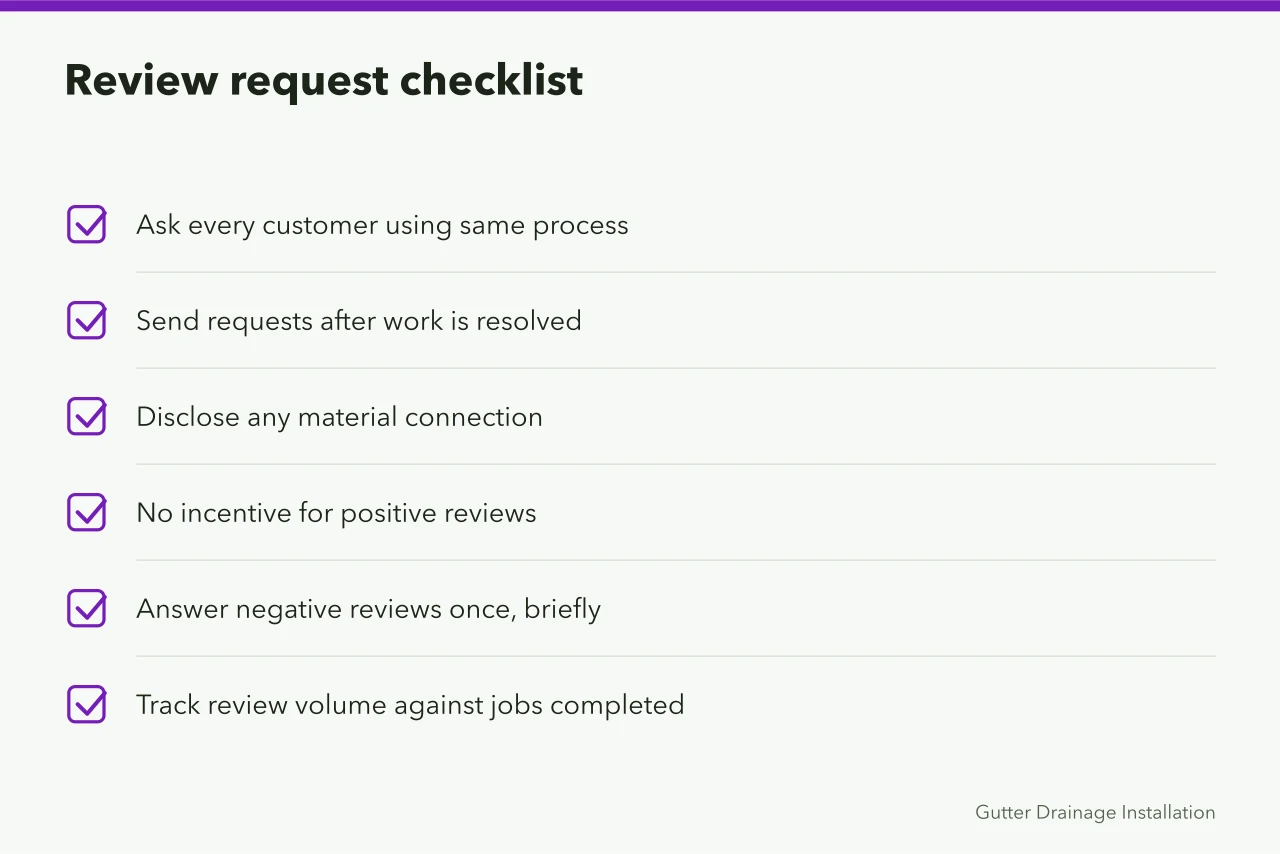
- Every customer asked, using the same process, regardless of how the job felt
- Requests sent after the work is resolved, never as a condition of resolving it
- Any material connection disclosed where one exists
- No incentive offered for a positive review specifically
- Negative reviews answered once, briefly, factually, with an offer to continue offline
- Review volume tracked against jobs completed, not chased in bursts
The rules here are real. The Federal Trade Commission's guidance on soliciting and paying for online reviews sets out what marketers are expected to do and not do, and filtering who gets asked by expected sentiment is exactly the practice to avoid.
The honest version also works better. A steady flow of ordinary reviews from a company that inspects the discharge end reads as more credible than a wall of perfect ones that arrived in one week.
What to leave alone
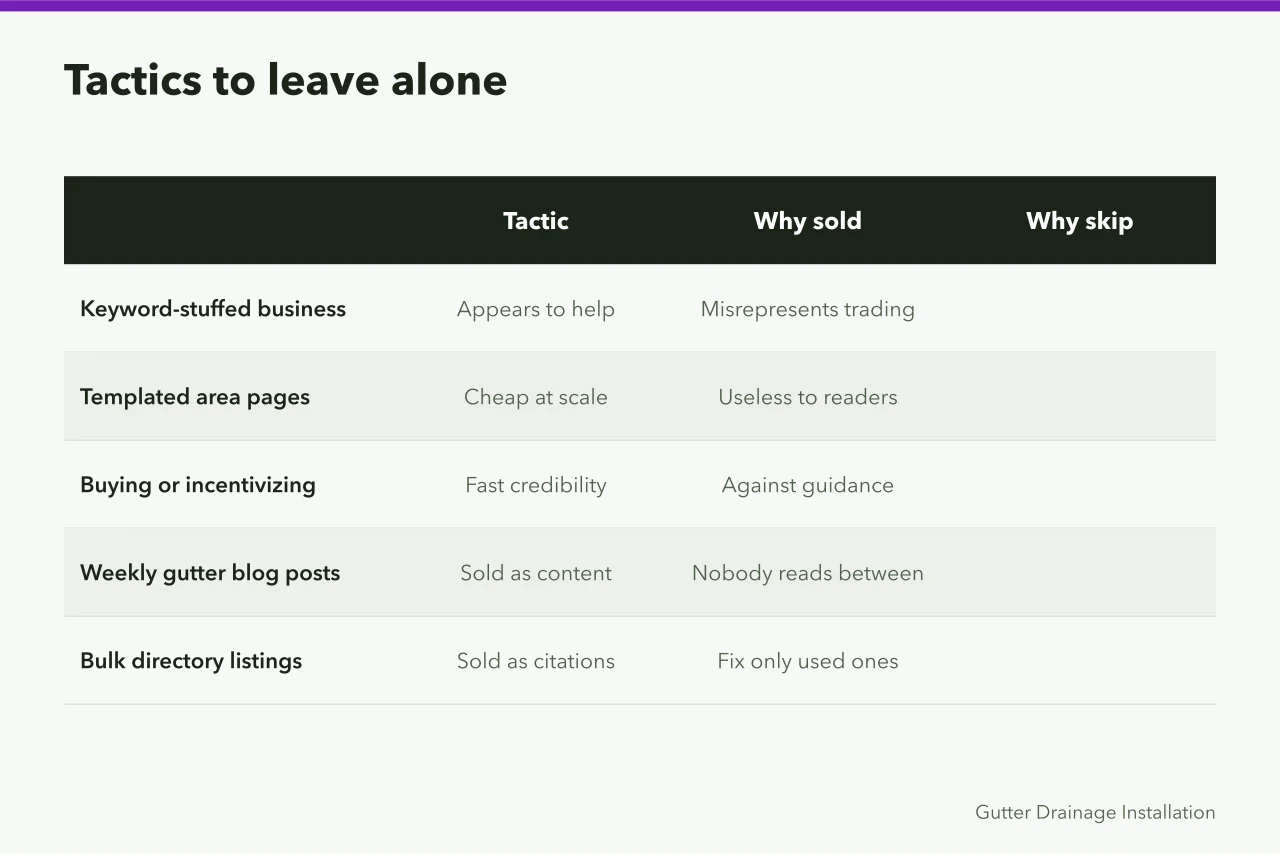
| Tactic | Why it is sold | Why to skip it |
|---|---|---|
| Keyword-stuffed business name | Appears to help ranking | Misrepresents the name you trade under |
| Dozens of templated area pages | Cheap to produce at scale | Useless to a reader and long since understood |
| Buying reviews or incentivizing positive ones | Fast credibility | Against the guidance, and detectable by customers |
| A blog post every week about gutters | Sold as content marketing | Nobody reads gutter content between triggers |
| Directory listings in bulk | Sold as citations | Fix the ones customers actually use, ignore the rest |
The fourth row deserves a caveat. Content is worth writing where it answers what a customer asks at the door: what guards actually do, where water is allowed to discharge locally, how to compare two quotes. Content written to fill a schedule is noise. The distinction is the same one described in the marketing and growth guide.
What to measure
Two numbers. Calls received from search, and how many became booked appointments.
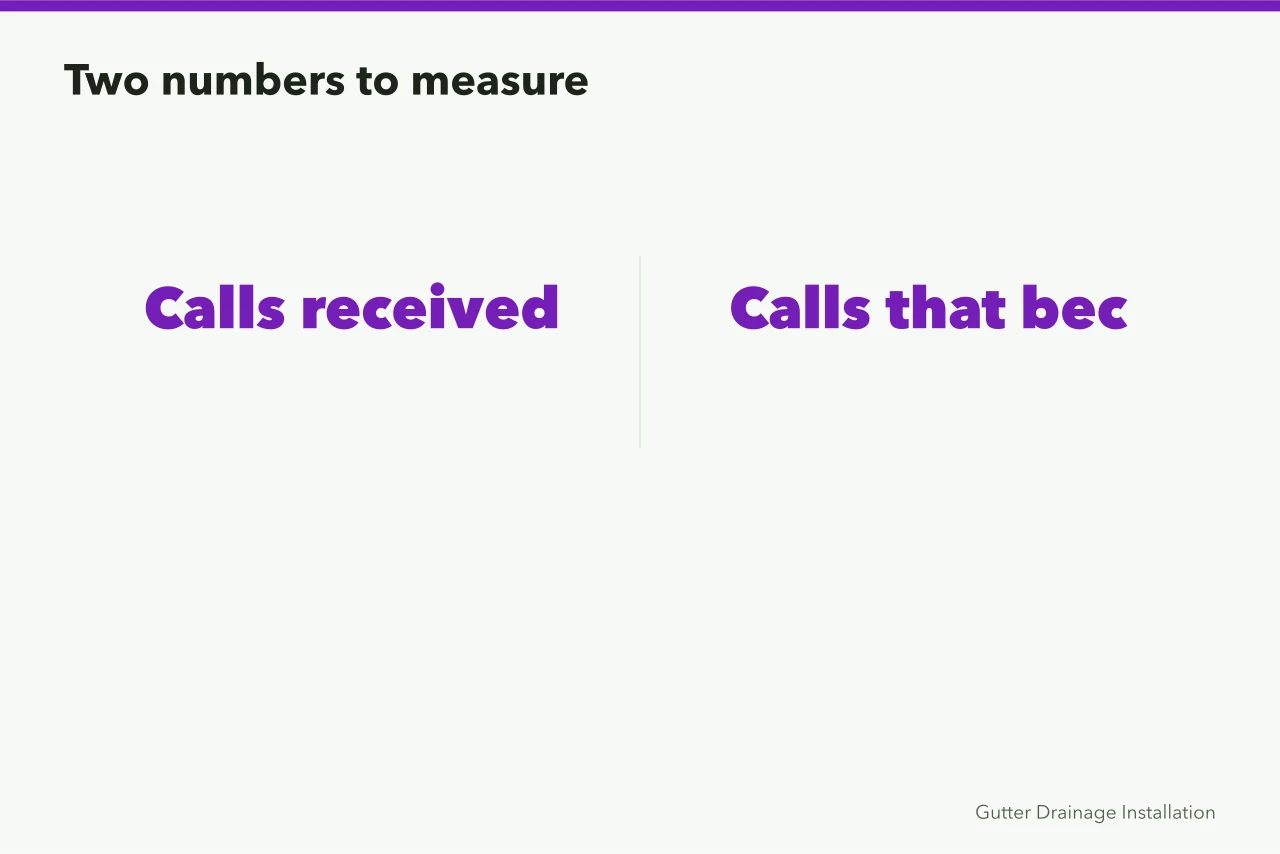
If calls are rising and appointments are not, the problem is what happens when the phone rings, not the profile. If calls are flat, work down the checklists above before spending anything.
Whatever the search side produces, the job still has to be finished in one visit for the review to be worth having.
That comes back to stocking the truck to the list in the equipment checklist for new owners.
Common questions
How long before changes show up?
Longer than an agency will promise and shorter than a season. Make the accuracy fixes first, because they also help the customers who already found you.
Do I need a website if I have a profile?
A profile is enough to get calls. A website is what lets a customer verify you and compare scope, which is where you win against a cheaper quote.
Should I hire someone for this?
The checklists above take an afternoon. Hire help for photography and for writing genuinely local pages, not for submitting your business to directories.
Does posting on the profile help?
Treat it as a communication channel rather than a ranking lever. Seasonal notices about scheduling and what a storm means for booking are useful to customers either way.
What matters most in the peak weeks?
Nothing on this page beats answering the phone. A profile that produces calls nobody picks up is an expensive way to send work to a competitor.