Guides
3 stormwater fees Canadian cities charge and how they affect gutters
Stormwater fees in Toronto, Vancouver and Montreal each reshape what local gutter crews quote, from downspout disconnection to roof moss removal.
What to take away
- Toronto bills a stormwater charge by hard surface area, so a roof is a billing input and downspout disconnection becomes a quotable job.
- Vancouver folds rainwater into utility rates, which supports a maintenance model built on moss and needle removal rather than a fee credit.
- Montreal collects drainage costs through municipal taxes and borough rules, so work leans on flat-roof drains, freeze-thaw repair and French-language service.
- Every downspout connection sits on the National Plumbing Code baseline, with provincial and municipal rules layered on top.
- A single national price list underserves all three markets, because the offer follows the fee.
How stormwater fees work in Canadian cities
A stormwater fee pays for the rain and snowmelt that runs off a property into the municipal system. Pipes, catch basins and treatment plants cost money whether the water is clean or not.
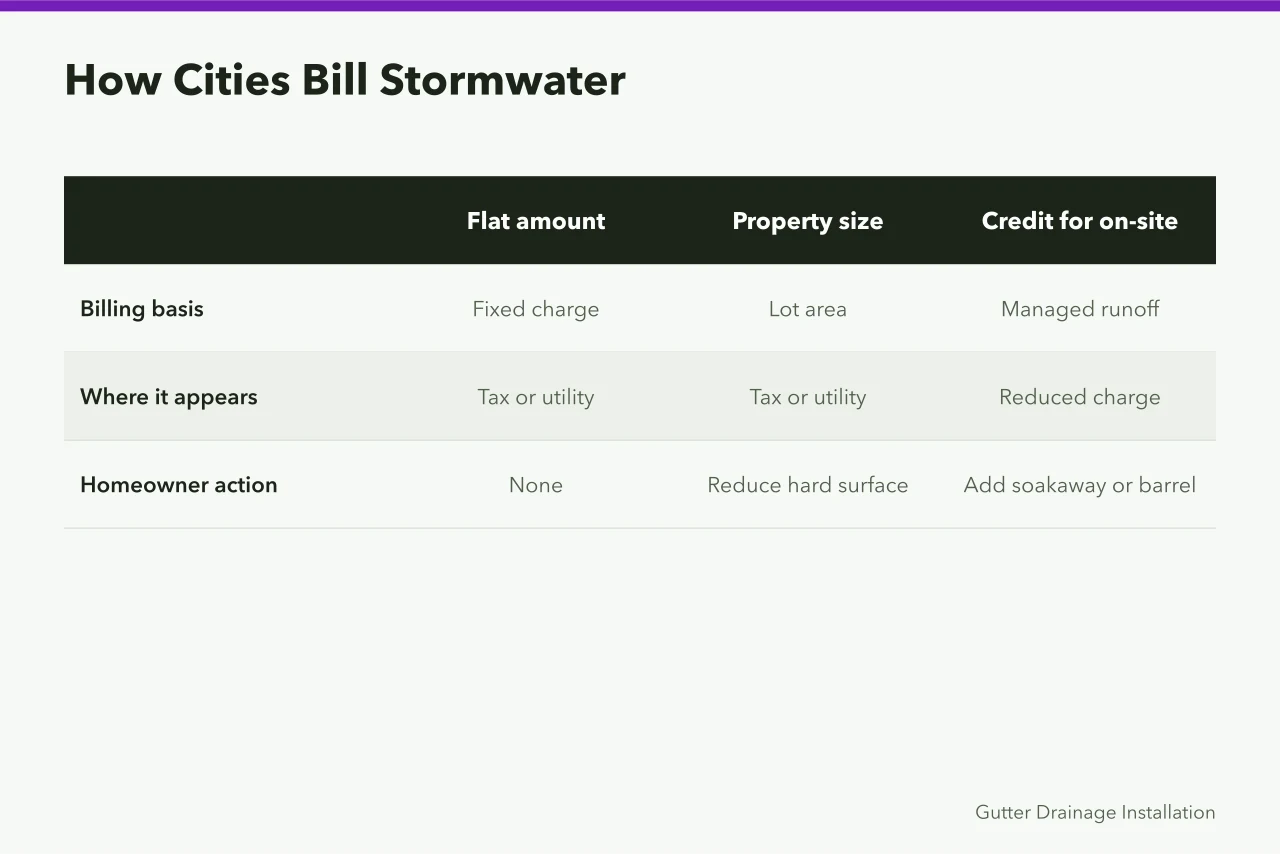
Cities bill it in a few ways. Some use a flat amount on the property tax or utility bill. Others tie the rate to the size of the property. A third group offers a credit that lowers the charge when a property manages water on site.
Gutter drainage is where that water first meets the building.
Ontario sets the legal ground through the Ontario legal framework for drainage, with permitting detail in the province's stormwater and drainage permitting rules. Both matter to anyone who disconnects a downspout or changes how a lot drains.
In British Columbia, discharge falls under the BC environmental rules on stormwater discharge. Contractors routing downspouts into storm systems should read what the province expects before quoting.
The National Plumbing Code requirements for storm drainage set the baseline for how storm water and downspouts connect to a building's drainage. Provincial and municipal rules build on that baseline.
For a gutter company, a fee is not just a bill. It is a signal about what the city wants property owners to do, and that signal drives demand.
Toronto's stormwater charge and what it funds
Toronto calculates its stormwater charge from the hard surface on a lot. Roof area counts. Driveways count. A bigger impervious footprint means a bigger charge.
The money funds the storm sewer system, basement flooding programs and creek and ravine work. It is a user fee for the water a property sends into the system, not a tax on rain.
For a homeowner, the charge turns a roof into a billing input. A clogged gutter or a downspout emptying onto a driveway stops being a maintenance issue and becomes a drainage issue with a dollar figure attached.
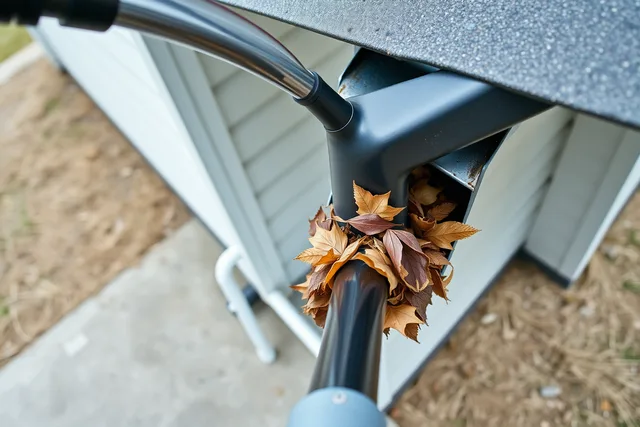
Toronto's older housing stock and mature tree canopy sharpen the problem. Leaves, seed pods and shingle grit fill gutters fast, and a blocked leader sends water to the foundation.
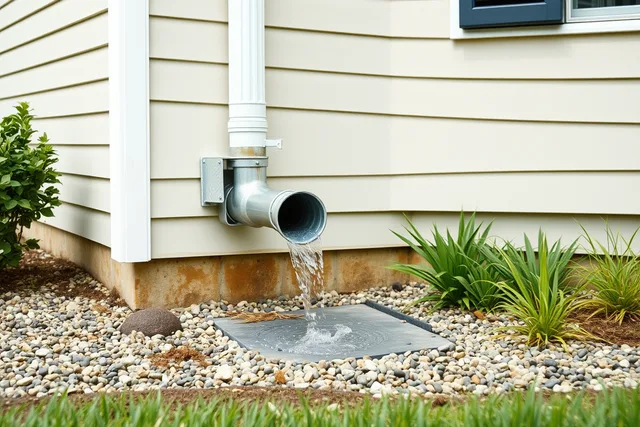
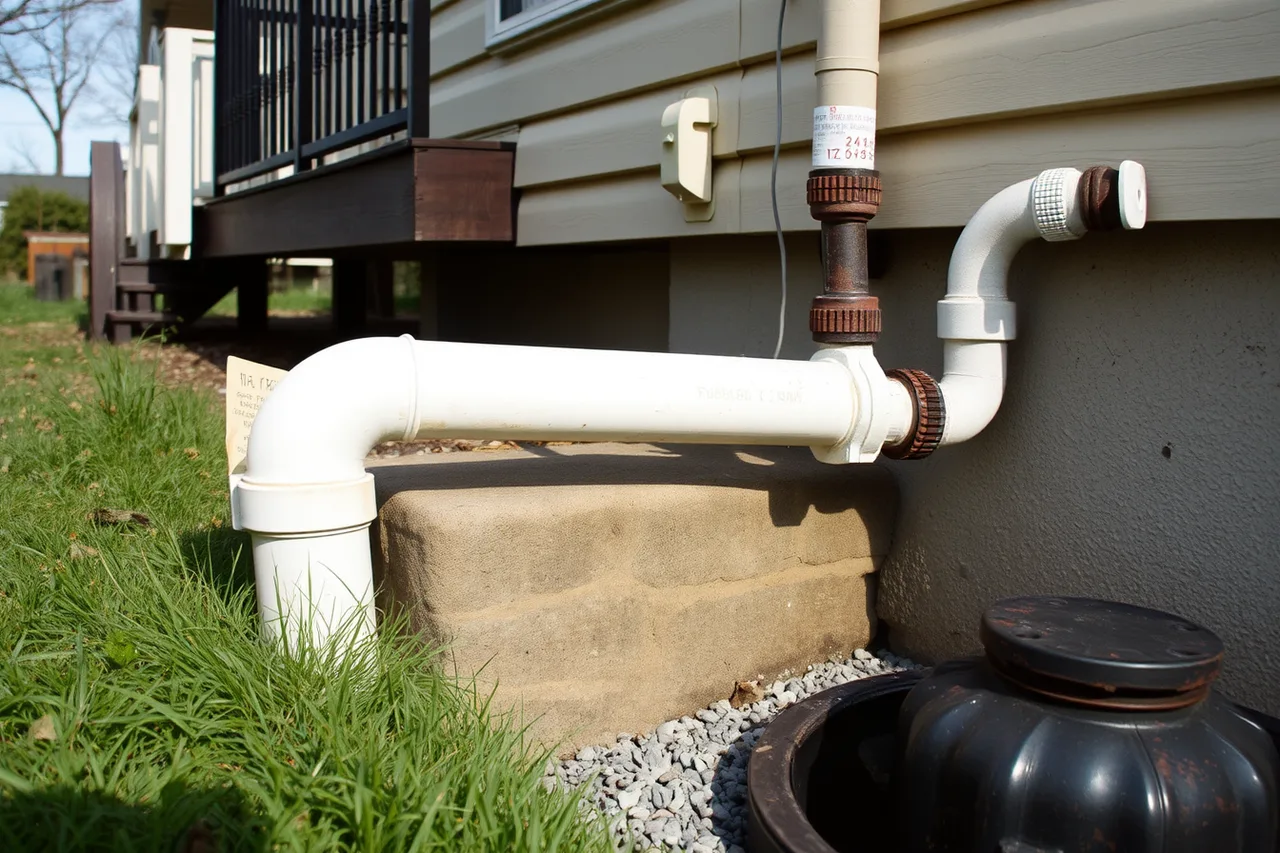
Downspout disconnection is one of the city's encouraged solutions. A disconnected downspout that drains to a garden, a rain barrel or a soakaway keeps roof water out of the sewer.
That work is exactly the kind of job a gutter crew can quote, and it pairs well with the gutter service employee pay that shapes the cost of Canadian service work.
Toronto also has a sewers bylaw governing what can enter the system. A contractor who knows it can tell a client why a downspout must not tie into a foundation drain, and why the discharge point matters.
The fee does not pay for gutter cleaning. It pays for the system downstream. The opportunity is the upstream work that keeps the fee from rising and the basement from flooding.
Vancouver utility rates for rainwater management
Vancouver does not use a separate stormwater charge in the Toronto style. It funds rainwater management through utility rates, alongside water and sewer charges on the same bill.

The city's approach treats rain as a resource rather than only a waste product. That shows up in incentives and rules around infiltration, rain gardens, permeable surfaces and disconnected downspouts.
Vancouver's climate makes gutter drainage a year-round job. Rain falls in every month, and the tree canopy drops needles, leaves and moss. A gutter clear in July can be blocked by October.
Moss is the local specialty. It grows in the gutter, lifts the shingle edge and holds water against the fascia. A crew removing moss and re-securing the gutter is doing rainwater management, whether the client calls it that or not.
Heavy rain also exposes undersized or poorly sloped gutters. Water sheets over the edge, stains the soffit and pools at the foundation. Repair and replacement work follows the rain.
Because the utility rate covers the whole system, Vancouver homeowners rarely see a line item called stormwater. The pitch here is protection: keep the water moving, keep the moss out, keep the foundation dry through the wet season.
That difference matters when you win more customers. A Vancouver homeowner responds to a maintenance schedule. A Toronto homeowner responds to a fee and a flood risk.
Montreal's drainage-related fees
Montreal handles drainage costs through municipal taxes and service charges rather than one named stormwater fee. Sewer and water charges appear on the municipal tax bill, and boroughs enforce their own rules on discharge and connections.
A Montreal gutter job therefore runs into borough-level requirements. Some boroughs restrict where a downspout can discharge. Others require a sewer connection or a specific infiltration solution.
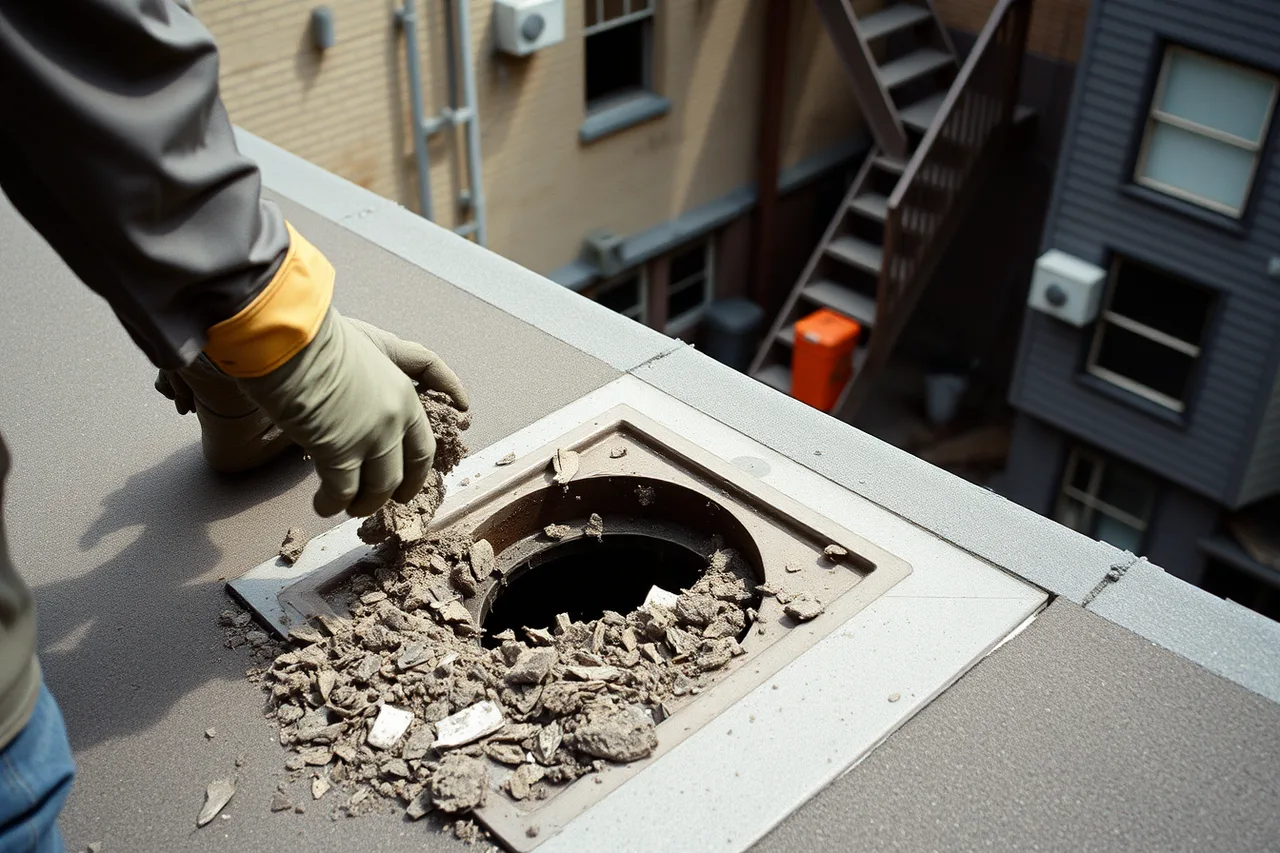
Montreal's built form adds work. Flat roofs with interior drains, exterior staircases and dense older housing create drainage paths unlike a Toronto or Vancouver house. A flat roof needs its drains and scuppers cleared, not just its gutters.
French-language service is expected. Quotes, invoices and site communication in French are the norm, and a company that cannot provide them loses work. That is a market fact, not a nicety.
Winter changes the schedule. Freeze-thaw cycles, snow load and ice dams damage gutters and downspouts, and spring melt tests every drainage path on the property.
Because these costs are less visible than Toronto's charge, the sales conversation leans on prevention. A client who has never seen a stormwater line item still understands a flooded basement and a cracked foundation.
What each fee means for downspout and gutter service demand
Three cities, three fee models, three service patterns. Toronto's charge makes disconnection and lot-level drainage billable. Vancouver's utility rates support a maintenance and moss-removal model. Montreal's tax-based costs sit behind borough rules and winter damage.
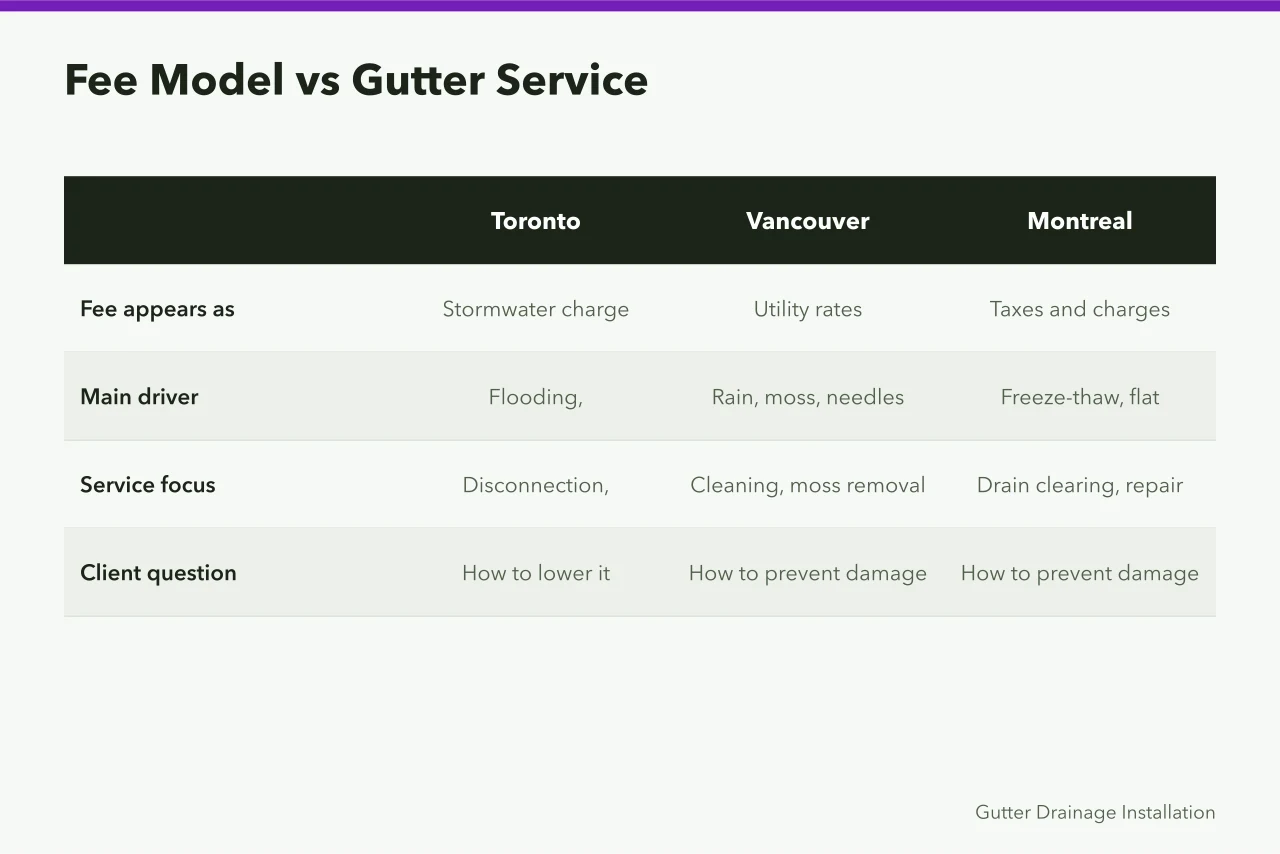
| City | How the fee appears | Main gutter drainage driver | Typical service focus |
|---|---|---|---|
| Toronto | Stormwater charge based on hard surface area | Basement flooding and disconnection programs | Downspout disconnection, cleaning, repair |
| Vancouver | Utility rates covering water, sewer and rainwater | Year-round rain, moss and needle debris | Scheduled cleaning, moss removal, repair |
| Montreal | Municipal taxes and service charges, borough rules | Freeze-thaw damage and flat-roof drainage | Drain and scupper clearing, winter repair |
Demand follows the fee logic. Where a fee is visible, the client asks what can be done to lower it. Where the fee is hidden, the client asks what can be done to prevent damage.
A worked example shows the split. A Toronto homeowner pays a charge based on roof and driveway area. A crew inspects, finds a blocked leader and a downspout tied into the foundation drain, and quotes a disconnection to a soakaway plus a cleaning.
The same house in Vancouver gets a maintenance plan: two or three visits a year, moss treatment and a repair allowance. In Montreal, the quote covers clearing the flat-roof drains before winter and repairing ice damage in spring.
Same trade, different offer. That is the effect of the fee model, and it is why a single national price list underserves all three markets.
Turning stormwater rules into gutter drainage service offers
Start by learning the local rule. In Ontario, read the drainage statute and the permitting regulation. In BC, read the environmental rules on discharge. Everywhere, know the National Plumbing Code baseline for storm drainage connections.
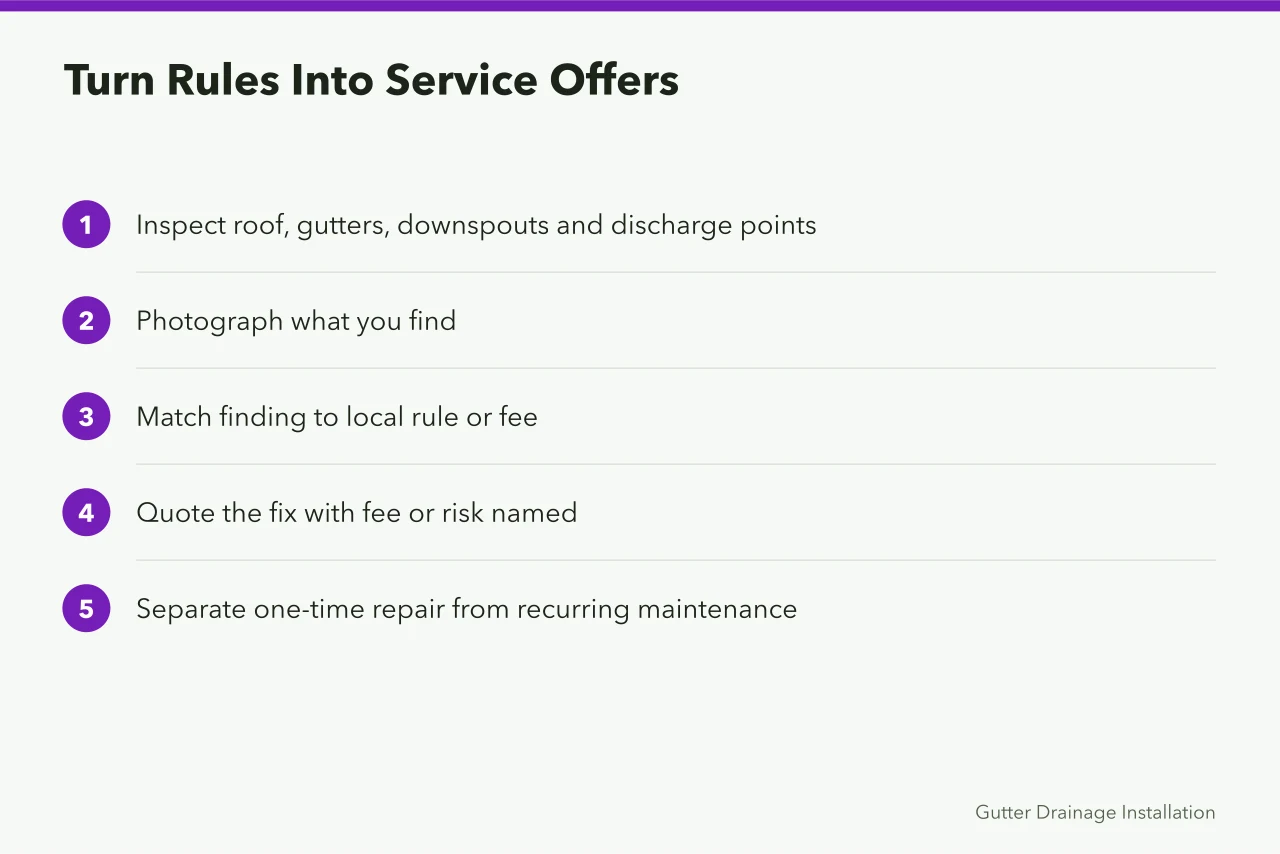
Then build offers around the rule. Three steps work in any of the three cities:
- Inspect the roof, gutters, downspouts and discharge points, and photograph what you find.
- Match the finding to the local rule or fee: disconnection, soakaway, cleaning schedule or drain clearing.
- Quote the fix with the fee or the risk named, so the client sees why the work matters.
Use package ideas that separate one-time repair from recurring maintenance. A Toronto disconnection is a project. A Vancouver cleaning plan is a subscription. A Montreal winter prep is seasonal.
Price in the local market. Canadian prices are in Canadian dollars, and GST or HST applies depending on the province. Ontario work carries HST, BC carries GST plus PST on some items, and Quebec carries GST and QST. A quote that ignores tax looks amateur.
Before you publish a price, check your packages and pricing against local costs, including disposal, travel and any paperwork a municipal program requires.
Track which offers actually sell. In Toronto, disconnection and repair lead. In Vancouver, recurring cleaning leads. In Montreal, seasonal drain clearing and winter damage repair lead. Build your profitable gutter service packages around the leader in each market.
Train crews on the local rules and the local climate. A technician who can explain a stormwater charge, a utility rate or a borough bylaw is worth more than one who only clears debris.
Document the work. Photos before and after, a note on the discharge point and a record of debris removed protect the client and the company if a basement floods later.
Common questions
Does Toronto's stormwater charge pay for gutter cleaning?
No. It funds the municipal storm sewer system and related programs. Gutter cleaning and downspout work are private services the property owner arranges.
Why does Vancouver not have a separate stormwater fee?
Vancouver funds rainwater management through utility rates that sit alongside water and sewer charges. The cost is still there, just not as a separate line item.
Are Montreal's drainage costs a stormwater fee by another name?
They are municipal taxes and service charges rather than a single named stormwater fee. Borough rules on discharge and connections do the regulatory work.
What code governs downspout connections?
The National Plumbing Code sets the baseline for storm drainage and downspout connections, and provincial and municipal rules build on it.