Guides
Hail and wind damage claims for Alberta and Saskatchewan gutters
Alberta and Saskatchewan gutter contractors document hail and wind damage claims, price storm repairs, and keep insurance adjusters moving fast.
What to take away
- Storm work pays the bills on the Prairies, and the file you build on the day of inspection decides whether the claim is approved or argued.
- Photograph dents, pulled fasteners and separated elbows before you touch anything. Adjusters price what they can see.
- Write observations, not conclusions. Note trough size, hanger spacing and slope, then let the adjuster decide coverage.
- Cite the National Building Code of Canada and the provincial edition adopted in Alberta or Saskatchewan, and verify the version first.
- Bill temporary repairs and documentation as separate line items. They are real work and they protect the final scope.
Why Prairie storms hit gutters harder than roofs
Alberta sits in the hail alley that runs from the foothills east through the Calgary and Edmonton corridors. Stones large enough to dent aluminium and strip the finish off steel eavestrough fall on the same subdivisions year after year.
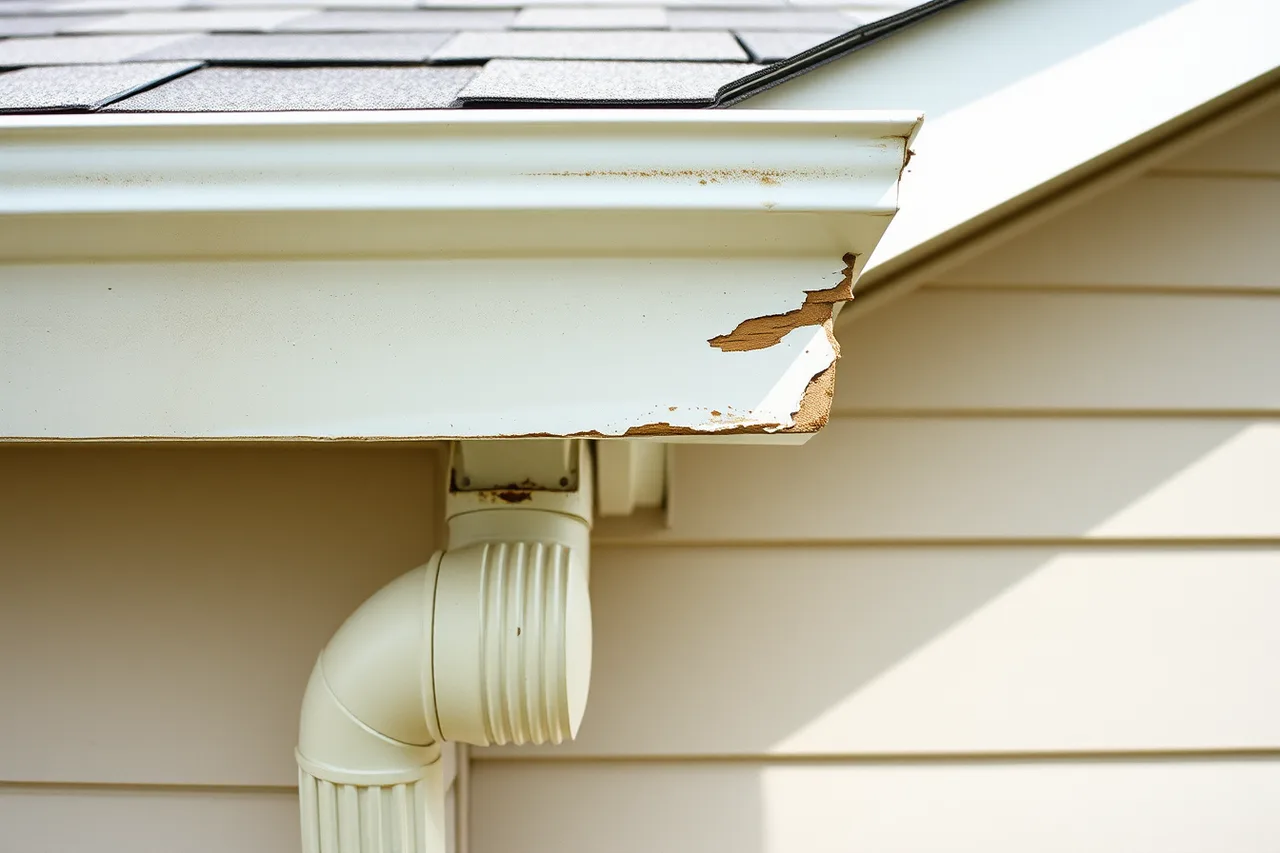
Saskatchewan sees fewer giant stones and more straight-line wind. Wind peels fascia, tears hangers out of soft boards and folds long runs of trough.
The pattern that generates claims is the same in both provinces. A roof survives a storm that destroys the drainage hanging off it. The homeowner sees intact shingles, assumes nothing happened, and finds water in the basement three weeks later. That gap between the storm and the leak is where gutter claims are won and lost.
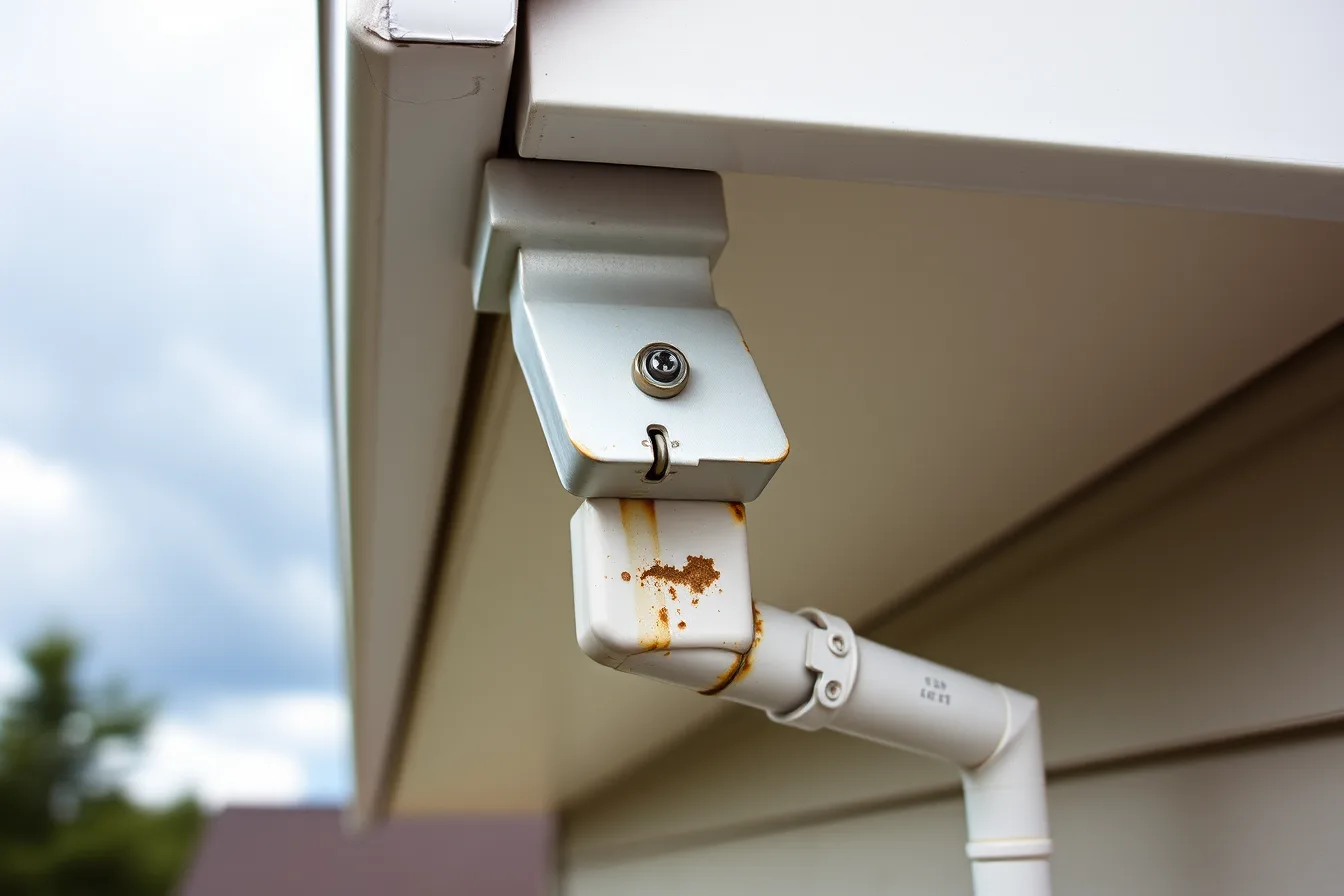
Wind damage is the easier file. Fasteners pull, troughs hang away from the fascia, downspouts separate at the elbows. A phone camera records all of it from the ground.
Hail damage hides. Dimples on the back of a trough, chipped paint and small punctures often show only when you run a hose.
New subdivisions concentrate the risk. Hundreds of identical gutter runs go up in the same year on the edge of a city, so one storm produces hundreds of near-identical claims.
That is why Prairie storm work arrives all at once and why your paperwork has to survive being read by an adjuster who has already seen forty files that week.
Much of that work is financed through insurance, which shapes what you can charge and when you get paid. See insurance costs and coverage for how those limits sit against storm scopes.
What the Insurance Bureau of Canada guidance means for your invoice
The Insurance Bureau of Canada publishes water damage guidance aimed at homeowners, and its logic runs straight through to gutters. Water that enters because drainage failed is a maintenance and installation question. Water that enters from an overland flood or a sewer backup is a different coverage question.
That distinction decides who pays your invoice. A trough that was undersized, clogged or hung with too few fasteners reads as wear and tear. A trough that was sound and was physically damaged by the storm usually sends the interior damage to the property policy.
The guidance also stresses maintenance records. A homeowner with receipts for annual cleaning and a recent inspection is in a far stronger position than one without. That is the argument for selling maintenance plans alongside storm repairs, because the paperwork becomes evidence the next time.
When a claim is denied, the complaint handling process you run decides whether the homeowner stays with you or finds someone who will argue harder.
For contractors the lesson is narrow. Write observations, not conclusions. Record the condition of the trough, the number of fasteners per length, the slope and where the downspout discharges. The adjuster draws the coverage conclusion.
Documenting hail and wind damage on a storm file
Documentation is the job. Get it wrong and a legitimate claim becomes an argument about pre-existing damage. Get it right and the adjuster approves a scope without a second visit.
Photograph before you repair. Wide shots establish the property, mid shots show the run, close shots show the dent or pulled fastener with something for scale. Include the date stamp, and for a disputed storm date, a copy of the Environment Canada warning for that day.
Measure in the units the code uses. Trough size, downspout size, outlet count and slope in millimetres per metre all belong in the report.
The National Research Council Canada publishes the National Building Code of Canada, which sets out roof drainage and eavestrough requirements. Quoting those provisions gives your scope a baseline that is not your own opinion.
- Date and time of inspection, plus the storm event claimed
- Address, roof type and approximate roof area
- Trough material, profile and measured size
- Number and spacing of hangers or spikes
- Downspout size, count and discharge location
- Photographs of every damaged section, with scale
- Hose test result and where water escaped
- Interior damage observed, with photos if the owner permits access
Keep your own copy. Claims reopen, and the contractor who can produce the original file two years later gets the repeat work.
A worked example
A homeowner in a Calgary suburb calls after a July storm. The shingles are intact. The trough on the west elevation is dented along six metres and one downspout has separated. Water has stained the basement ceiling below that corner.
You photograph the dents, measure hanger spacing at roughly 600 millimetres, and note a 5-inch profile on a roof area that the code tables suggest should carry a larger outlet. A hose test confirms water overflows at the damaged section rather than at a clog.
Your report separates three things: storm damage to the trough, a pre-existing sizing shortfall, and the interior stain. The adjuster approves the damaged run and the downspout, declines the sizing upgrade, and the homeowner pays for that as an improvement. The file closes in one visit because nothing was left to ask about.
Repair or replace: the decision adjusters dispute most
The insurer wants the smallest scope that restores function. You want a scope that will not generate a callback. That tension is the whole negotiation.
A short dented section on an otherwise sound run is a repair. Cut out the damaged length, match profile and colour as closely as the supplier allows, and seal the joints. Put the match limitation in writing, because colour variation on older aluminium is normal and homeowners notice it.
Replacement is justified when damage is widespread, when fasteners have pulled through the fascia along most of a run, or when the trough has lost its slope and cannot be re-hung without dismantling it.
Age matters too. A trough at the end of its service life will not survive a partial repair, and saying so in the report protects you when it fails.
This is where a clear quote template earns its keep. Line items for removal, disposal, new trough, hangers, downspouts and sealing make the scope readable for an adjuster comparing three contractors. Vague lump sums invite negotiation and delay.
Where the code and the provinces fit
The National Building Code of Canada governs roof drainage design, and provincial codes adopt it with local amendments. Alberta and Saskatchewan each apply their own edition, so verify the adopted version before you cite a clause in a report.
Saskatchewan environmental rules affect where stormwater and drainage can discharge, which matters whenever a replacement moves the discharge point. Switching a downspout from a foundation drain to a splash pad, or the reverse, can raise a bylaw question in some municipalities. Check the province's environmental protection and sustainability guidance for businesses before promising a homeowner anything about routing.
Eavestrough sizing, structural attachment and stormwater connection are engineering questions. Cite the code and the local bylaw, then refer the homeowner to a licensed engineer or building official for a determination.
Working with adjusters after a Prairie hailstorm
The workflow is predictable. A claim opens, an adjuster is assigned, a scope is requested, a decision follows. Your job is to make the third step easy.
Send one document, not five. A single PDF with the report, the photographs and the priced scope gets read. Photos spread across three emails get lost. Name the file with the address and claim number so it can be filed without editing.
Be reachable and be brief. Adjusters handle large volumes after a hailstorm, and the contractor who answers the phone and gives a two-minute summary gets called back first. Do not argue coverage with the adjuster. Give facts and let the process run.
Invoice the insurer directly only when the adjuster confirms it in writing. Otherwise invoice the homeowner and hand them the scope to submit. Receivables stay predictable and nobody argues about who owes what.
Keep your own conduct clean when a homeowner is unhappy with a denial. A written complaint process with a named contact and a response time protects your reputation. The same discipline shows up in how you set pricing and profit targets for storm work.
Pricing and scheduling storm response
Storm work is not routine cleaning and should not be priced like it. Demand spikes, access gets harder, and every job carries administration that a cleaning route does not.
Build three numbers into every storm quote: the inspection and documentation fee, the repair or replacement scope, and a contingency line for hidden damage behind the fascia. The contingency is not padding. It is what you find when you pull a trough off a board that has been wet for a decade.
Learning how to price gutter service jobs with that contingency built in keeps a storm file from running at a loss.
Scheduling is harder. Storm response compresses weeks of work into days and crews burn out fast. Saskatchewan employment standards set hours, overtime and rest period rules for the workers you hire, and they apply whether the rush is on or not. The province publishes them under employment standards for businesses and industry.
| Job type | Typical trigger | Documentation load | Scheduling pressure |
|---|---|---|---|
| Routine cleaning | Seasonal maintenance | Low | Predictable |
| Minor storm repair | Isolated dents or pulled hangers | Medium | Moderate |
| Full run replacement | Widespread hail or wind damage | High | Severe |
| Interior water follow-up | Basement or ceiling staining | High | Immediate |
Work at height is governed by provincial occupational health and safety rules, and fall protection requirements differ by jurisdiction. Name the authority that applies to your crew, WorkSafeBC, CNESST, Alberta OHS or Saskatchewan OHS, and put every new hire through certified training before they leave the ground.
Scheduling that holds up
- Triage calls by water entry, not by call order. Active leaks first.
- Book inspections in clusters by neighbourhood to cut drive time.
- Hold one crew slot per day for emergency tarping and temporary repairs.
- Send the documentation package within 48 hours of inspection.
- Follow up on the claim decision weekly until it closes.
Temporary repairs deserve their own line item. A tarp or a temporary seal stops further damage and shows the insurer that someone acted responsibly. Bill it separately and photograph it, because it often ends up inside the final scope.
Common questions
Does homeowners insurance cover hail damage to gutters in Alberta?
Usually yes, when the damage is sudden and caused by a storm rather than by age or neglect. The insurer will look at the trough's condition before the storm, which is why maintenance records help. Coverage wording varies by policy, so read the property policy rather than assuming.
What changes for Saskatchewan hailstorm claims?
The same principle applies. Saskatchewan hailstorm claims turn on whether the trough was sound beforehand, and wind claims often accompany them because Prairie storms rarely deliver hail alone. Document both perils in one report.
Can a gutter contractor bill the insurer directly?
Only with written confirmation from the adjuster. Otherwise invoice the homeowner and provide a copy of the scope so they can submit it for reimbursement. Direct billing without that confirmation is how contractors end up chasing money for a year.
Do I need to cite the building code in a claim report?
It strengthens the scope. Citing the National Building Code of Canada and the adopted provincial edition shows the work meets a known standard rather than a contractor's preference. Verify which version your province has adopted before you quote a clause.