Guides
Gutter service quality assurance: the version that survives contact with reality
Gutter service quality assurance checklist, staged by moment: before the ladder, while hanging, before the crew leaves, and before the file is closed.
What to take away
- A checklist works when it is tied to a moment in the job. A list of virtues at the end of a shift changes nothing.
- The most valuable item is the water test, and it is the first thing dropped when a crew is running late.
- Half the items sit at the ground end, because that is where the complaints originate.
- Every failed check should be recorded with a cause. A callback with no cause attached teaches nobody anything.
How to use it
Print it, laminate it, keep it in the truck. It is a working document, not a report.
Each block below belongs to a specific moment. Run the block at that moment, not later, because most of these checks are impossible or expensive once the ladder is down and the trailer has left. The reasoning behind each check is in the quality assurance guide; this is the version you carry.
Before the ladder goes up
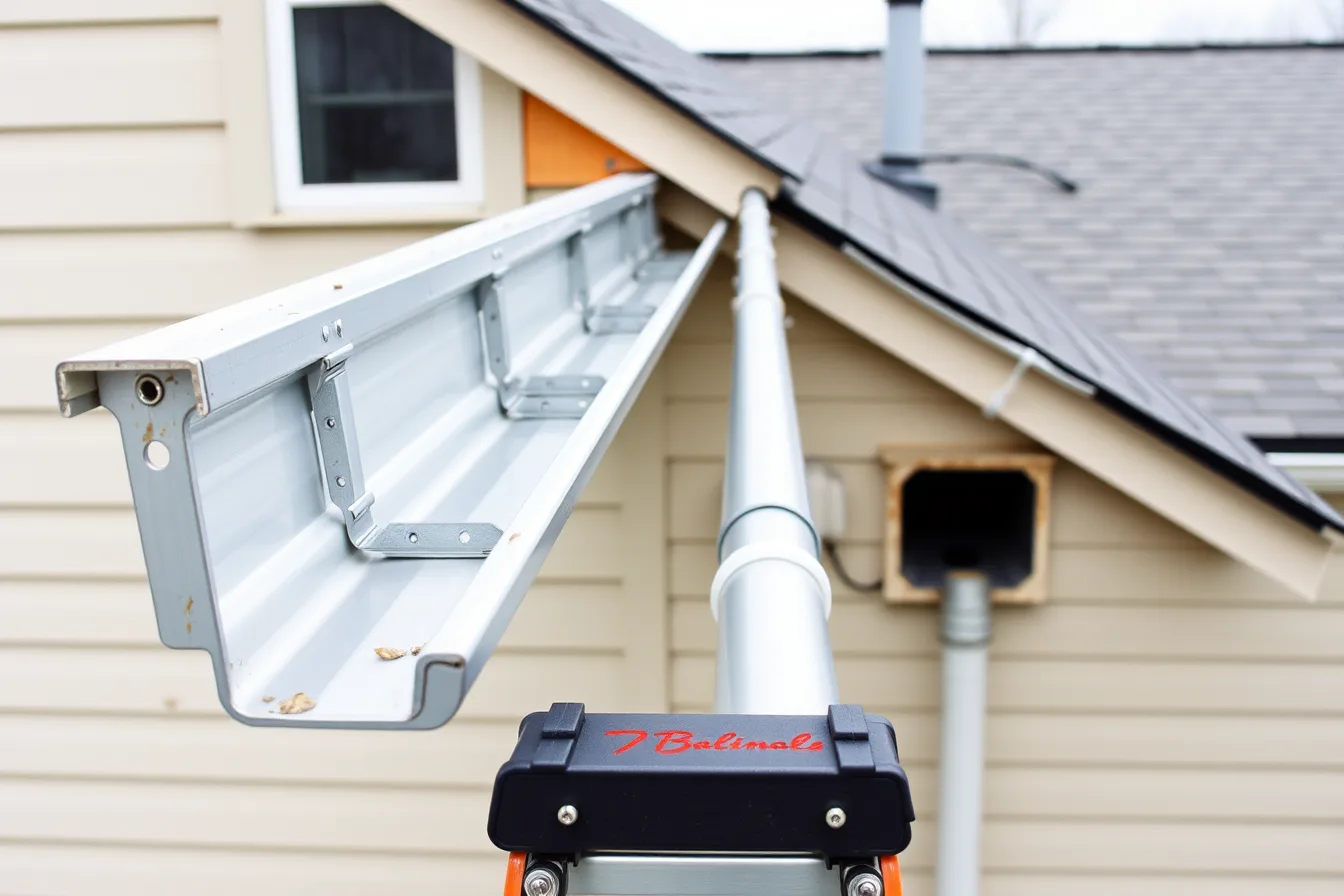
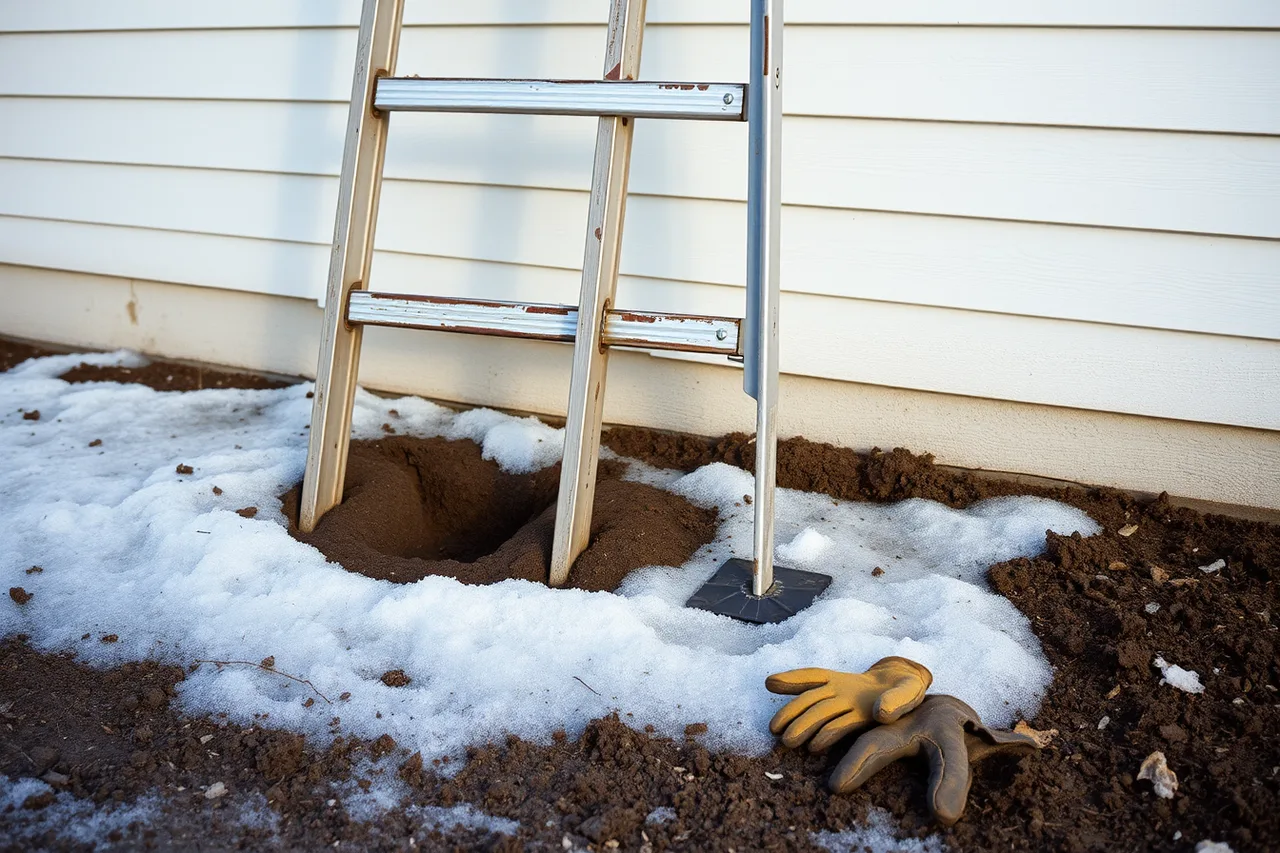
- Ground conditions checked for the ladder foot, including slope and soft or thawing ground
- Access gear inspected against the removal-from-service criterion
- Wind and surface conditions assessed, and the crew knows who has authority to stop
- Work is within the company's stated access ceiling for this property
- Existing discharge points located, including any buried line
- Customer's stated problem read from the file, in their words
The fourth line is not negotiable and it is not a matter for the crew to renegotiate at the property. This trade's severe exposure is at the roof edge, and OSHA's guidance on fall protection in residential construction puts responsibility for site-specific controls on the employer rather than on the person who agreed to try.
While the run is being hung
- Fascia pressed along the run and at every existing downspout, findings recorded
- Photograph taken of the fascia at its worst point before anything is fixed
- Hanger type suits what the board will actually hold
- Hanger spacing follows the manufacturer's instructions and any local requirement
- Fall runs toward the outlet along the whole length, with no reverse section
- Trough set so roof runoff lands in it rather than over it, allowing for the roof's pitch and covering
- Outlets sized to the downspouts and cut cleanly
- Miters and end caps sealed with a product rated for this metal and joint
- No dissimilar metals in contact
- Roof edge detail lets water enter the trough rather than run behind it
Spacing and slope figures belong to the manufacturer's installation instructions and to whatever your building department has adopted. Confirm both rather than working from a number somebody remembers from a previous employer, because they differ by profile and by region.

Before the crew leaves
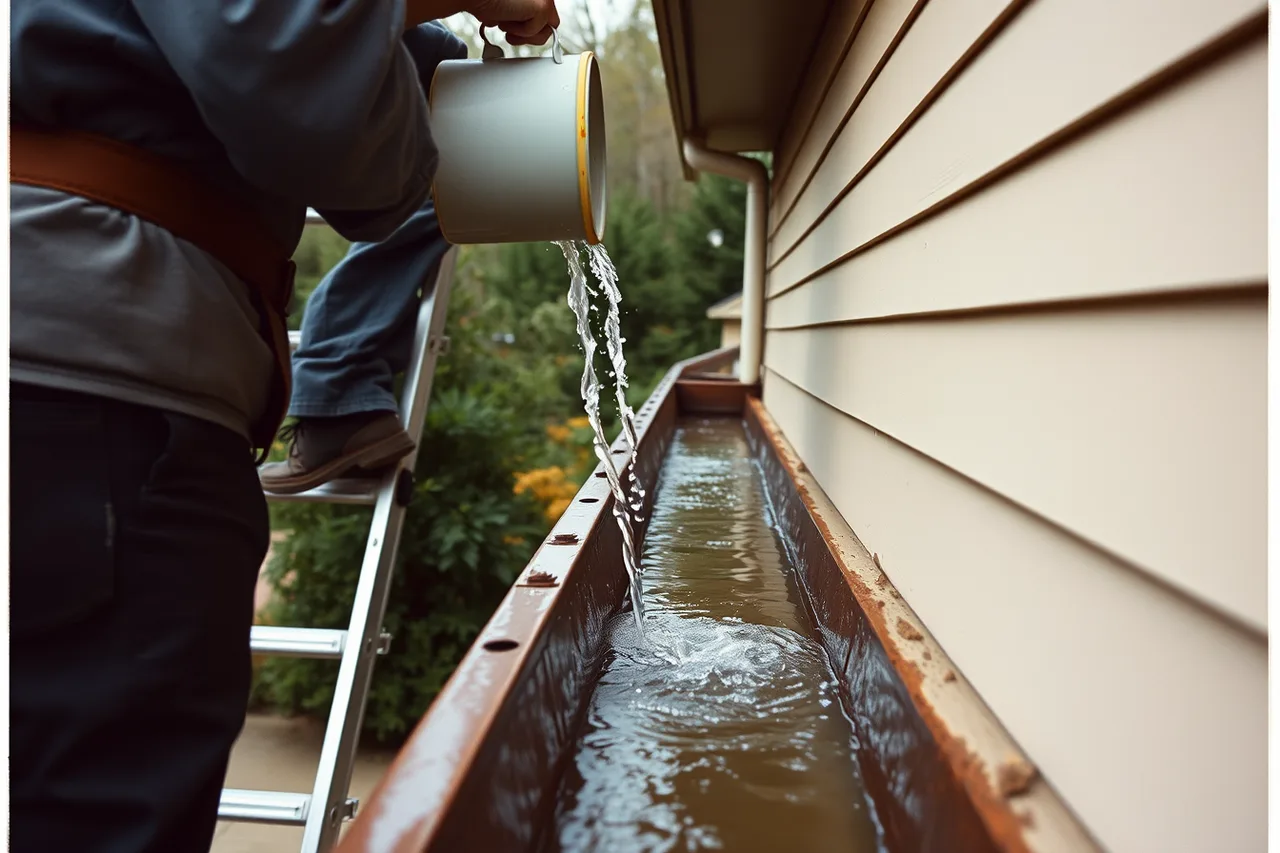
- Water run into the far end of every run, away from the outlet
- No standing water anywhere along the length
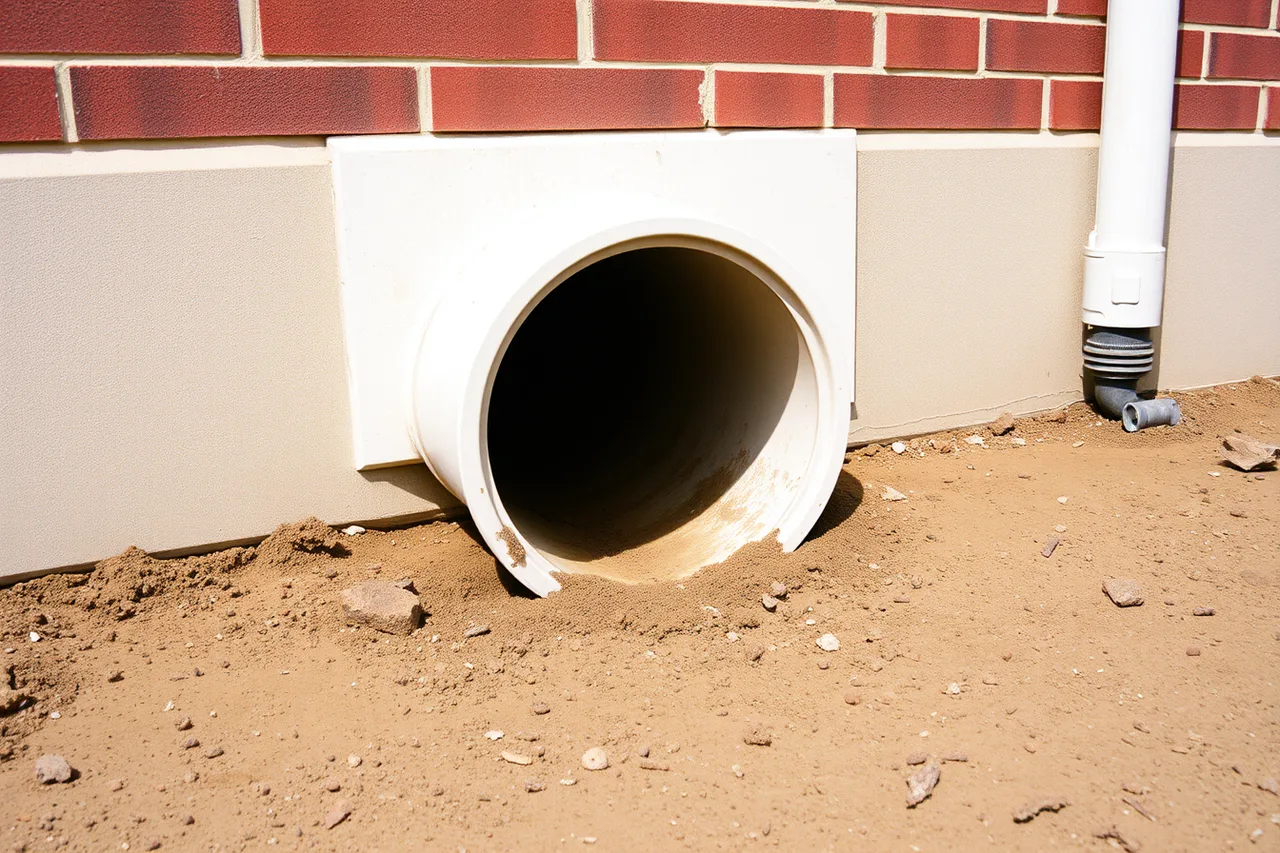
- Water exits at the terminal you promised, not somewhere near it
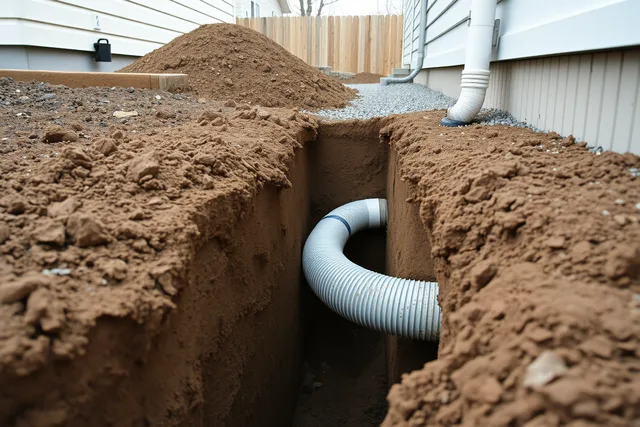
- Buried line cleanout opened where reachable, and flow confirmed by watching the level
- Downspouts strapped at the manufacturer's intervals, elbows oriented so water cannot exit a joint
- Receiving ground falls away from the building
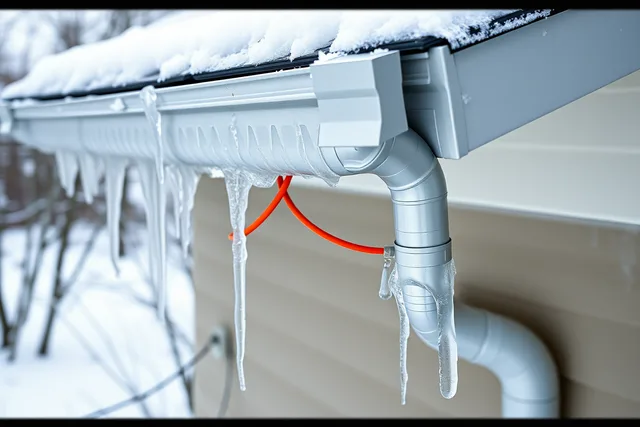
- Nothing discharges onto a walkway or drive where it will refreeze
- Photograph taken of the finished discharge terminal
- Site cleared, debris hauled, magnets run where fasteners were dropped
- Handover conversation held: what was found, what was done, what was deliberately not done
- Expected maintenance interval stated, based on the canopy over this property
The water test is the item to defend. It takes minutes and turns a class of callback into a correction while the ladder is still up.
That makes it the first thing a crew drops when running late. That is a scheduling problem, not a discipline problem. Price the time instead of asking people to try harder.
Before the file is closed
- Photographs filed against the job record
- Findings and any contingency work documented with what was authorized
- Written record left with the customer matches what was said in the driveway
- Return visit, if any, logged with a cause
- Invoice reflects the actual scope delivered, including anything declined
- Review request sent using the same process for every customer
That last line has rules. The Federal Trade Commission's guidance on soliciting and paying for online reviews says what marketers should do. Safe habits: ask everyone, not just customers you expect to be happy, and disclose any material connection.
How review flow fits the wider demand picture is in the marketing and growth guide.
The seasonal re-check
Once a season, before the peak weeks, run a different list.
- Access gear re-inspected and anything failing removed rather than set aside
- Truck restocked to the small-parts list so no job needs a second visit
- Sealant stock within date and suited to the metals you are currently using
- Callback log reviewed and each cause counted
- Any local rule change confirmed for each city you work in
The callback log is the one that pays for the exercise. Counting causes shows you whether your returns are measurement, parts, pitch or discharge, and each of those has a different fix.
What a failed check costs
| Check missed | What it becomes | When you find out |
|---|---|---|
| Fascia not pressed | A hanger pulls, or a contingency charge becomes an argument | Weeks to a season later |
| Fall not verified | Standing water, then a stained trough and a complaint | The next heavy rain |
| Water test skipped | A return trip with the trailer | Whenever the customer next looks |
| Discharge terminal not confirmed | A call about a wet basement | The following spring |
| Photographs not taken | A dispute you cannot answer | At the worst possible moment |
Every row costs more than the check does. That is the whole argument for the list.
Where the list came from
Most of these items exist because somebody skipped them. Parts-related ones are avoidable by loading the truck properly, covered in the equipment checklist for new owners.
A fault found late is expensive because a formed run is made on site with the machine and coil traveling as one unit. See the equipment and setup guide.
Two items are legal rather than technical. What you may do with discharged water is set locally and belongs to the method in the licensing and compliance guide. And the records behind the job file serve more than quality: the IRS explains what records a business is expected to keep, and one file can satisfy both purposes.
Common questions
Should the crew or a supervisor run the list?
The crew, on every job, with a supervisor sampling. A list run only when a supervisor attends is a list run on a minority of jobs.
Is a digital checklist better than paper?
Only if it is faster at the moment of use. A phone that needs unlocking on a ladder is slower than a laminated card.
What if an item cannot be completed?
Record that, and why. An honest incomplete is useful data. A ticked box that was not checked is worse than no list.
How many items is too many?
If a block does not fit on one side of a card, it will be skimmed. Cut to the checks that have actually caused you a callback.
Does this apply to cleaning visits?
The ground-end block does, in full. Clearing a trough and not confirming where the water goes leaves the customer's actual problem in place.