Guides
Which permits a gutter service business needs before opening for first-year owners
Six things get called a gutter service license. Here is which ones reach this trade, the five calls that settle it, and the sheet that keeps it straight.
What to take away
- Six different things get called a license. Confusing them is why owners believe they are covered when they are not.
- Only some are decided by your state. The rest sit with the county, the city, your insurer or your customer.
- What you may claim in advertising is capped by which of the six you actually hold.
- A permit attaches to an address, not a company, so a fully licensed outfit can still be doing unpermitted work daily.
- Keep one sheet with the answer, the source and the date. An answer with no date is a rumor.
Six different things get called a license
An owner asking whether they need a license is usually asking about one of these and being answered about another.
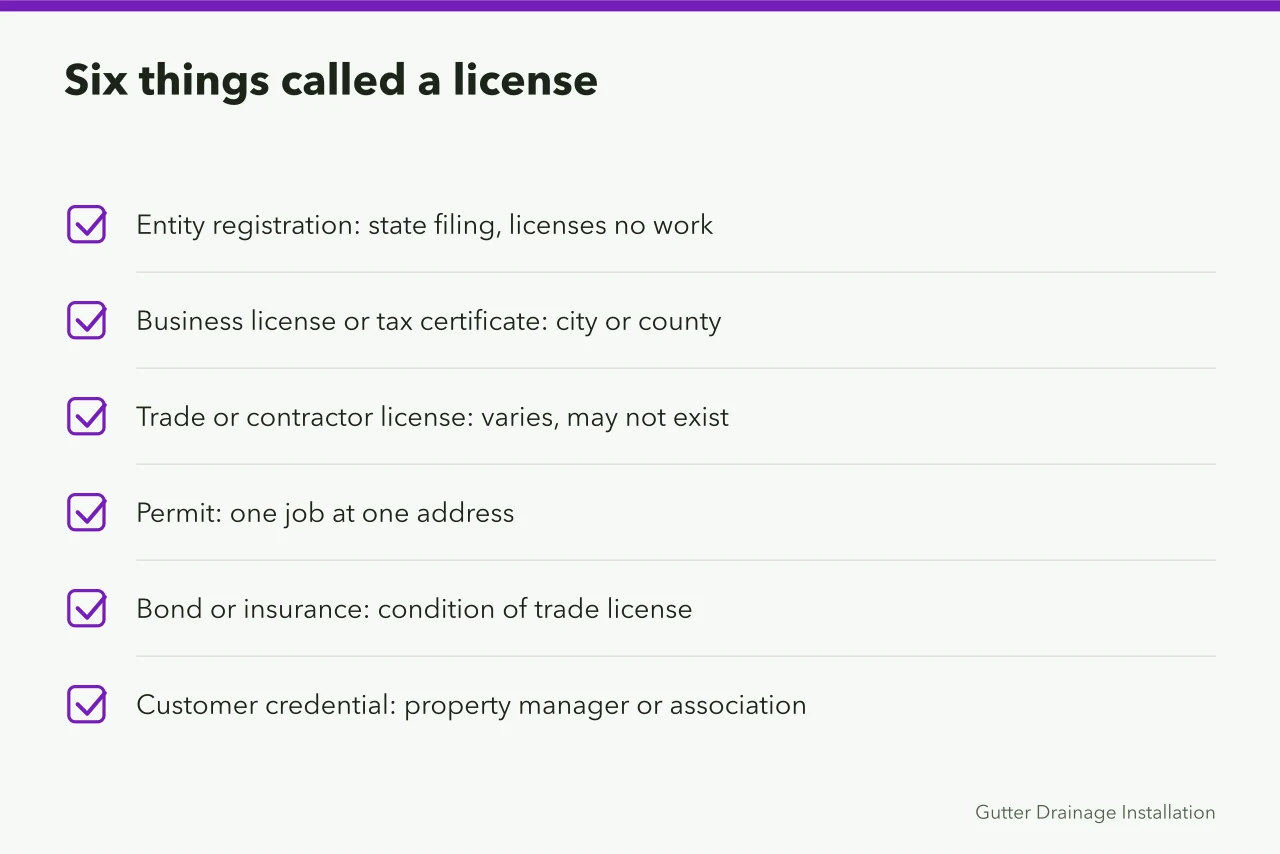
- Entity registration. Forming the business and filing it with the state. Nearly universal, and it licenses nothing about the work.
- A general business license or tax certificate, usually issued by the city or county, which permits you to do business there at all.
- A trade or contractor license, which says a person or company is qualified for this class of work. This one varies most, and in some states it does not exist for this trade.
- A permit, which authorizes one job at one address. Issued per project, never per company.
- A bond or insurance requirement, often a condition of number three rather than a separate license, but enforced on its own.
- A customer-imposed credential: an approval list run by a property manager, an association or a warranty program. Not law, and frequently stricter than law.
An owner holding one and two, told there is no state contractor license for gutter work, may think the file is closed. Categories four, five and six are still open.
Which of the six usually reach gutter work
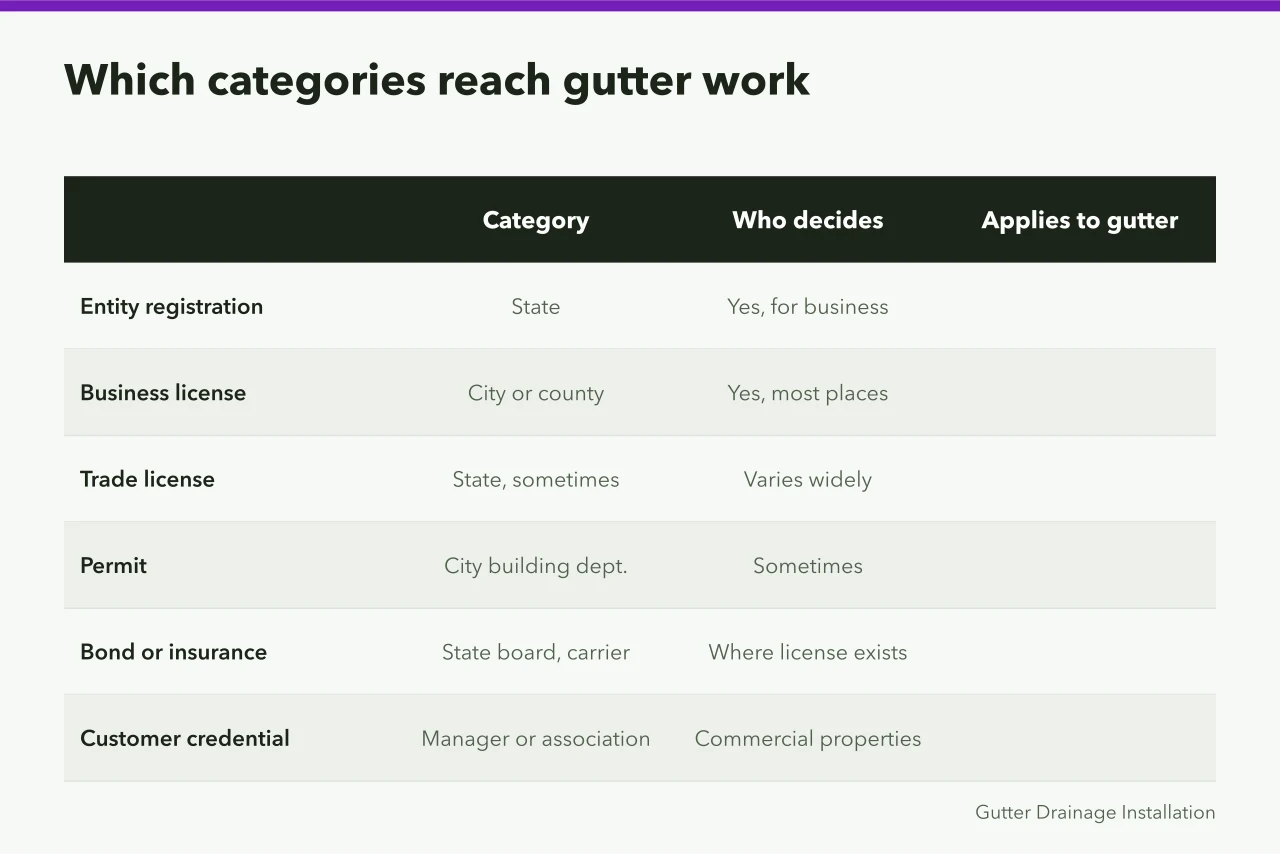
| Category | Who decides | Typically applies to gutter work? | The question to ask |
|---|---|---|---|
| Entity registration | State | Yes, for the business itself | What entity type and what annual filing? |
| Business license or tax certificate | City or county | Yes, in most places you work | Do I need one per city I take work in? |
| Trade or contractor license | State, sometimes county | Varies widely, and may depend on job value | Which classification covers exterior drainage work? |
| Permit | City building department | Sometimes, especially for drainage changes | Is a permit required for replacement, for a new connection, or neither? |
| Bond or insurance | State board, plus your carrier | Usually where a trade license exists | Is proof filed by me or by my carrier? |
| Customer credential | Property manager or association | On commercial and managed properties | What minimums and what documentation? |
The third row is where the variation lives. Ask about the classification, not the words gutter or drainage, because boards organize by work category. Ask whether a project-value threshold exists and whether it is measured per project or per contract.
The fourth row is where new owners get caught. A company can hold every license on this page and still be doing unpermitted work every day. The person who finds out is often the customer's home inspector, years later.
The calls, in order
Five calls per market. They take an afternoon.
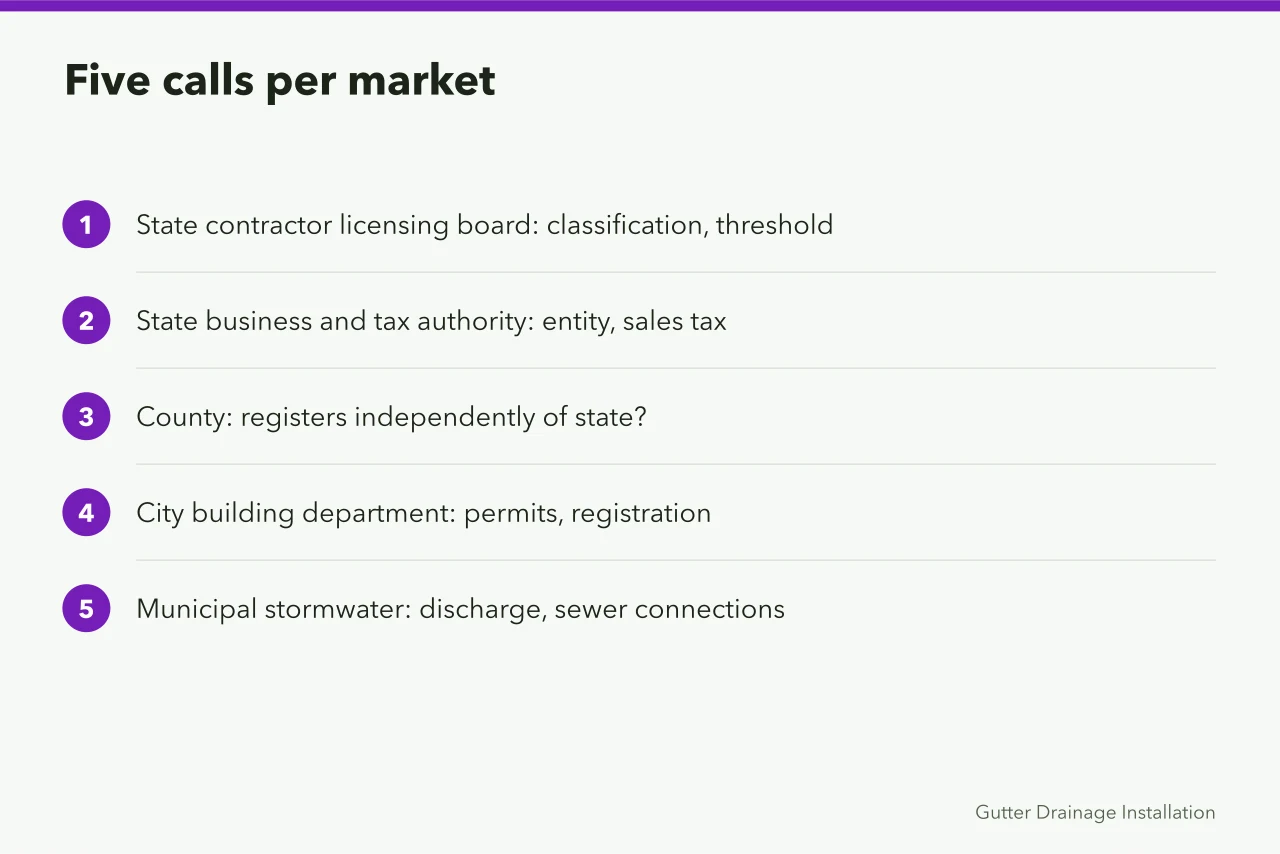
- State contractor licensing board: which classification, what threshold, does it attach to the entity or to a qualifying individual, does it cover employees.
- State business and tax authority: entity filing, and whether sales or use tax applies to materials, labor or both in your state.
- County: whether it registers or licenses independently of the state.
- City building department: permits, local contractor registration, and whether either changes for a drainage connection as against a like-for-like replacement.
- Municipal stormwater or public works: what you may do with discharged water, including any restriction on connecting to a storm sewer, the prohibition on tying into a sanitary sewer, and any setback from a property line.
Call five is not a licensing call and appears on no licensing checklist, which is exactly why it gets missed. It sets your standard scope, because where the water is allowed to go separates a finished job from a callback.
The record sheet
Keep one row per requirement with six columns:
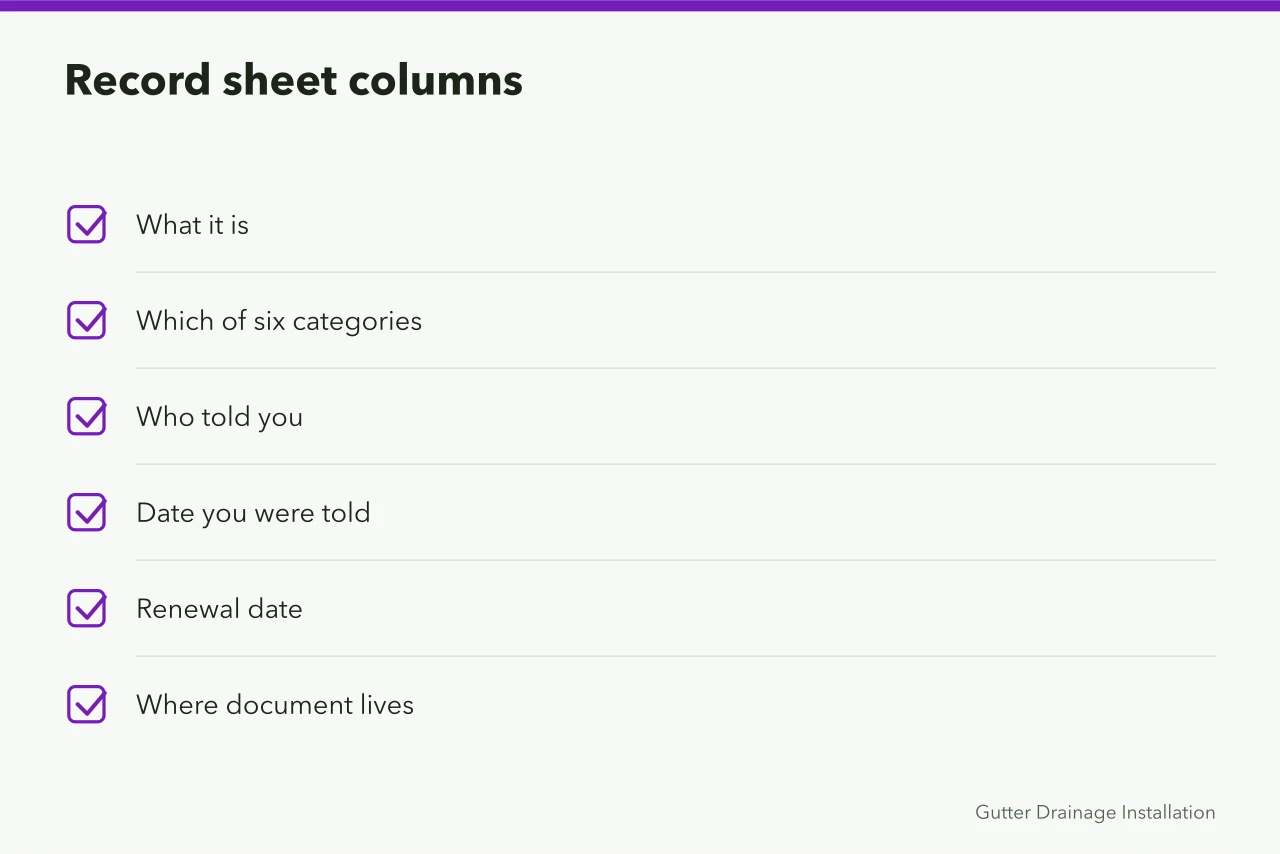
The date column is the one that matters. Requirements move, thresholds move, and nobody writes to tell you. An answer with no date attached is something you half remember from a phone call two years ago, which is not a compliance position.
Re-run the five calls once a year, and again whenever you take work in a new city. Growth into the next metro area is the most common way a compliant company becomes a non-compliant one.
What none of this covers
One obligation is granted by no license and satisfied by no permit, and it is the one that matters most in this trade.
The work happens at the roof edge, on ladders, on surfaces that were wet earlier in the day.
OSHA's guidance on fall protection in residential construction describes the methods and puts responsibility on the employer for site-specific controls and for whichever federal or state-plan requirements apply where you operate.
Some states run their own approved plan, so confirm which set governs you.
Training and equipment selection belong with a certified provider and the applicable code, not with a licensing checklist.
Around it sits the program. OSHA's framework for a safety and health program describes what a small employer builds: commitment, worker involvement, hazard identification, correction and training. Being licensed says nothing about whether any of that exists at your shop.
Accessibility is the other obligation owners assume does not apply. It concerns your own premises where the public comes, not the houses you work on. the ADA guide for small businesses sets out the general expectations. Read it once even if your office is a desk in a yard, and ask an attorney about anything specific to your setup.
What you may say in your advertising
What you hold caps what you can claim. Calling yourself licensed where the state issues no license for the trade, or advertising a number that belongs to a lapsed registration, is a claim you cannot support.
If you hold a credential, display it precisely: issuing body, number, classification. Vagueness reads as evasion to the customers who check.
How that fits your positioning is covered in the marketing and growth guide. The method for establishing which requirements apply where you work is set out in the licensing and compliance guide.
Some requirements attach to equipment and vehicles rather than the business. Check the jurisdiction before finalizing purchases in the equipment checklist for new owners and before committing to machine decisions in the equipment and setup guide.
Employment rules arrive with the first hire, not the first job. Put hiring and training on the compliance calendar too.
Common questions
Is there a national gutter installation license?
No. There is no federal license for this trade. Anyone offering you one is selling a certificate, not a license.
Do I need a license for cleaning only?
Often not, and sometimes yes once repairs are bundled in. Describe the actual mix of services to the board rather than asking about the trade name.
If my state has no contractor license, am I finished?
No. Categories one, two, four, five and six are still live, and the city permit question is the one most likely to bite.
Can I work in the next state on my existing license?
Only where a reciprocity arrangement exists, and the terms vary. Ask both boards, not one. For anything with a legal or tax consequence, ask an attorney or accountant licensed in your state rather than relying on a phone note.