Guides
How to price gutter service jobs so the margin survives
How to price gutter service jobs: the estimate visit in order, the four quantities you must leave with, and turning them into hours before a rate.
What to take away
- Pricing happens at the property, not at the desk. What you write later is arithmetic on what you saw, or a guess dressed up as arithmetic.
- Leave every estimate with four quantities and two photographs. If you are missing any of them, you are not ready to quote.
- Convert quantities into hours before you convert hours into money. Skipping that step is why access difficulty never makes it into the price.
- Fair means the customer can see what changes the number. A price nobody can interrogate is a price you will defend badly.
What fair has to mean
Fair does not mean cheap and it does not mean split the difference. In this trade it means three specific things.
The customer can see which quantities drove the number. The conditions that would change it are named before work starts rather than discovered on a ladder. And the price would still be the same if a different estimator had come out, because it was built from observations rather than from a read on the customer.
That third one is the test most pricing fails. If two people from your company would quote the same house differently, you do not have a price, you have a mood.
The estimate visit, in order
- Walk the full perimeter before you get out a ladder. Note elevations, ground conditions, obstructions and where each run has to terminate.
- Measure each run and count the corners. Corners are labor, not length.
- Count and locate the drops, including any the current system is missing.
- Get the ladder up on at least the low points of each run and at every existing downspout, and press the fascia.
- Find where the water currently goes. Follow it to the terminal end, including any buried line, and open a cleanout if you can reach one.
- Photograph the fascia at the worst point you found, and the discharge point.
- Ask the customer what problem prompted the call, and listen for the words basement, ice or overflow.
- Write the observations down at the property. Not in the truck, and not that evening.
Step five is the one crews and owners both skip, and it is the one that predicts the complaint. Most calls about a gutter are calls about where the water ended up.
Step seven earns its place because those three words change the job. Basement means the discharge is the job. Ice means you should be talking about the roof and the attic as well as the trough. Overflow means either capacity or a blockage, and the two have different answers.
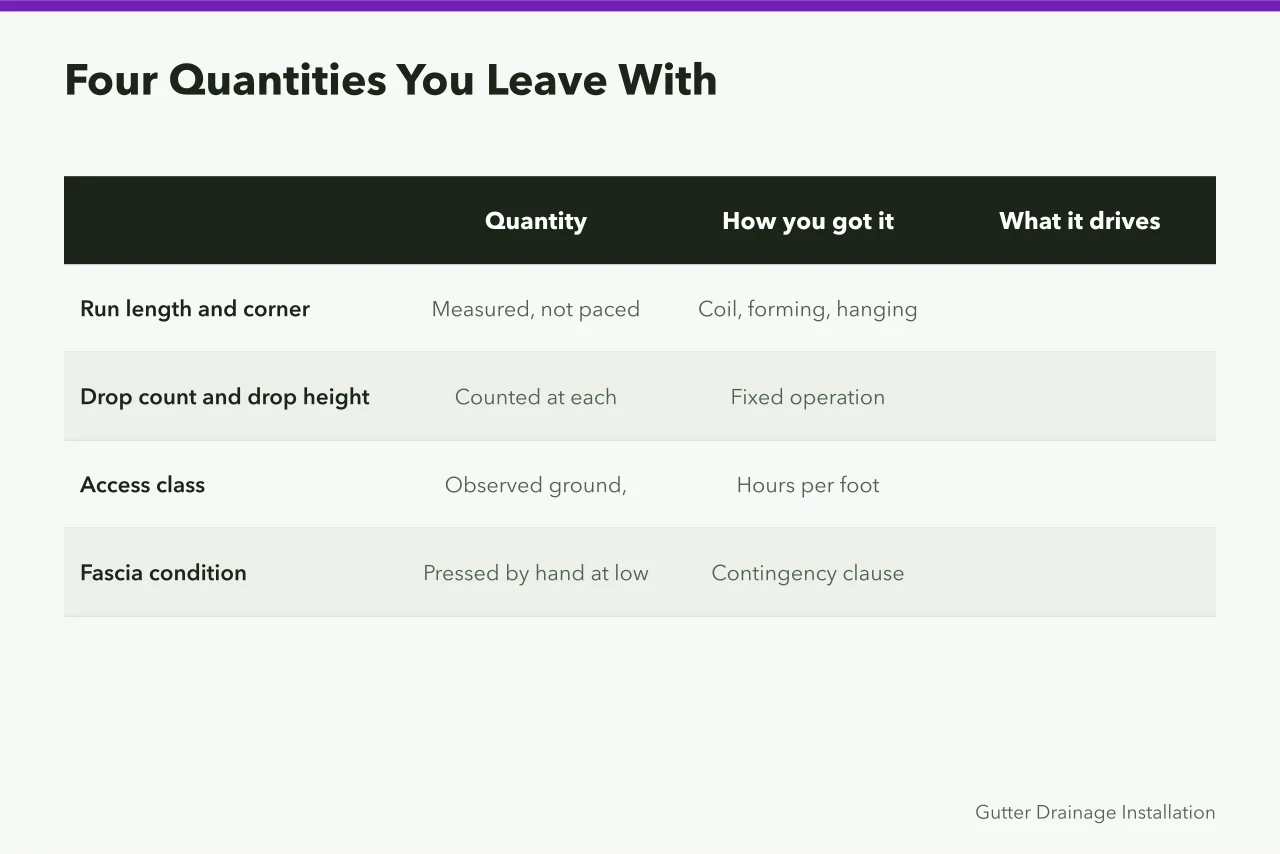
The four quantities you leave with
| Quantity | How you got it | What it drives |
|---|---|---|
| Run length and corner count | Measured, not paced | Coil, forming time, hanging time |
| Drop count and drop height | Counted at each termination | A fixed operation sequence per drop |
| Access class | Observed: ground condition, elevation, obstruction | Hours per foot, which is the real variable |
| Fascia condition | Pressed by hand, at the low points | Whether a contingency clause is needed and at what basis |
Access class is the one that carries the year. Two houses with identical run lengths can differ enormously in hours because one has firm level ground and one has a slope, a deck and a bay window. Grade it into a small number of classes, three is plenty, and apply it as a factor on hours.
Do not grade it on a feeling. Write down what puts a property in each class, so the third estimator you hire produces the same answer as you do.
Turning quantities into hours
Do this before any money appears on the page.
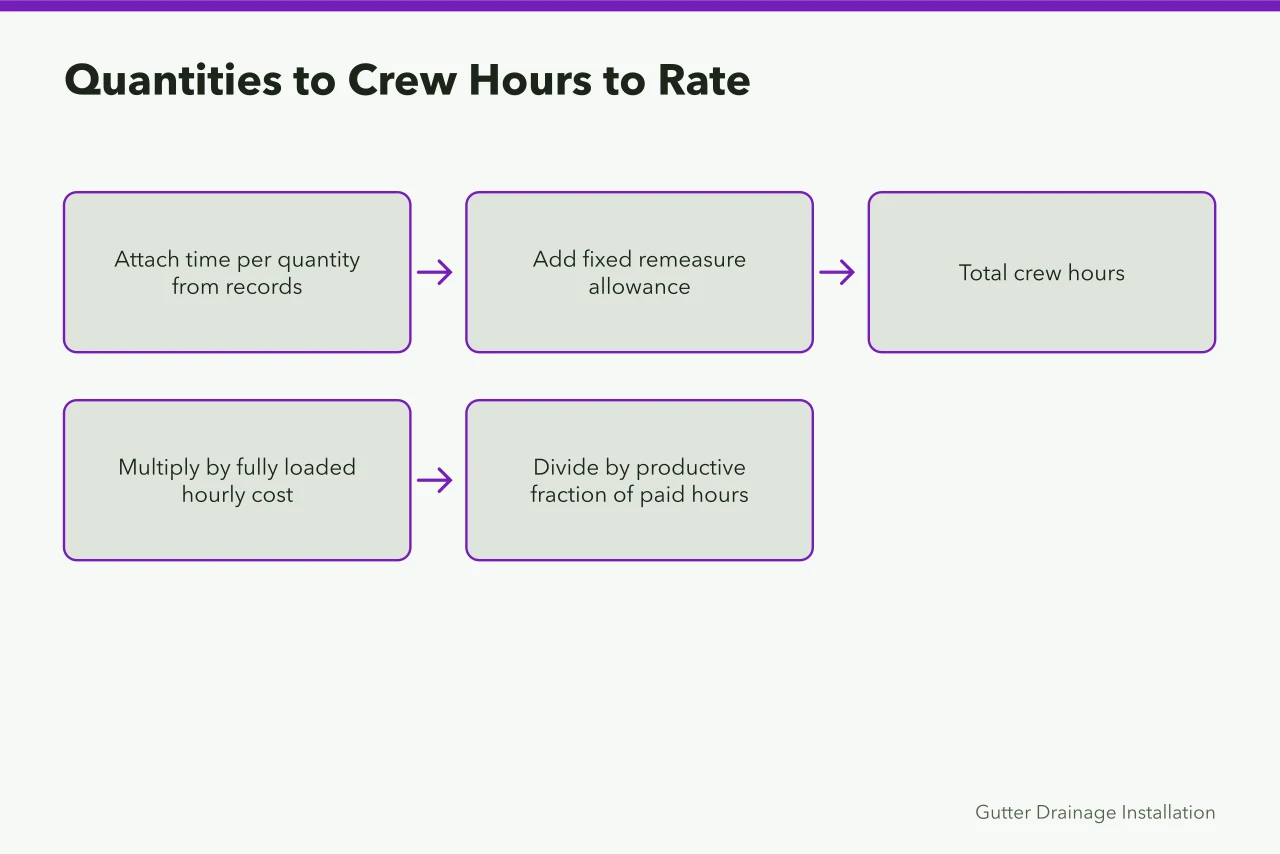
Attach a time from your completed-job records to each quantity: forming and hanging time per foot at each access class, time per drop, time per corner, setup and teardown per elevation, and travel from the yard.
Add a fixed allowance for verifying measurements before forming. A remeasure is a return trip with the trailer, not a correction.
Now you have total crew hours. Multiply by your fully loaded hourly cost and divide by the fraction of paid hours that are genuinely productive. That fraction is not a detail. Travel, setup, the supply run and the weather delay are all paid and none of them is billable.
If you have not built that loaded rate yet, the pricing and profit guide sets out the components. For the wage input, the Bureau of Labor Statistics publishes occupational employment and wage estimates by area, which gives you a defensible local starting point before you add your own burden.
The margin decision, made once
Decide your margin as a policy at the start of the season, then apply it to every job. Deciding it per quote, in a driveway, in front of a customer, is how discounts happen.
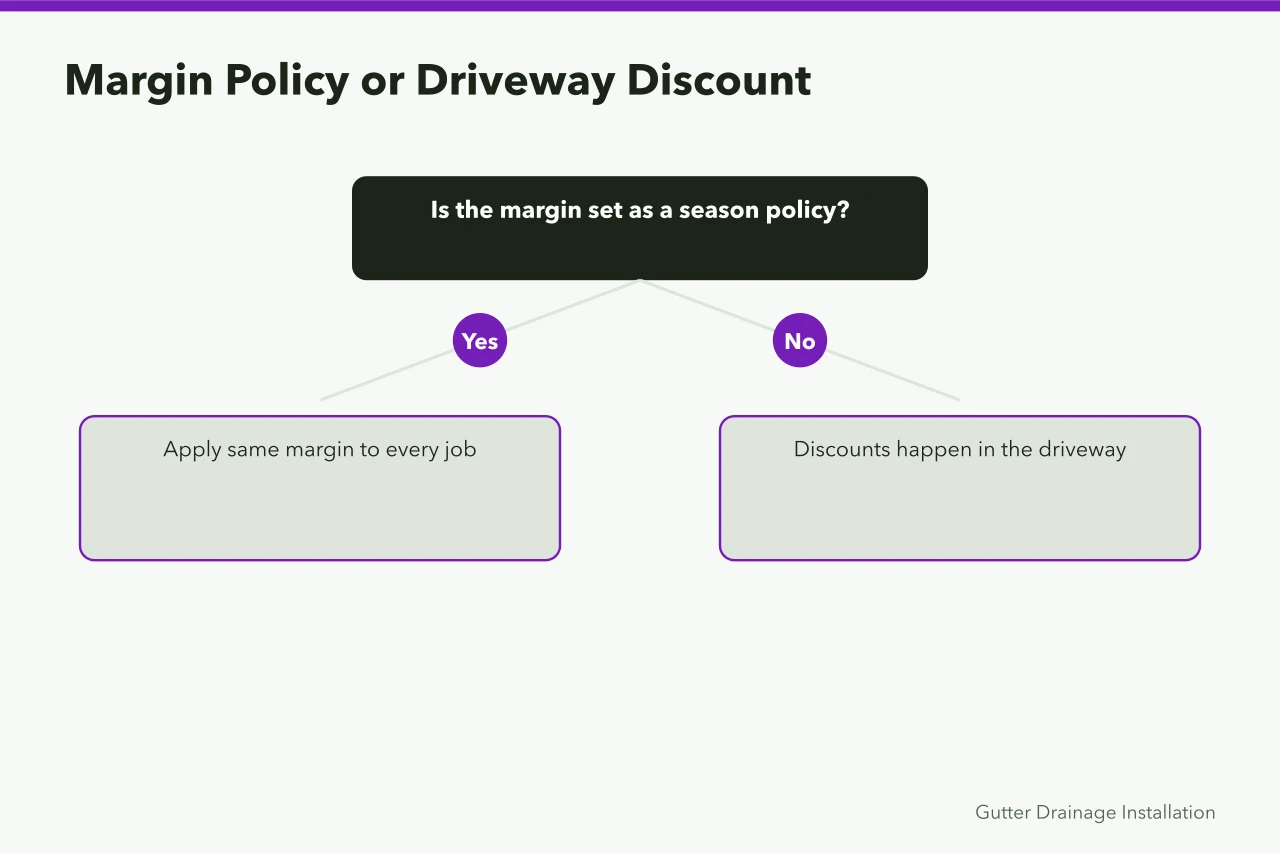
There are legitimate reasons for a job to carry a different number: an unusually long travel leg, a property you want as a reference in a neighborhood you are entering, a repeat customer with a known payment history. Write those exceptions down as rules too. An exception you can name is a policy. An exception you feel is a leak.
What you should never do is buy the job on price and plan to make it up on a change order. That is the pattern that produces the complaint, the review and the refund.
Where a quote goes wrong after you send it
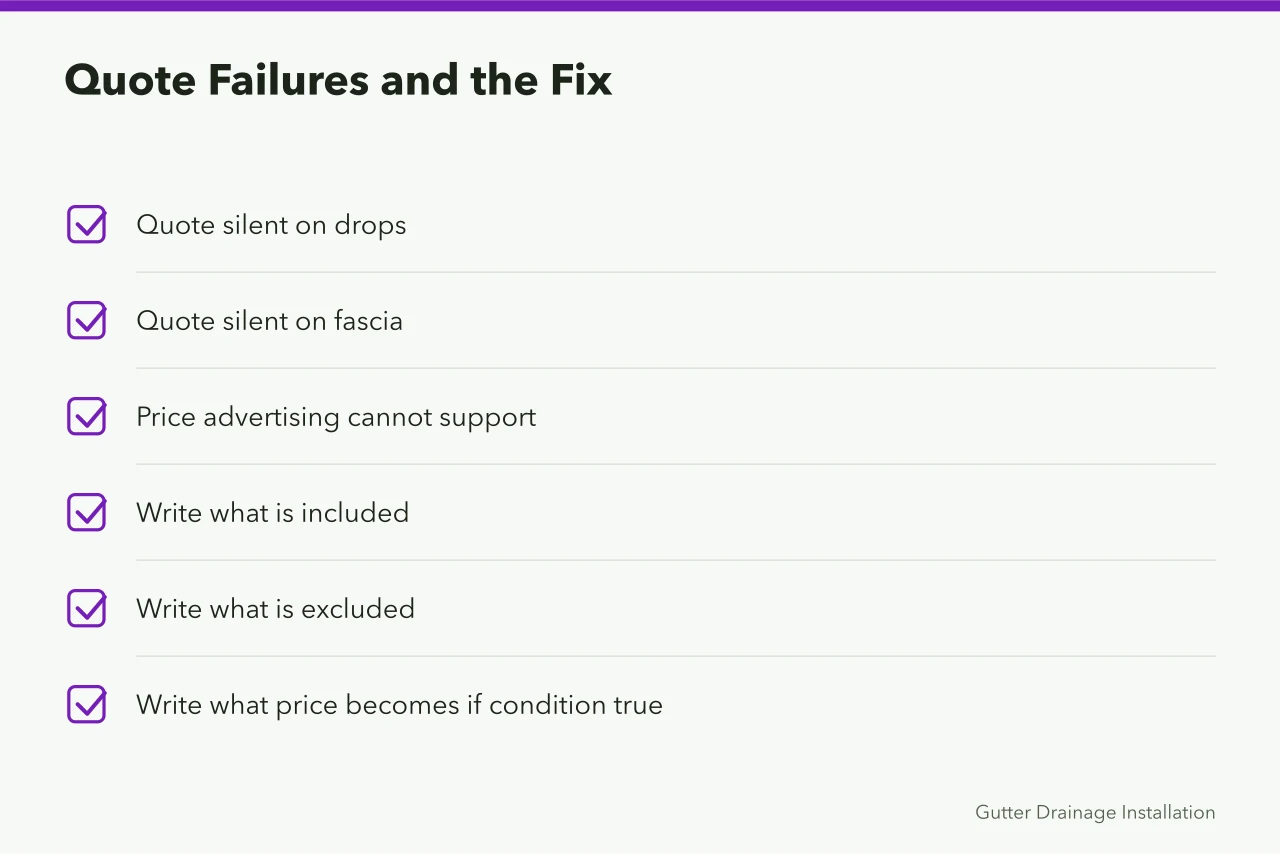
The quote is silent on drops, so the customer compares a number that includes them against one that does not. The quote is silent on the fascia, so a repair becomes an ambush.
The third failure is a price the advertising cannot support. If a headline or promotional rate is out in the market, the conditions that make it achievable have to be clear to a reader. The Federal Trade Commission's advertising guidance for small businesses explains the general expectation.
Fix all three the same way. Write down what is included, what is excluded, and what the price becomes if a named condition turns out to be true.
Making the next quote better than this one
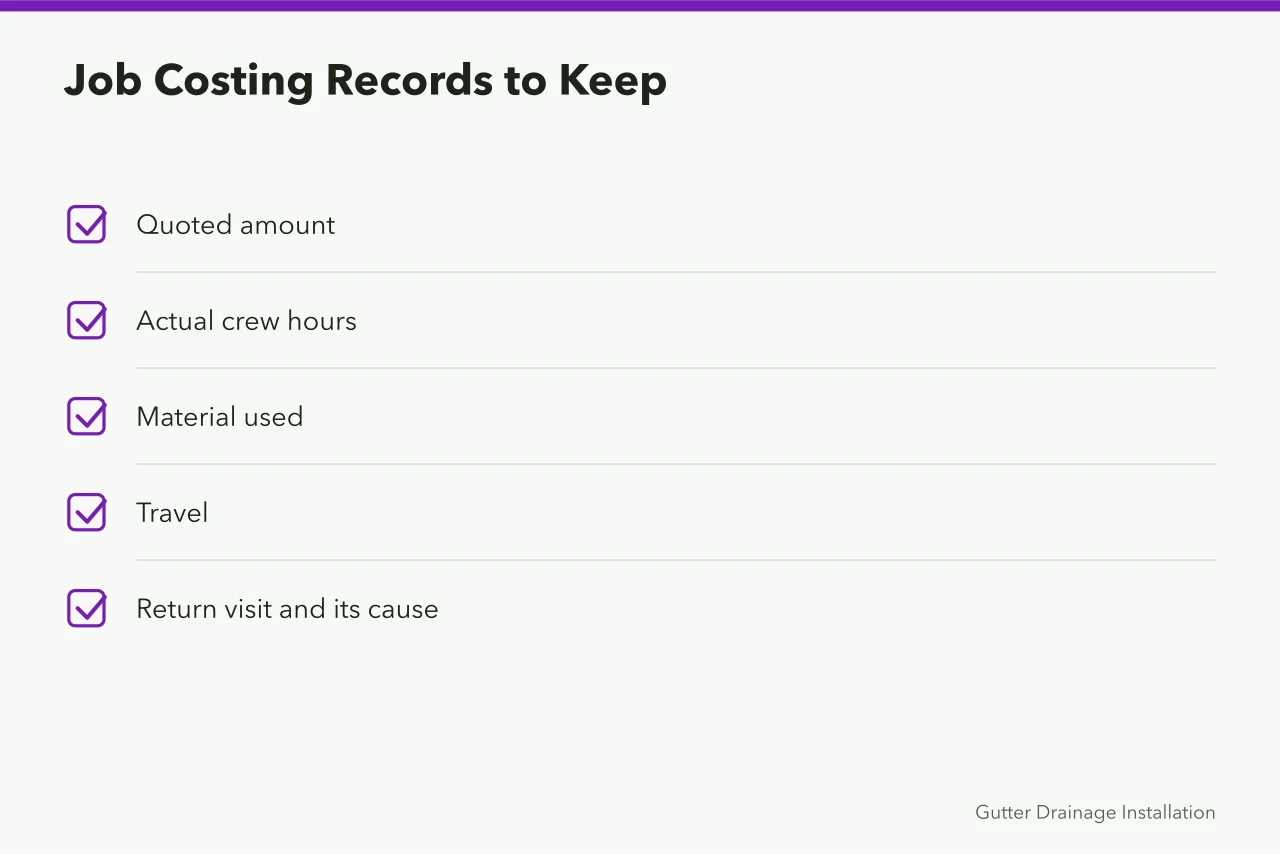
A price is a hypothesis and job costing is the test. Record quoted amount, actual crew hours, material used, travel, and any return visit with its cause. Compare monthly rather than annually, because a season is over before an annual review notices anything.
The IRS sets out what records a business is expected to keep, and the same discipline produces the data your pricing needs.
Two other inputs move quietly and should be re-checked before every season. One is what your equipment actually costs per hour to run, which follows from choices covered in the equipment and setup guide. The other is what you are carrying in fixed compliance costs, which depends on the jurisdiction and is set out in the licensing and compliance guide.
Crew speed is the other half. The same house takes very different hours depending on who is on it, so the hour figures in your rate card should be re-derived after any significant change in the crew.
That is one reason hiring and training shows up in a pricing article at all. It is also worth checking that the truck left with everything, because a missing outlet or elbow turns a finished job into a second visit, which is what the equipment checklist is for.
Common questions
How long should an estimate visit take?
Long enough to complete the eight steps. If that feels expensive, price it into your overhead rather than shortening it, because every step you drop reappears as a dispute.
Can I quote from photographs?
For simple repairs, sometimes. For a formed installation, you are guessing at access class and fascia condition, which are the two quantities that decide the hours.
Should I show the customer the breakdown?
Show the quantities and what is included. You do not owe anyone your loaded hourly cost, and publishing it invites a negotiation about your payroll rather than about the job.
What if the customer has three cheaper quotes?
Ask what each one includes. Drops, the discharge terminal and the fascia contingency account for most of the spread, and once those are equalized the comparison is usually much closer.
Is it ever right to walk away?
Yes. A property above the access ceiling you have set, or a customer who wants the fascia contingency removed from the paperwork, is a job that costs more than it pays.