Guides
Gutter service quality under review: the good, the weak and the verdict
Gutter service quality control: what done right means physically, the checks at the roof edge and at the ground, and how to verify a run using water.
What to take away
- Quality in this trade reduces to one test: water goes where you said it would, in the volume the roof actually sheds.
- Verify with water, not with eyes. A run can look perfect and hold standing water at the far end.
- Half of the checks are at the ground, and they are the half most companies skip.
- Photographs are the quality record. Two pictures per job settle most of the arguments this trade has.
Quality means one thing here
Strip away the finish, the color match and the straight line along the fascia. A gutter system either does its job or it does not.
Its job is to catch what the roof sheds, carry it to an outlet without holding water, and release it somewhere it does no harm. Every quality check worth doing tests one of those three clauses.
That framing puts the checks in the right places. A company that inspects only the trough is inspecting one third of the system, and the third least likely to generate the complaint.
The checks at the roof edge
Work along the run and confirm each of these before the ladder comes down.
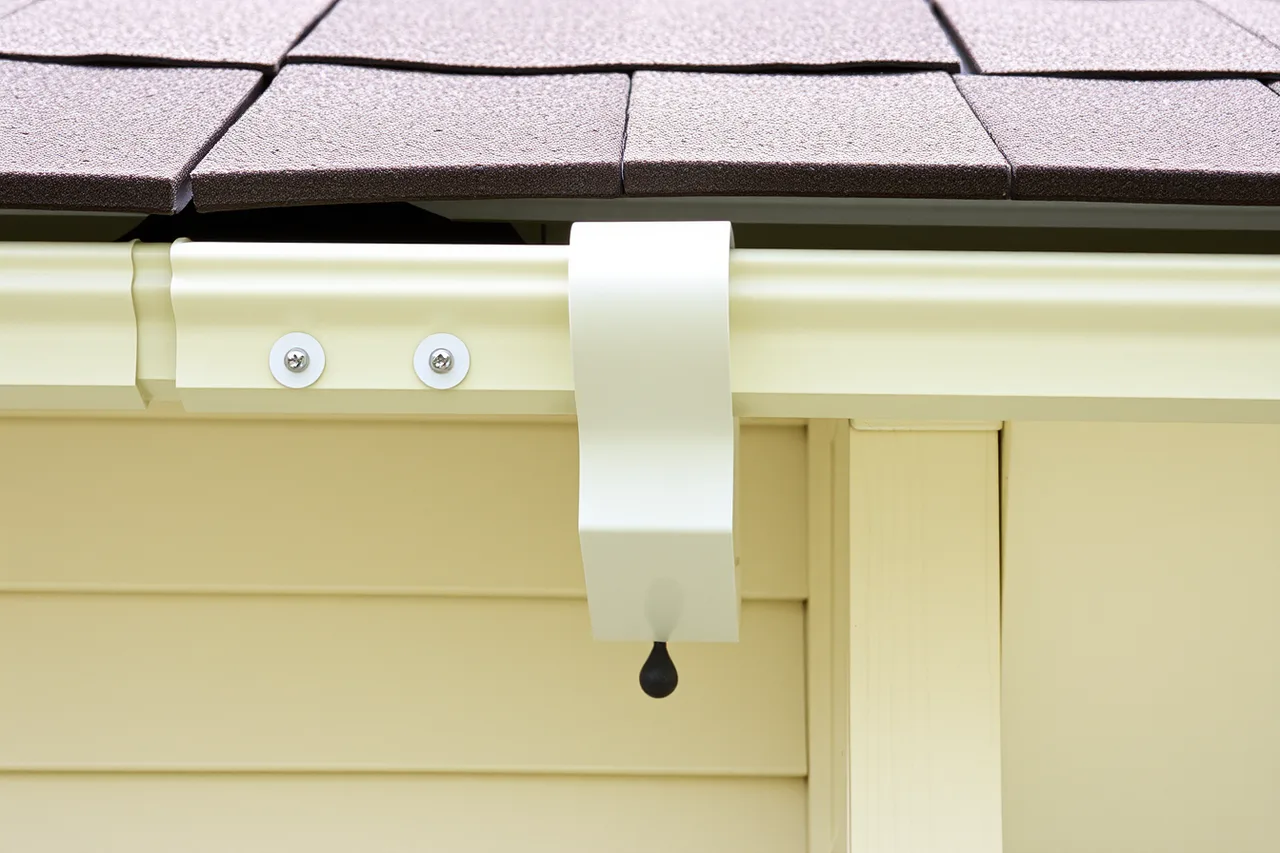
The trough sits where roof runoff will land in it rather than over it. Steeper roofs and metal roofs shed faster and further, and a run set for a low-slope shingle roof can be overshot by one that is not.
The fall runs toward the outlet along the whole length, with no reverse section. Slope requirements come from the manufacturer's installation instructions and from whatever your building department has adopted, so check both rather than working from a remembered number.
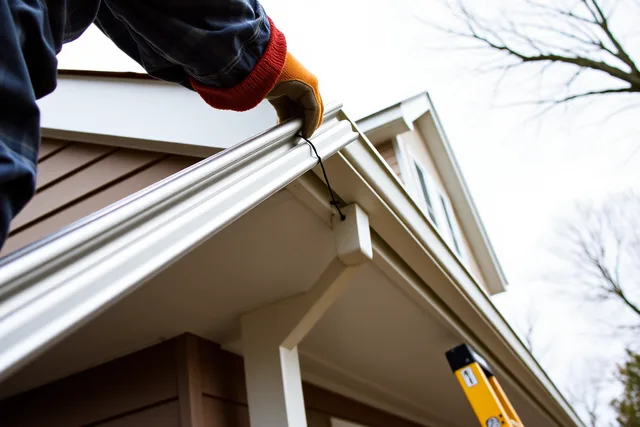
Hangers are fixed into sound material at the spacing the manufacturer specifies, which is tighter in regions that get snow and ice load. Again, the figure belongs to the manufacturer's instructions and to local requirements, not to habit.
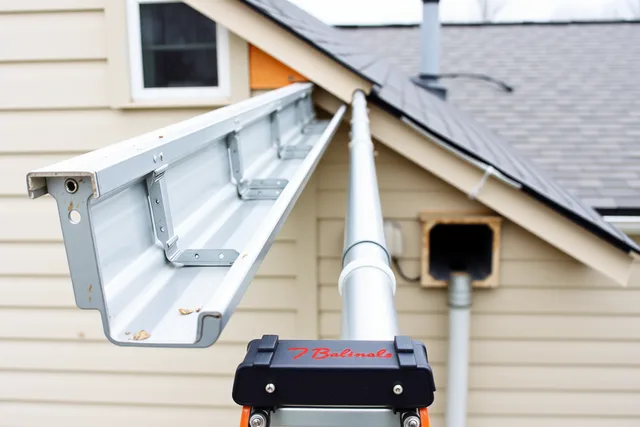
Corners and end caps are sealed with a product rated for the metal and the joint. Miters are the most common leak point on an otherwise sound run.
Outlets are cut cleanly and are the size the downspout actually needs. An undersized or partially obstructed outlet will make a correctly sized trough overflow.
Dissimilar metals are not in contact. Copper against aluminum or steel is a corrosion problem that shows up long after you have left.
The roof edge detail lets water enter the trough rather than run behind it. Where a drip edge or gutter apron is missing or badly lapped, water wicks behind the fascia and nobody sees it until a hanger pulls.
The checks at the ground
This is the half that gets skipped, and it is where the complaints come from.
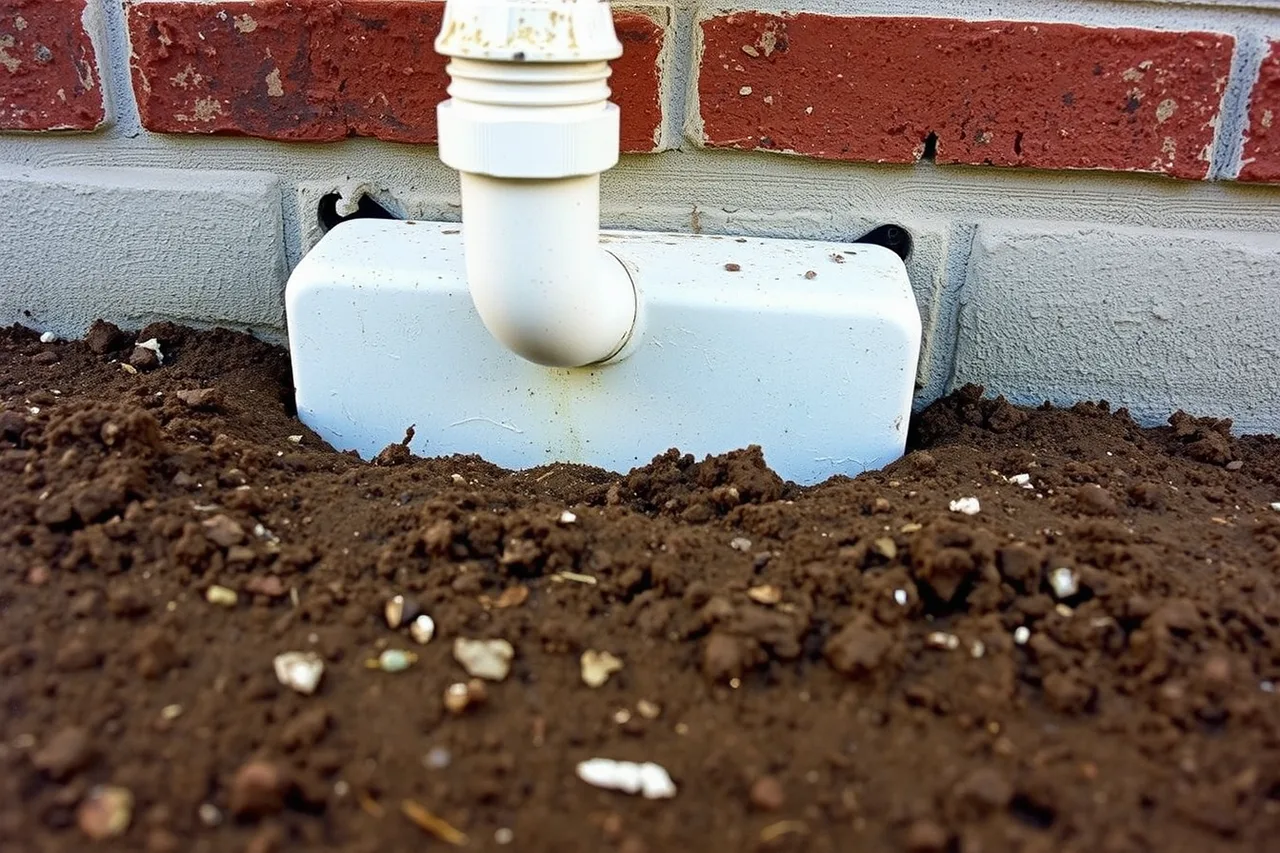
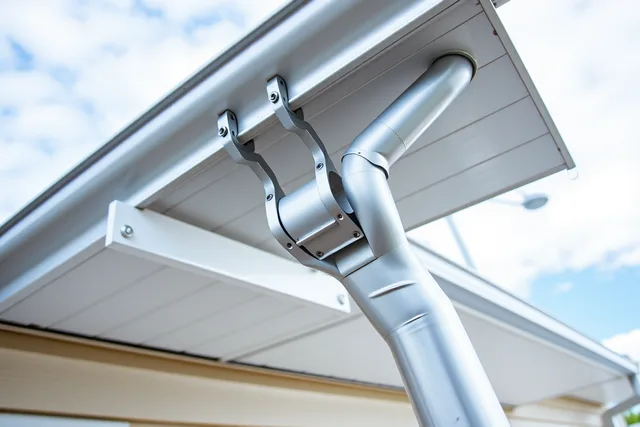
Every downspout is secured at the intervals the manufacturer specifies, and its elbows are oriented so water cannot exit at a joint.
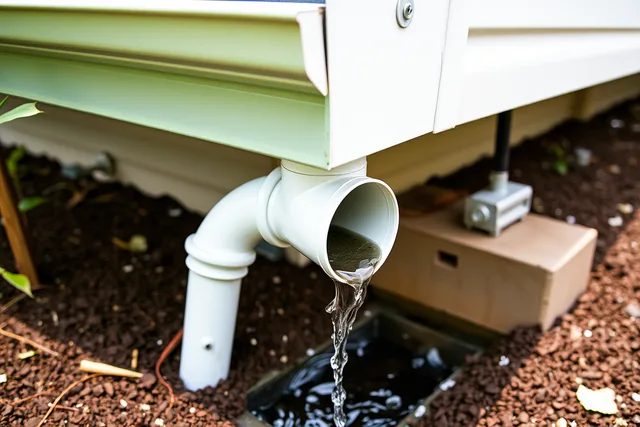
Each downspout terminates somewhere you can point at. Onto a splash block, into an extension, into a buried line with a reachable cleanout. Vague is not a termination.
The receiving ground falls away from the building. A perfect extension aimed at ground that slopes back at the foundation has moved the problem three feet.
Nothing discharges onto a walkway or a drive where it will refreeze. In cold markets this is a liability item as much as a quality one.
The discharge complies with local rules. The municipality sets whether you may connect to a storm sewer, the ban on tying into a sanitary sewer, and any setback from a property line. The reasoning behind checking each market is in the licensing and compliance guide.
Verify with water
Eyes are not a test. Water is.
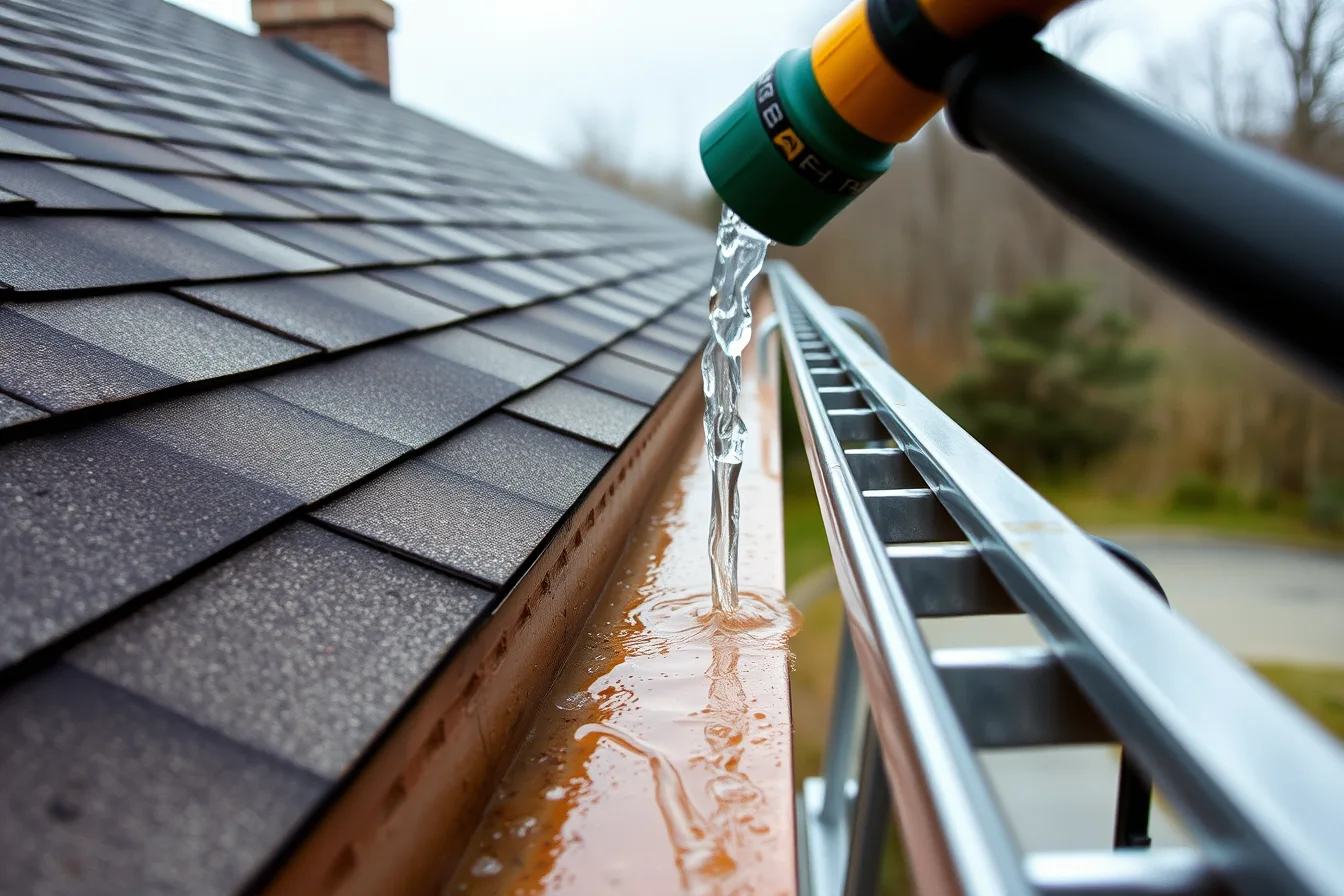
Run a hose into the far end of each run, away from the outlet, and watch. You are looking for three things: whether it moves, whether it holds anywhere, and whether it exits at the terminal you promised.
Standing water at the far end means the fall is wrong, and the honest response is to fix it before you leave rather than to wait for the customer to notice a green line inside the trough in August.
Then follow the water to the ground and confirm it leaves where you said. Where a buried line is involved, open the cleanout and confirm flow. A line that has silted up will accept a hose and refuse a storm, so watch the level rather than the first few seconds.
This step takes minutes and it is the single highest-value habit in the trade. It converts a class of callback into a five-minute correction while the ladder is still up.
Where the checks sit, and what each one costs
| Check | Moment | Time it takes | What it prevents |
|---|---|---|---|
| Fascia pressed along the run | Ladder already up, at the estimate | Minutes | A hanger pulling, and an argument about a contingency |
| Fall verified along each run | While hanging | Minutes | Standing water and a stained trough |
| Water test from the far end | Before the ladder comes down | Minutes | A return trip with the trailer |
| Discharge terminal confirmed | Before the truck moves | Minutes | A call about a wet basement next spring |
| Two photographs filed | Before the file is closed | Under a minute | A dispute you cannot answer |
Every row is short and every row is skipped when a crew is behind. That is the argument for putting the time in the priced hours rather than asking people to be conscientious.
The first four rows also share a condition: somebody is on a ladder at the roof edge to perform them. That is the trade's severe exposure, and it does not stop being one because the task is an inspection rather than an installation.
OSHA's guidance on fall protection in residential construction describes the methods and makes clear that the employer stays responsible for site-specific controls. A quality check above your stated access ceiling is not a quality check, it is a decision to work outside your own limits.
What to photograph
Two pictures per job, minimum, and both are quality records rather than marketing.
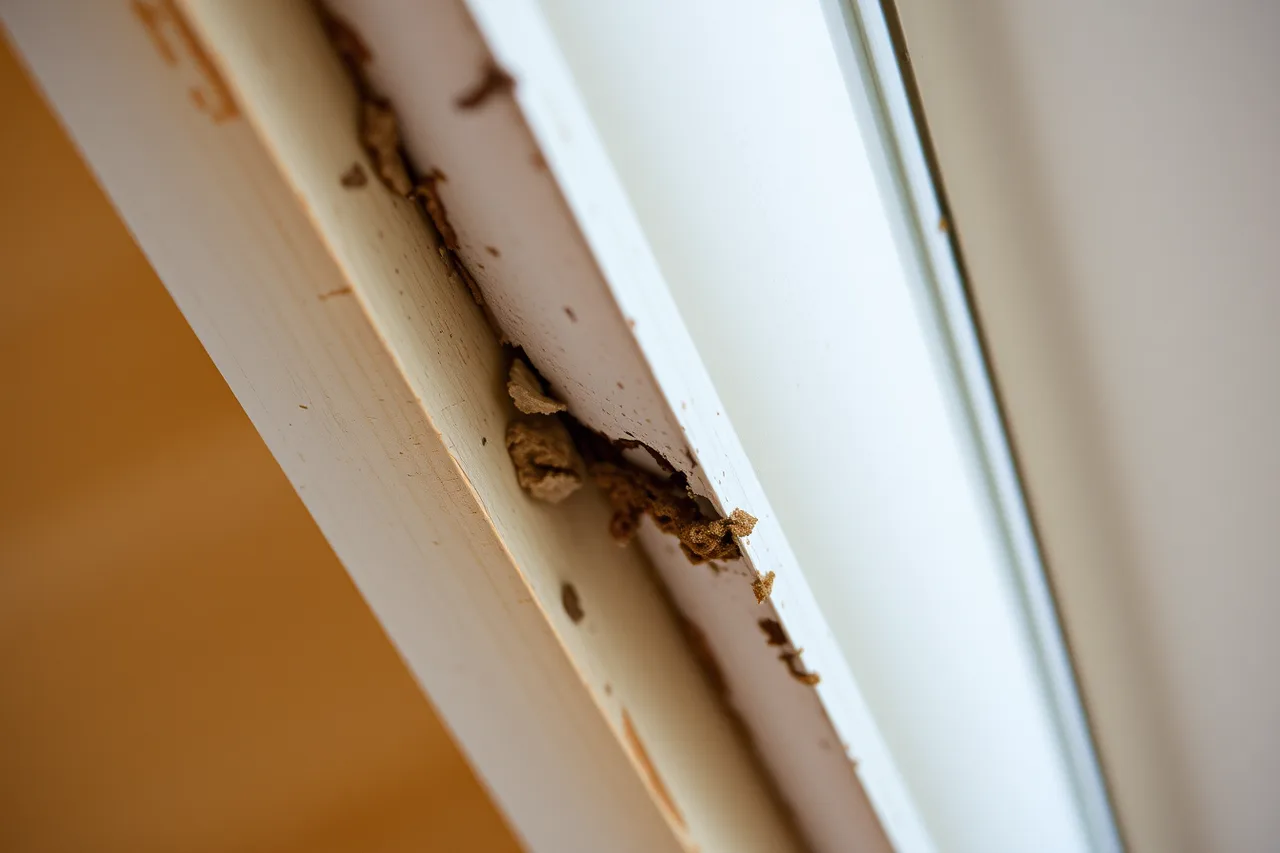
The fascia at its worst point, before you touch anything. That picture is what makes a contingency charge a documented finding rather than an assertion.
The discharge terminal, finished. That picture is what answers the call about a wet basement next spring.
Where the job included a pitch correction, an added outlet or a buried line, photograph those too. The file costs nothing and it is the difference between a discussion and a dispute.
The handover
A handover is not a wave from the driveway. It is a short, specific conversation and a document.

Tell the customer what you found that they did not know about, what you did about it, and what you deliberately did not do. Show them where the water now goes. Say what maintenance interval you expect for this property and why, based on the canopy over it rather than on a standard schedule.
If guards were installed, say plainly what still needs clearing and how often. Guards reduce large debris and do not end maintenance, and the gap between those two sentences is where most guard complaints live.
Leave a written record of the same. Anything explained only verbally will be remembered differently by both of you.
Where quality meets price
Quality checks cost time, and time has to be in the price or it will be cut by whoever is running late.
Build the water test, the ground checks and the photographs into the priced sequence rather than treating them as professionalism. If they are not in the hours you quoted, the crew is paying for them out of its lunch break. That means they stop happening in the busy weeks when they matter most.
How to get them into the rate is covered in the pricing and profit guide, and which checks belong to which offering is a package-definition question set out in the packages and pricing guide.
Quality is a staffing question. The same house takes very different hours and reaches a very different standard depending on who is on the crew. Retention protects that standard over a season.
The Bureau of Labor Statistics publishes occupational employment and wage estimates by area, which tells you what your market pays for the skills you are trying to keep.
Reviews are evidence, with rules attached
Consistent quality produces reviews, and reviews are the main way this trade's reputation travels. That makes it worth knowing where the line is.
The Federal Trade Commission's guidance on soliciting and paying for online reviews sets out what marketers are expected to do and not do. Asking every customer, not just the happy ones, and disclosing any material connection are the safe habits. Incentivizing positive reviews specifically, or filtering who gets asked by expected sentiment, is not.
The honest version is also the more useful one. A steady flow of ordinary reviews from a company that inspects the discharge end is more convincing than a wall of perfect ones.
Keeping the standard
Write the checks down as a list the crew carries, review the return visits monthly and attribute each one to a cause. A callback with no cause recorded teaches nothing.
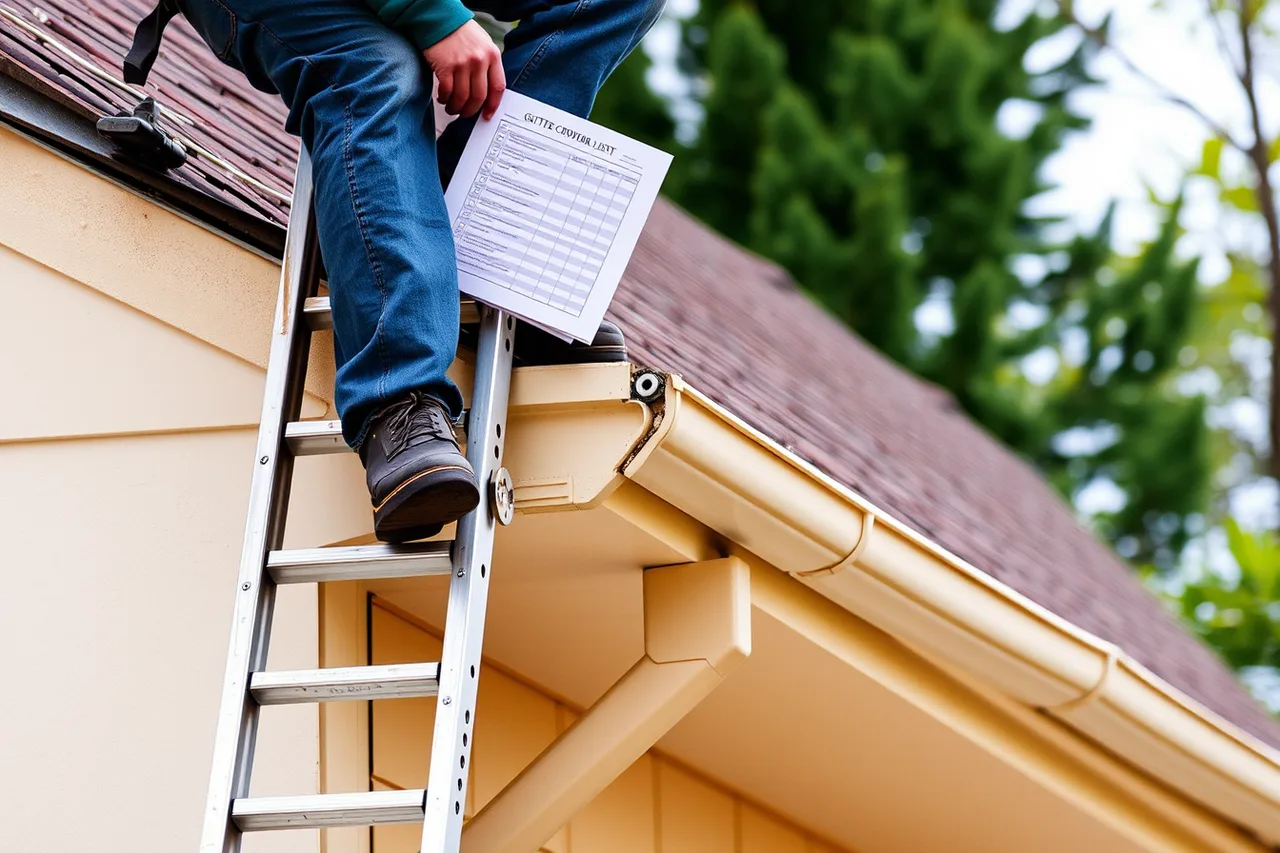
Keep the records where they are usable. The IRS explains what records a business is expected to keep, and the same file that satisfies that requirement will show you which crew, which package or which property type produces the returns.
One physical constraint shapes all of it. A formed run is made on site, so a fault found after the crew leaves means a return trip with the trailer, not a correction. That is why checks belong at the property, and why the equipment and setup guide treats the water test as a step in the job.
Whether a market makes that easy or hard is partly a routing question, covered in the startup and market guide.
Common questions
How long should the water test take?
Minutes per run. It is the cheapest quality control available and the first thing dropped when a crew is behind, which is exactly why it belongs in the priced hours.
What if the customer refuses the extra time?
They are not refusing time, they are refusing a check they do not know about. Explain what it finds. Almost nobody declines once they understand it.
Is a straight line along the fascia a quality measure?
It is a finish measure, and customers notice it. It says nothing about whether the run holds water, which is why it should never be the only thing inspected.
Who should do the checks, the crew or a supervisor?
The crew, on every job, with a supervisor sampling. Checks performed only by a supervisor happen on the jobs a supervisor visits.
What is the most commonly missed check?
The ground end. Companies inspect what they installed and not what happens to the water after it leaves.